
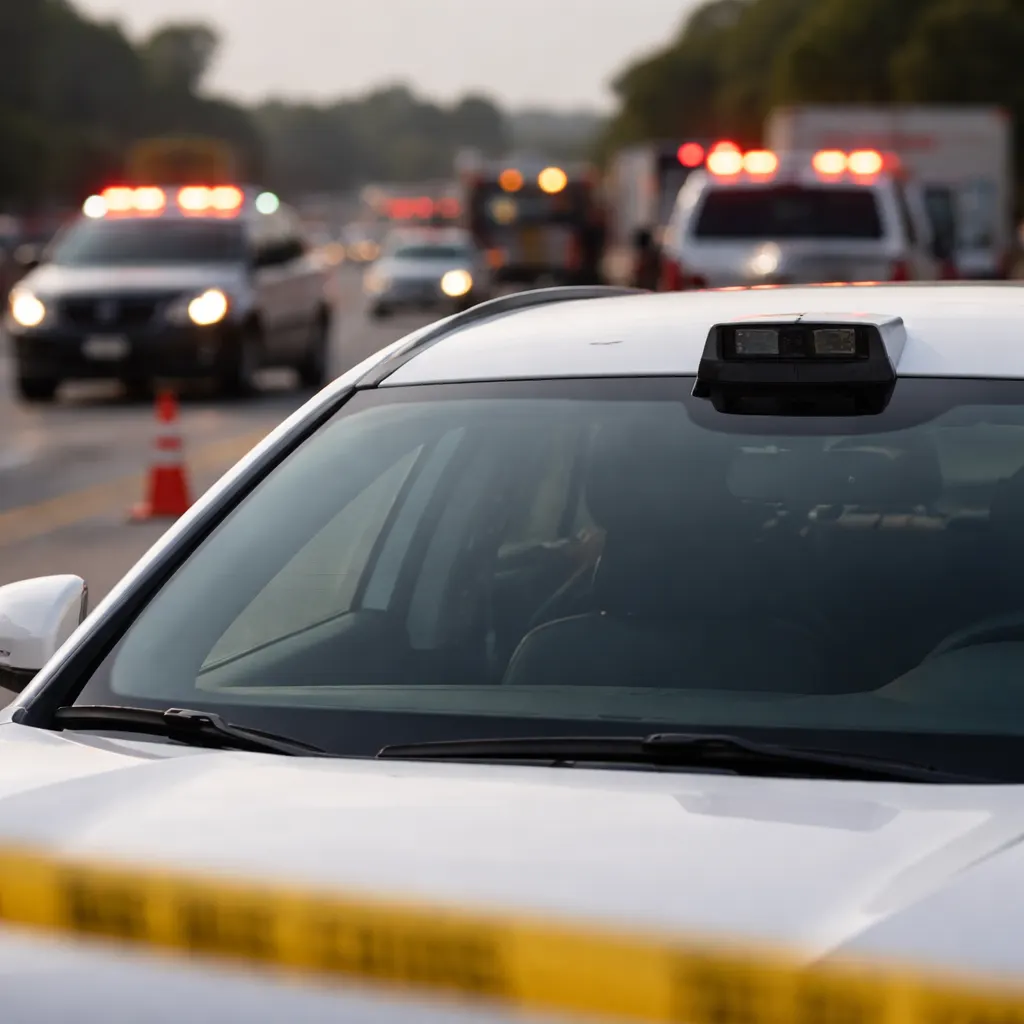
Federal regulators have opened an investigation into Comma.ai, the aftermarket driver assistance startup founded by hacker George Hotz, after five reported crashes involving the company's hands-free technology resulted in three deaths. The National Highway Traffic Safety Administration's Office of Defects Investigation announced this week that the collisions involved Comma.ai devices that failed to recognize or react to vehicles that were either stopped or moving slowly in the same traffic lane. Across four of the five incidents, as many as 11 people sustained injuries, with some classified as serious.
The crashes spanned multiple scenarios in which the company's "openpilot" software appeared to struggle with stationary or slow-moving obstacles. One of the two fatal incidents occurred in February 2026 in Ascension Parish, Louisiana, when a 2022 Toyota RAV4 equipped with FrogPilot—a third-party modified version of openpilot—struck an unoccupied police vehicle that was fully marked and had its emergency lights activated while officers investigated a separate crash. Two rear-seat passengers in the Toyota died in the collision. Federal investigators noted that at least one of the deadly crashes may have involved "forked" or altered versions of Comma.ai's software, though the other fatal incident could not be immediately identified from the report numbers cited by the Office of Defects Investigation.
According to Comma.ai's own website, the "performance" of openpilot Adaptive Cruise Control can be compromised by "vehicles in the same lane that are not moving." The company's documentation states that "when abrupt braking maneuvers are required," openpilot is "designed to be limited in the amount of deceleration and acceleration that it can produce." Comma.ai markets devices that can be installed on a range of modern cars to control Adaptive Cruise Control and Automated Lane Centering systems, performing functions "similar to Tesla Autopilot and GM Super Cruise" with the goal to "make driving chill," though the company warns drivers must always be ready to immediately retake manual control.
The investigation highlights a persistent challenge for advanced driver assistance systems, which have historically struggled with stopped or slow vehicles and other stationary objects. Tesla and Ford have faced similar federal investigations after their systems were involved in multiple crashes involving these scenarios. Comma.ai's technology relies on a camera-based driver-monitoring system to detect distracted or drowsy drivers, but the reported crashes suggest the software's limitations in emergency braking situations may outpace its ability to alert drivers in time. Founded in 2015, Comma.ai sells aftermarket devices and open-source software that promise to deliver Tesla-like automation to vehicles that didn't come with it from the factory, but the current probe raises questions about whether third-party systems can match the safety performance of manufacturer-integrated technologies.
The investigation comes at a critical moment for aftermarket driver assistance providers, as regulators weigh how to oversee software that modifies vehicle safety systems outside the original manufacturer's control. Comma.ai could not immediately be reached for comment, and Hotz, who stepped back from day-to-day operations in 2022, did not respond to requests for comment. The outcome of this federal probe could set a precedent for how open-source and third-party driving software is regulated moving forward. The pattern of crashes involving stationary emergency vehicles suggests a fundamental gap between the marketing promise of "hands-off" driving and the technology's actual capability to handle unpredictable road conditions. For companies building on the premise that automation can be retrofitted through aftermarket hardware, the stakes now extend beyond competitive positioning to questions of legal liability and regulatory survival.