
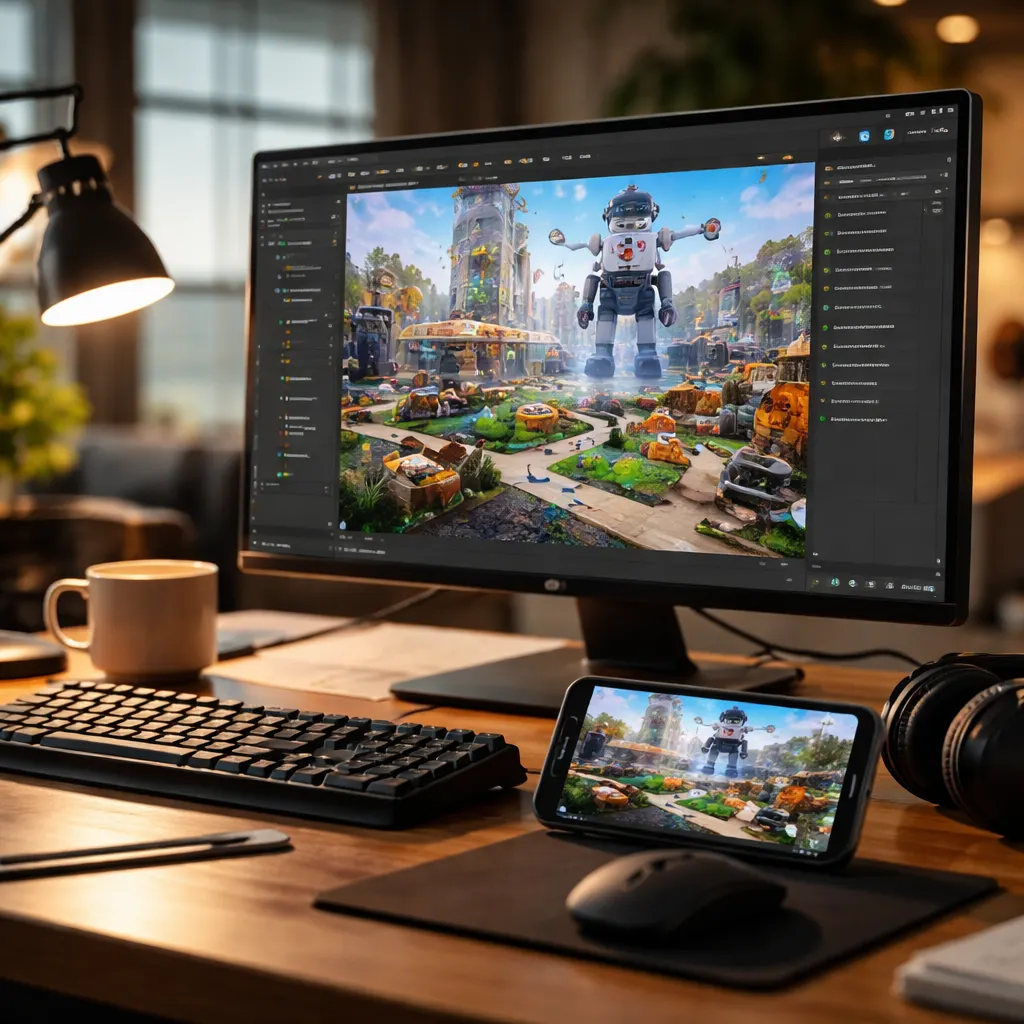
Roblox is rolling out its artificial intelligence-powered game creation tool to two additional countries and preparing to let players access games outside its walled garden, the company announced at its annual Roblox Developer Conference on September 11. The gaming platform revealed it's expanding "Build," a feature that allows users to create games using natural language prompts, from New Zealand to Serbia and Singapore. The announcements signal that Roblox is now concentrating not just on attracting users to its platform, but also on widening the distribution of developer-created content while simplifying the creation process itself.
According to the company, game makers have pulled in over $5 billion on the platform since 2013, with the most recent 12-month period generating $1.7 billion in creator earnings. Players logged more than 29 billion hours combined in the last quarter across 180 countries, CEO David Baszucki said. The Build tool, first unveiled in July, is gaining desktop support for larger-screen development, a new asset library, and iterative controls, with a prompt-driven scene-generation capability coming later this year that will extend into Roblox Studio. By the end of 2026, creators will be able to distribute their games as standalone applications on mobile devices, PCs, and consoles, with Roblox functioning as the underlying game engine, and players will be able to join games directly through browser links.
The platform is introducing enhanced non-player character functionality, including NPCs capable of playtesting games, arriving later in 2026. Developers will also gain the option to add offline modes to their creations, letting players continue when network connectivity is poor. A new Friends chat tab will follow users across games and include voice typing capability. The discovery algorithm is being refined to recommend shorter games to younger players and longer experiences to older ones. Roblox is also debuting 2D game creation through its engine with an orthographic camera, animated image containers, and direct sprite-sheet importing for animation, while its Moments vertical feed will soon allow players to tap avatars in clips and buy items directly.
The company is launching a Roblox Wallet in partnership with Airwallex that pays creators in real currency by the end of each business day, with transfers to other bank accounts enabled—initially available to U.S. users 18 and older, with global expansion planned. A Roblox Card, slated for next year, will let creators spend their earnings anywhere the card is accepted. These moves reflect Roblox's strategy to retain creators by giving them more financial flexibility and faster access to their money, while the cross-platform distribution and AI-driven creation tools lower barriers for new developers and expand the addressable audience for existing games. The platform's shift toward becoming infrastructure rather than just a destination could position it to capture engagement beyond its own app, turning every Roblox-powered game into a potential gateway back to the ecosystem. For enterprise decision-makers, this evolution suggests that platforms willing to decentralize distribution while centralizing monetization tools may secure stronger creator loyalty than those defending rigid ecosystems.