
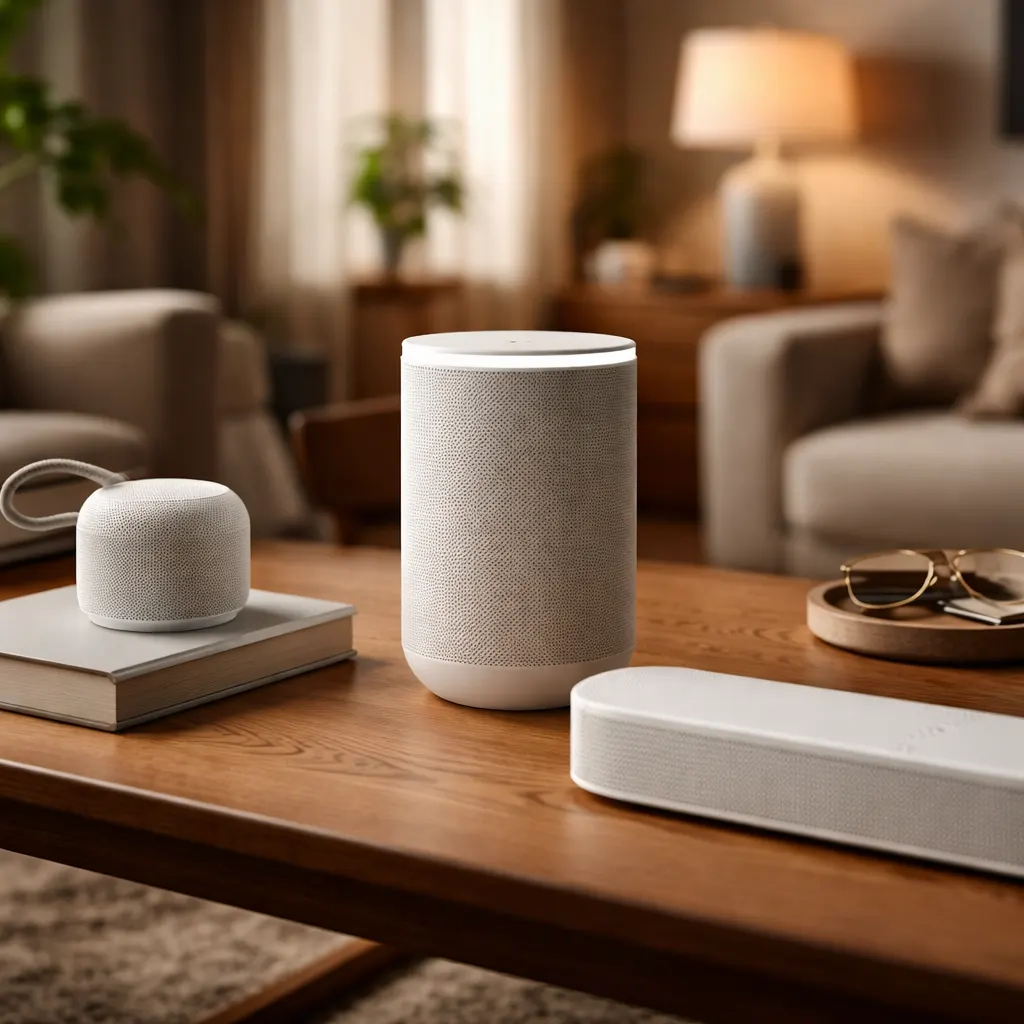
Sonos announced two new audio products and a major operating system update dubbed Sonos 27 at an event in New York City, marking its biggest product launch since a disastrous app rollout in 2024 upset customers and forced the company into damage control. The announcement centers on AI integration, including an in-house voice assistant for music and system control, alongside the Ace Ultra headphones and Beam Ultra soundbar. Software changes form the core of the reveal, with the company betting heavily on artificial intelligence to rebuild customer trust.
The Sonos 27 operating system introduces three AI-powered features rolling out over the next 18 months. The company's proprietary voice assistant for music and system control arrives as an opt-in early access feature this fall, while Sonos 27mcp launches September 8th and allows users to connect existing AI models like ChatGPT or Google Gemini—though Google Assistant still lacks native support. Users can eventually create up to 10 custom agents with different voices and roles, such as a moody detective delivering morning news or a motivational coach offering encouragement, though this capability won't arrive until sometime in 2027. The wireless Play and Move 2 portable speakers can now function as surround sound speakers in home theater systems, automatically configuring to their new positions without app-based setup. Compatible headphones will integrate into Sonos home systems starting September 29th through a feature called headphone linking, which senses the closest speaker and transfers audio to the headphones automatically.
The Ace Ultra headphones, releasing September 29th for $449, represent what the original Ace should have been—a fully integrated part of the Sonos ecosystem. Built on Headphone Engine 2, the headphones feature custom-designed 40mm drivers and 10 microphones for noise control, delivering active noise cancellation that's twice as effective at key frequencies compared to the original Ace. According to Brandon Holley, senior director of product development, the headphones perform 2.2 times better at 65Hz—the typical frequency of an HVAC system—and 1.8 times better at 120Hz, the airplane drone range. Battery life extends to 35 hours with ANC enabled, a five-hour improvement, and a three-minute fast charge provides three additional hours of listening. The Beam Ultra soundbar launches the same day for $699, featuring a completely redesigned 7.1.2 configuration with two up-firing drivers for Dolby Atmos spatial audio, compared to the 5.0 setup of its predecessor.
Sonos is rolling out updates gradually to avoid repeating past mistakes, letting users opt into early access rather than forcing changes on everyone simultaneously. The measured approach reflects lessons learned from 2024's app debacle, with improvements drawn directly from community feedback including input from the Sonos subreddit. App updates arriving September 8th include new home, system, and search tabs, a pinnable room sort option, and a virtual volume knob controlled with two fingers like a physical component. Lockscreen controls for volume and play/pause began rolling out August 17th, while system health views and presets arrive later this fall. The combination of deeper ecosystem integration for headphones, improved hardware specifications, and staggered software releases suggests Sonos is attempting to rebuild credibility through incremental, user-focused enhancements rather than sweeping overhauls. Whether AI-powered custom agents delivering motivational messages or moody news briefings will resonate with users remains an open question, but the company is clearly banking on personalization and choice to differentiate itself in an increasingly crowded smart audio market. The real test will be execution—Sonos can't afford another fumbled launch if it wants to win back customers who felt abandoned last year.