
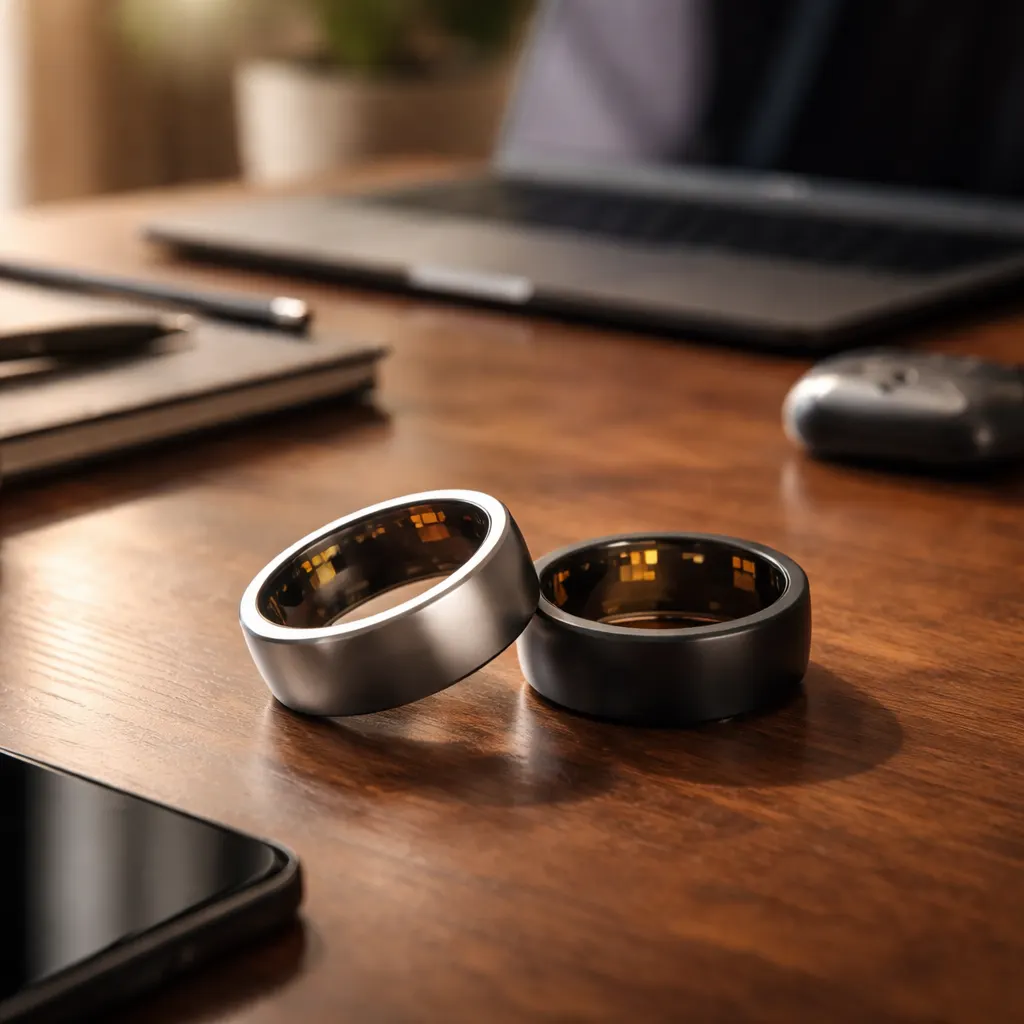
Ultrahuman, an Indian startup recognized for producing smart rings, has secured $70 million in a fresh funding round that includes investment from Qualcomm's venture division, according to a September 3 report from TechCrunch. The financing values the Bengaluru-based company at $365 million, roughly three times its $120 million valuation from 2023. The startup is moving beyond traditional sleep and health monitoring to develop a ring capable of running software directly on the device, potentially powering everything from artificial intelligence interactions to gaming applications.
The funding round consists of $65 million in primary equity and $5 million in debt, with participants including Qualcomm Ventures, U.S. diagnostics company Labcorp, Alpha Wave, Blume Ventures, Nexus Venture Partners, and Alteria Capital, Ultrahuman founder and CEO Mohit Kumar disclosed. The company currently operates at an annual revenue run rate of $140 million, marking approximately 45% growth from the previous year, and anticipates reaching a $200 million run rate by January 2027. Ultrahuman has sold around 800,000 rings to date, up from roughly 700,000 in February, with about 12% of users paying for PowerPlugs, the startup's subscription-based software offerings. The U.S. represents the company's largest market, accounting for about 45% of revenue this quarter, while India contributes approximately 11%. Demand for the new Ring Pro device in the U.S. is currently running at 18 to 20 times the startup's available supply, and the company expects to triple its previous U.S. sales volumes over the next four quarters as production scales up.
Kumar told TechCrunch that "all ring devices today are like trackers," explaining that users wear the ring to measure heart rate, movement, and sleep. Ultrahuman's objective is to transform the ring into something more like a computer, where programs and algorithms execute on the device itself rather than relying on a phone or cloud. The startup is collaborating with Qualcomm on a new ring that will incorporate the chipmaker's silicon alongside Nordic Semiconductor chips currently used in existing devices. Quinn Li, global head of Qualcomm Ventures, stated that "the future of AI is personal, ambient, and always on," noting that Ultrahuman is constructing a new generation of personal AI devices. Some capabilities will arrive on the existing Ring Air and Ring Pro through a software update by the end of September, including features allowing the ring to function as a game controller and interact with AI applications, with support for third-party developers to build new features.
The enhanced computing power will enable more software and algorithms to run directly on the ring, decreasing dependence on external devices, and could unlock use cases well beyond health and sleep tracking, according to the report. Ultrahuman plans to leverage the ring's position on a user's finger to act as a precise pointing and interaction device while simultaneously capturing physiological context such as heart rate, temperature, and movement. Kumar envisions applications where the ring could work as a pointer or mouse, a game controller, a car key, and an interface for AI interactions, with games potentially responding not only to player movements but also to signals like heart rate and body temperature. The company is also partnering with Labcorp to explore whether blood-flow signals captured by the ring, when combined with blood-test data, could help identify health risks in areas including cardiovascular health, fertility, and aging.
Ultrahuman intends to deploy some of the fresh capital to strengthen its presence in markets such as India and the UAE, where physical stores and offline touchpoints help drive sales, though this expansion alongside spending on clinical research and product development may prevent profitability this year. Kumar told TechCrunch the startup wants to show about eight quarters of profitability before pursuing a public listing, a track record he expects could take eight to 10 quarters to establish, with 2028 as the earliest window for an IPO. Unlike competitor Oura, which is reportedly considering a September IPO, Ultrahuman is taking a longer path to the public markets while betting that turning rings into programmable computers will open a significantly larger market than health tracking alone. The company's strategy hinges on whether developers will embrace building applications for a ring-based platform and whether consumers will see value in a wearable that bridges the gap between passive health monitoring and active computing, a shift that could redefine expectations for what belongs on a finger versus a wrist.