
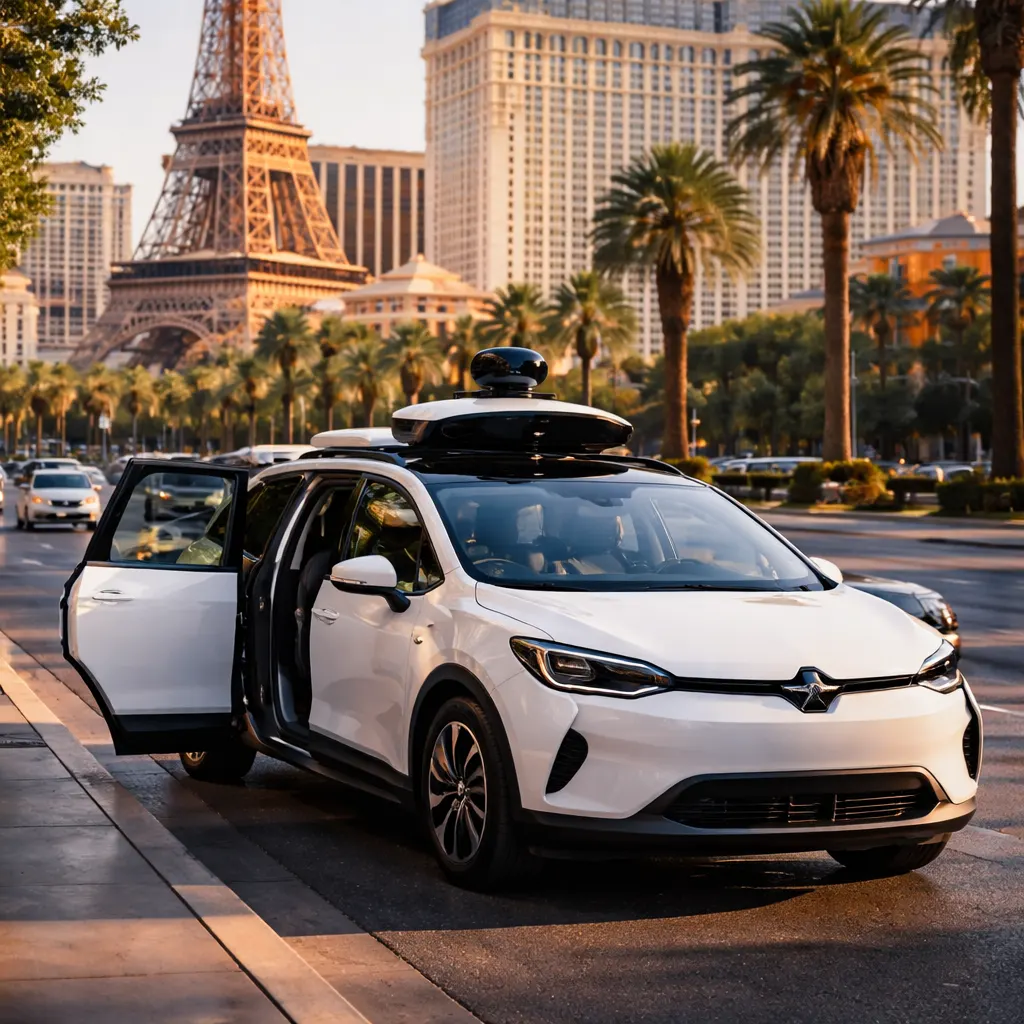
Waymo has started allowing public riders to use its autonomous taxi service in Las Vegas, just weeks after Nevada transportation regulators granted final clearance. The Alphabet-owned company announced Monday it will roll out invitations gradually, following the same launch approach it has used in 14 other cities. Las Vegas marks the company's 15th market as it races to expand operations across the United States and Europe while competitors including Tesla, Zoox, and others work to narrow its advantage.
Waymo is deploying "dozens" of its new Ojai minivan robotaxis to start, covering a zone that includes the Strip south of Highway 589 and extending into Boulder Junction, according to a company spokesperson. Members of the public must request an invitation and wait for an access code, though Waymo typically opens service to all users within one to two months of an official launch. The fleet and coverage area will grow over time. Nevada regulators have authorized Waymo to operate up to 1,000 autonomous vehicles over the next year, while Tesla received approval for up to 5,000 and Uber for up to 1,000 robotaxis through partnerships with Hyundai subsidiary Motional and Zoox. Combined, these permits could put up to 7,000 robotaxis on Clark County roads over the next 12 months, though it's unlikely the three companies will reach those totals.
The report notes that Waymo currently maintains a fleet of more than 4,000 robotaxis spread across more than a dozen cities. Tesla's Cybercab chief engineer Eric Early told state regulators during an August meeting that the company would be "extremely happy and satisfied if we could get ourselves up to 2,500, maybe a bit higher than that in the next year." The article states that even without hitting maximum permitted numbers, the city could be saturated with robotaxis within the next year. Zoox is already running a commercial robotaxi service in Las Vegas, while Tesla and Motional are planning to launch their own operations there.
Waymo's Las Vegas launch follows a rapid expansion push, with the company opening service to invited members of the public in Denver, San Diego, and Tampa earlier this month. The company now operates in Austin, Dallas, Houston, Los Angeles, Miami, Nashville, Phoenix, and the San Francisco Bay Area, though it launched and then paused service in San Antonio. The aggressive geographic expansion reflects Waymo's effort to consolidate its early mover advantage before rivals close the technology and market gap. Las Vegas represents a particularly competitive testing ground, with multiple companies converging on the same market simultaneously—a dynamic that could accelerate both innovation and regulatory scrutiny as the city becomes one of the most robotaxi-dense metros in the country. The strategy of controlled rollouts followed by full public access suggests Waymo is balancing operational scaling with safety validation, though the compressed timeline between markets indicates confidence in its deployment model.