
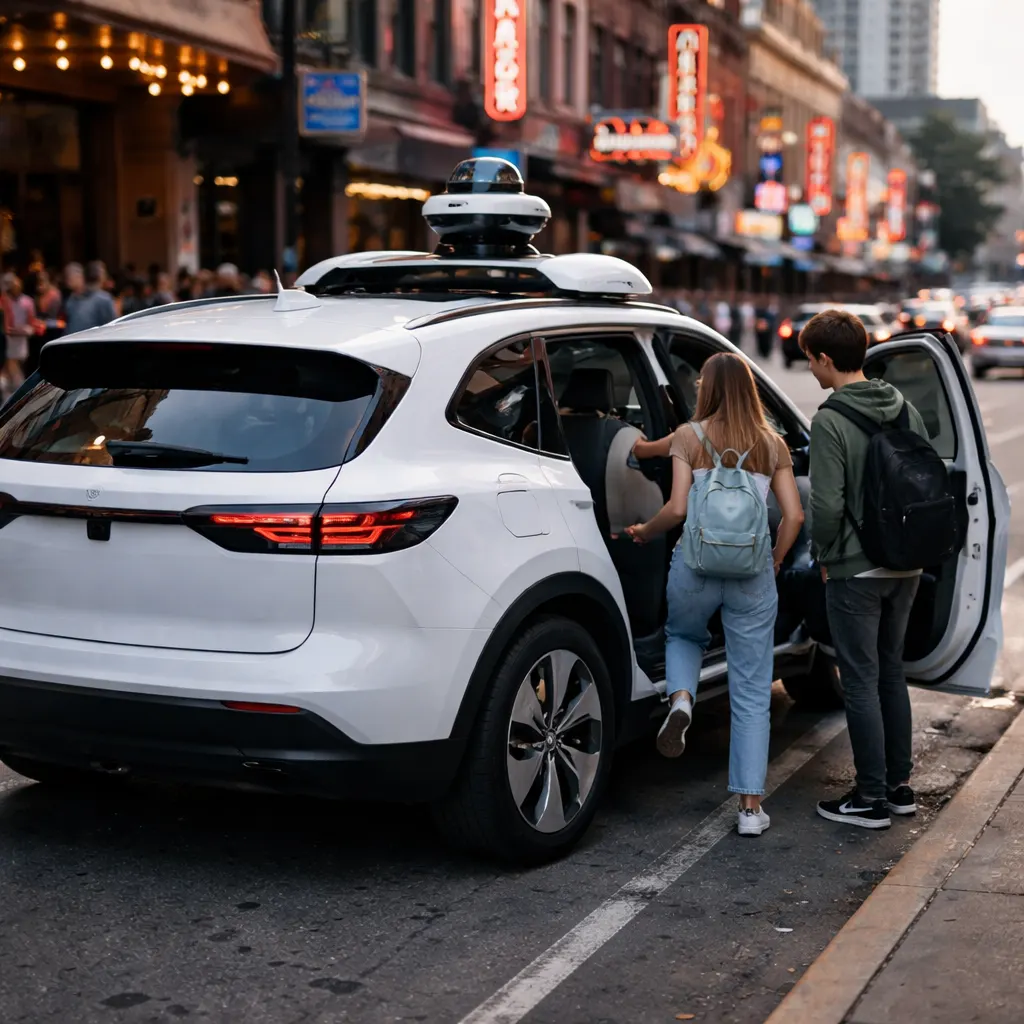
Waymo will now permit teenagers as young as 13 to use its self-driving taxi service in Nashville, marking the company's second city to offer youth accounts as it pursues growth by targeting a new rider segment, according to a report published Monday by TechCrunch. The Alphabet-owned firm first introduced teen accounts in Phoenix last year and plans to roll out similar programs across additional markets in the months ahead. Nashville launched Waymo service only five months ago, in April 2026, covering a 50-square-mile zone, and the robotaxis became available through the Lyft app earlier this month.
Waymo's paid trips have grown tenfold over the past two years, climbing from 50,000 weekly rides in May 2024 to more than half a million per week earlier in 2026, the report notes. That surge has been fueled by a rapid launch schedule: the company has opened robotaxi operations in a dozen cities over that span, including Denver, Las Vegas, San Diego, and Tampa in the past month alone. Teen accounts represent a fresh avenue for expansion, targeting a demographic that typically depends on parents or public transit for transportation to school, work, and activities.
A Waymo spokesperson told TechCrunch that Nashville will be "the first of many" teen launches across multiple markets using the Waymo app in coming months, with the company planning to offer teen accounts in cities where operations are mature and local regulations permit. Teen account holders can bring up to three guests ages 13 to 17, the report states, though Waymo didn't disclose how it would verify those ages. The accounts must be linked to a parent or guardian, but once activated, teens can request autonomous rides anywhere within Waymo's Nashville service area and bring friends along for the trip.
The teen account strategy addresses a mobility gap for young riders while also giving Waymo a competitive edge in markets where traditional rideshare drivers must be adults. Parents may prefer their children traveling in a robotaxi rather than in a car driven by another teenager, the report suggests, though it also acknowledges the potential for disruption when four adolescents share an unsupervised vehicle. The move underscores Waymo's broader push to scale quickly through geographic expansion and demographic segmentation, leveraging the logistical advantages of autonomous fleets that don't require human drivers for each trip. As the company extends teen access to more cities where its robotaxi networks have matured, it's betting that families will adopt self-driving rides as a routine solution for youth mobility, turning what was once a novelty into a staple of suburban and urban transportation. The question for competitors and regulators alike is whether autonomous vehicles can maintain safety and order when the passengers are teenagers—and whether that trade-off will reshape how cities think about mobility for minors. For Waymo, the answer seems to be that the opportunity outweighs the risk, and that capturing younger riders now could build loyalty that lasts well into adulthood.