
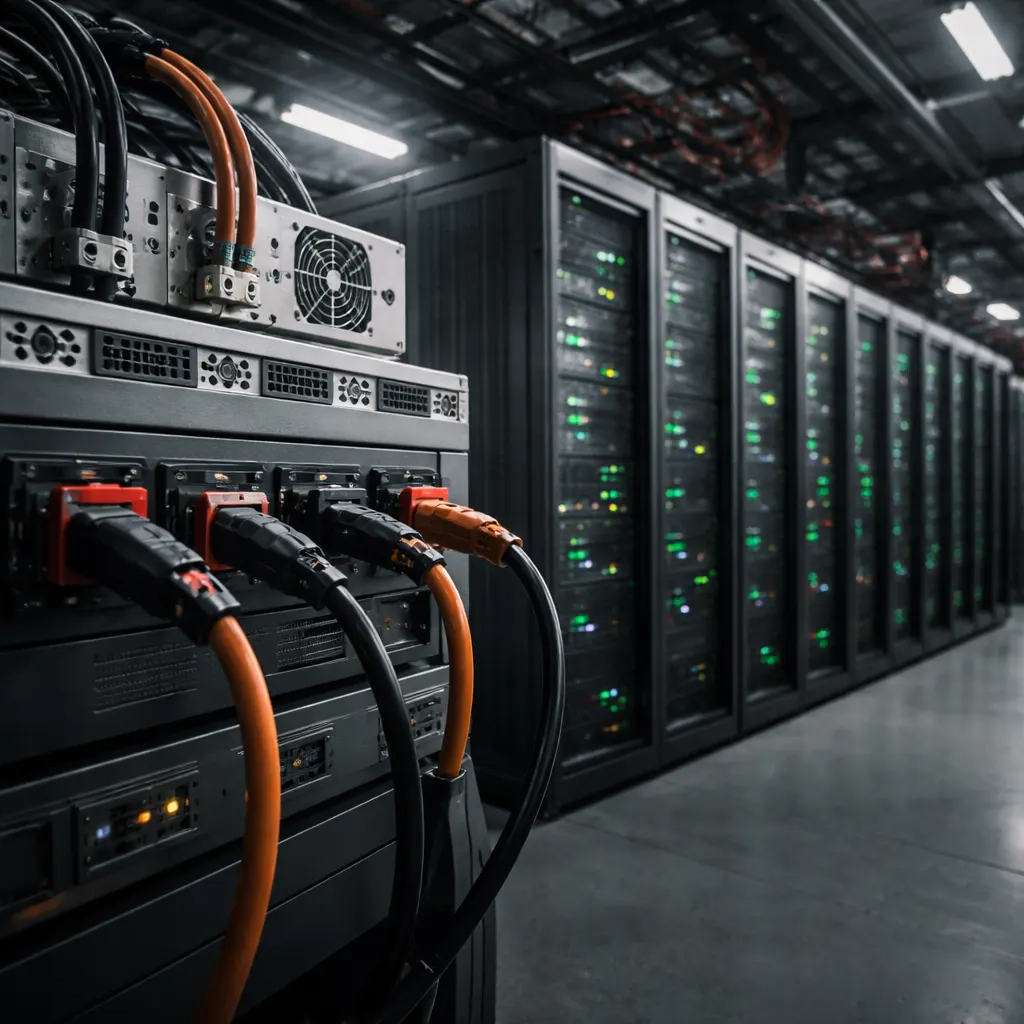
Major technology companies including NVIDIA, Google and Microsoft are working through the Open Compute Project to establish 800-volt direct current as an open standard for next-generation AI data centers, according to a Channel Insider report published this week. More than 80 equipment and infrastructure firms are now participating in the ecosystem, while Eaton has begun developing 800 VDC infrastructure alongside its current rack-level systems. The shift reflects broader pressure on data center power architectures as GPU-intensive workloads push rack densities higher and force facilities to rethink how electricity reaches computing equipment.
The scale of the challenge is substantial. The International Energy Agency forecasts that worldwide data center electricity use will approximately double from 485 terawatt-hours in 2025 to roughly 950 TWh in 2030, with AI-focused facilities growing even faster. Inside those facilities, higher density creates a current problem: supplying more power at lower voltages demands greater current, which translates to larger conductors, increased losses and additional heat. The Open Compute Project's Open Rack V3 ecosystem already uses 48-volt DC busbar architectures, while Eaton's forthcoming 50V DC system is engineered for both conventional 19-inch racks and 21-inch ORV3 racks, with power ratings spanning 33 kilowatts to 132 kW per rack.
According to the report, NVIDIA states that moving from current lower-voltage rack architectures toward 800 VDC reduces current, copper requirements and cable bulk while permitting fewer power-conversion stages. Eaton identifies system integrator builds, enterprise and colocation environments, AI and high-performance computing deployments, and OCP migration projects among its target applications. NVIDIA's own roadmap explicitly includes hybrid architectures intended to introduce 800 VDC power racks into facilities with legacy AC infrastructure, the report notes.
Higher-voltage DC distribution can lower current while eliminating some conversion stages between the utility feed and IT equipment, the report explains. That matters because delivering electricity at lower voltages requires greater current, which can mean larger conductors, greater losses and more heat. The emerging market is best understood as a continuum rather than a wholesale replacement, according to the report: existing facilities can continue operating AC infrastructure while introducing DC closer to high-density compute, rack-level 48- or 50-volt systems offer another path, and 800 VDC is being positioned for future AI environments with substantially greater density. For channel partners, power density now affects distribution, backup requirements, cooling, physical rack design and serviceability, meaning infrastructure decisions become interconnected earlier in the design process.
The report argues that the opportunity for solution providers, integrators and infrastructure partners isn't simply selling a different power product. It's helping customers determine when existing AC infrastructure remains sufficient, when rack-level DC makes sense, how to design hybrid environments, and when future workloads justify a more fundamental architectural shift. Partners accustomed to selling servers, uninterruptible power supplies, racks and power distribution as relatively discrete infrastructure categories may need to approach AI projects more holistically, the report concludes, while hyperscalers may be setting the direction today but channel partners should watch closely for when their customers begin following it. The transition from traditional AC designs toward rack-level DC and eventually 800 VDC affects not only power distribution but also backup systems, cooling, rack design and serviceability, forcing partners to think about those systems as an interconnected architecture rather than separate purchases. Channel firms that can bridge the gap between existing facility constraints and emerging density requirements will likely find themselves positioned as strategic advisors rather than equipment vendors, though that shift demands deeper technical fluency across previously siloed domains.