
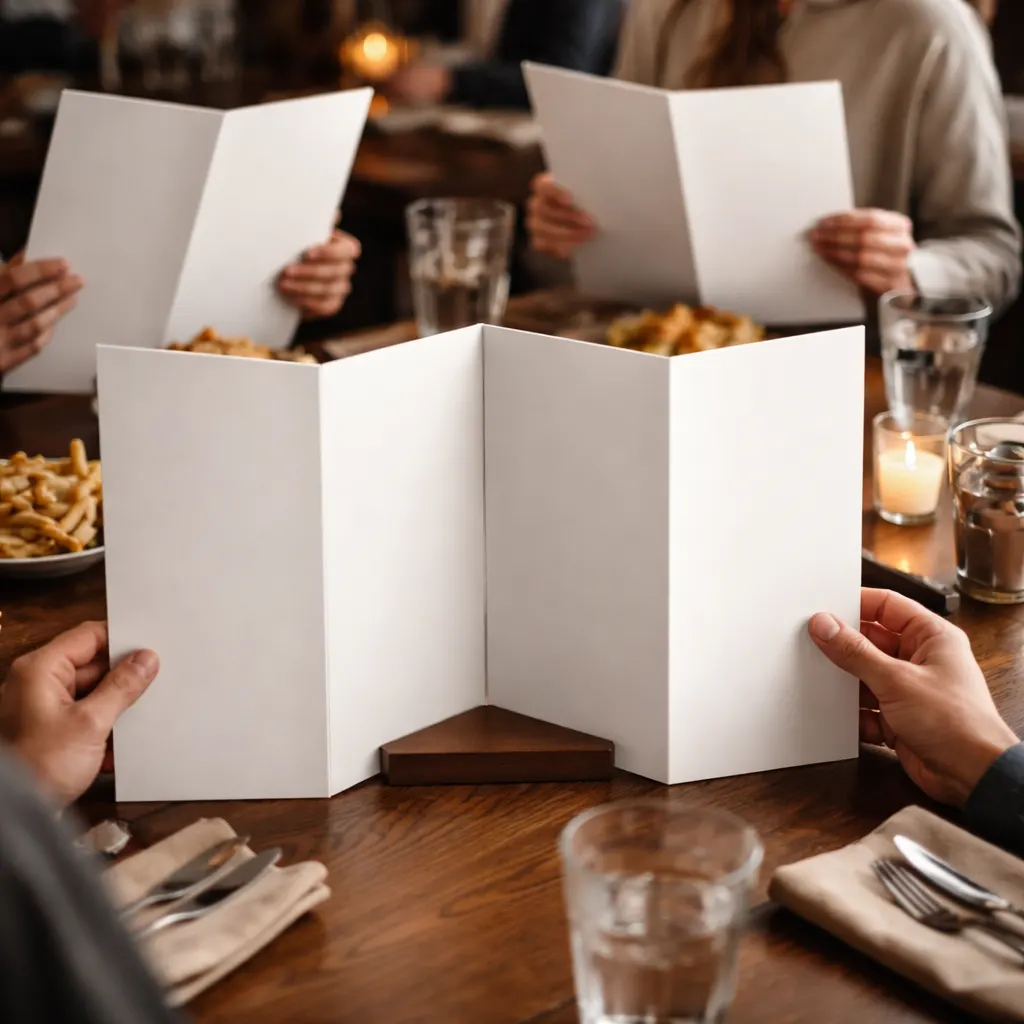
Restaurants deploying artificial intelligence to generate menu illustrations are producing images that provoke an "uncanny valley" effect in customers, eliciting disgust and unease even when viewers can't immediately explain why, according to a September 3, 2026 analysis by TechCrunch senior writer Amanda Silberling. The investigation examines how AI-generated food imagery has infiltrated the restaurant industry, creating eerily flawless, precisely symmetrical illustrations that range from egregiously fake—like burritos with cheese resembling avant-garde art—to ordinary-looking images that only reveal their synthetic origins upon closer inspection. The menus all share a specific aesthetic where every ice cream scoop appears perfectly round and shrimp seem genetically modified into "Lovecraftian food horrors."
The homogenization stems from how diffusion models and large language models are trained on vast datasets, then identify patterns to predict what users want when they request something like a burger restaurant menu. Reality Defender CTO Alex Lisle told TechCrunch that much of this AI-generated content "looks like a Chili's menu from 2015, and there's a reason for that"—the corpus of training data drew heavily from that era of restaurant marketing materials. When users make a menu in ChatGPT and then edit it 100 times to adjust small details like prices or item names, the food images progressively become rounder and smoother with each iteration, as demonstrated by X user Labtec in an August 19, 2026 experiment that TechCrench replicated with similar results. Researchers at the University of Duisburg-Essen in Germany discovered that AI-generated food images exhibiting this almost-real quality provoked more disgust and unease than images that were obviously fake.
The problem reflects a phenomenon called convergence, where AI models asked to generate fast food menus reference similar-looking chains like Wendy's, Burger King, and McDonald's, producing outputs that mimic and reinforce that shared style if the AI-generated menus end up back in training data. "The optimization of the data sets is for pleasingness, or you know, not being offensive, and so there's a way that turns into homogenization," Lee Rainie, Director of the Imagining the Digital Future Center at Elon University, explained to TechCrunch. Convergence differs from the more extreme "model collapse"—which Lisle compared to mad cow disease, where feeding a model's outputs back into itself causes the whole system to fail—but still degrades output quality by shaving off the distinctive edges of images and language.
Rainie noted that people possess "an almost unexplainable sense" when viewing AI-generated content compared to something real, a sensibility they find hard to articulate but recognize instinctively, explaining why backlash against restaurants using AI menus has been so pronounced. The cultural squeamishness only intensifies because, as Lisle observed, society has always operated on the principle that seeing and hearing equals believing, with court systems built entirely around videotaped evidence as the gold standard—a foundation that no longer holds. If customers react so negatively to these images, the analysis suggests, that's probably reason enough for restaurants to abandon AI menu generation, though the issues producing perfectly browned hamburger buns extend far beyond the dinner table into fundamental questions about visual evidence and trust. The business case for AI detection tools like Reality Defender exists precisely because these problems have become widespread enough to demand technical solutions, yet the discomfort may prove more powerful than any verification technology in pushing establishments back toward authentic food photography.