
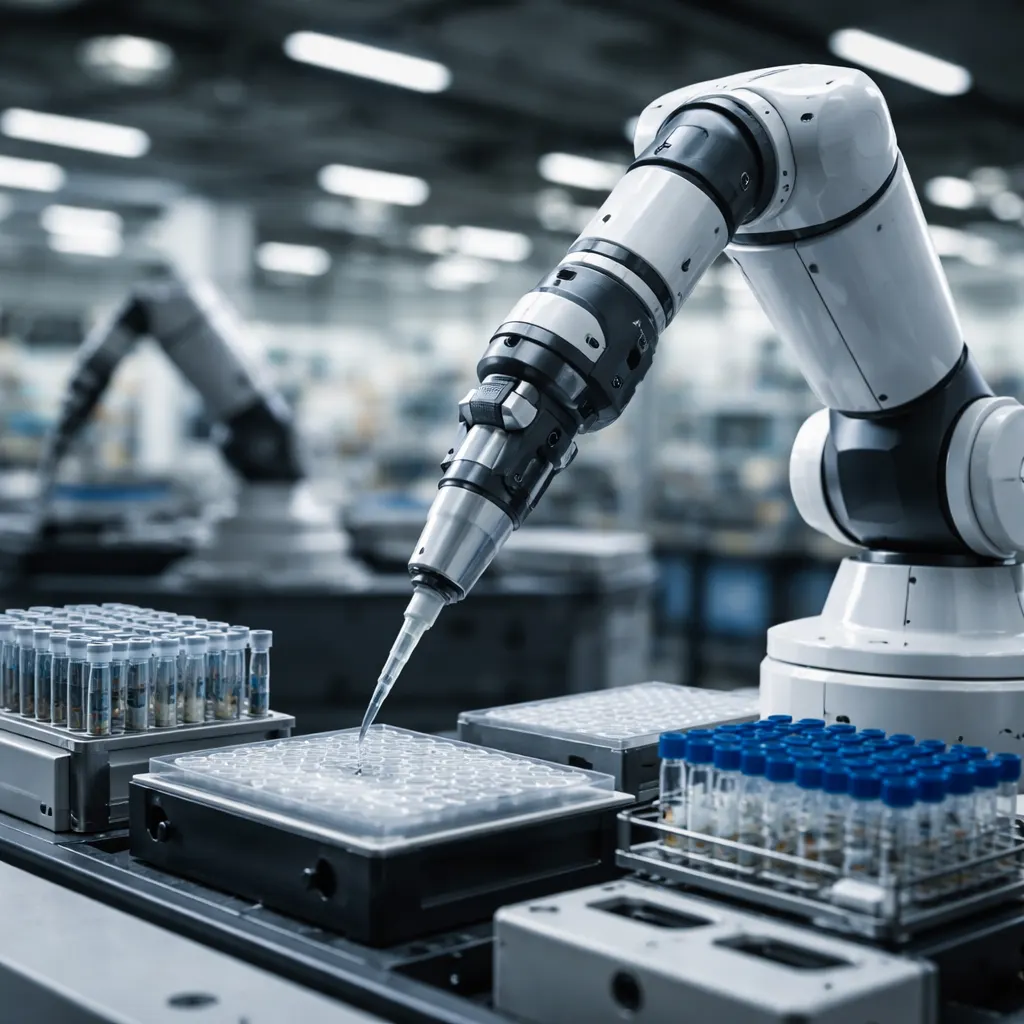
Anthropic on Thursday introduced a protocol designed to allow artificial intelligence agents to operate physical devices in laboratories, manufacturing plants, and robotic systems. The Model Hardware Standard, or MHS, aims to streamline how AI models like Claude connect to and control equipment that currently requires weeks or months of custom integration work. The company is testing the protocol with research partners before releasing it as open-source software, citing the need for additional safety evaluations before widespread deployment.
The protocol is currently being tested at Howard Hughes Medical Institute's Janelia Research Campus in Maryland, with applications now open for other organizations with suitable lab or industrial hardware to join the research preview. Biotechnology firm Genentech has used the standard to run a drug-discovery experiment with real-time error handling, while quantum computing company QuEra applied it to boost laser stabilization accuracy for its machines from 58 percent to 99.3 percent. Major technology and automation companies—including AWS, Automata, Danaher, Doosan Robotics, MBF Bioscience, Qiagen, Tecan, and Universal Robotics—plan to integrate MHS support into their platforms and equipment.
According to Anthropic, the protocol slashes integration time from weeks or months down to hours or minutes by serving as a universal translation layer between diverse industrial devices. The company explained that "most devices don't communicate with each other, instead requiring specialists to build bespoke integrations." The driver software relies on a limited set of basic commands like "read" and "write," making connected devices discoverable in a standard format while letting users provide information about device functions through conversational setup with the AI model. The technology allows AI agents to interact with equipment through three pathways: the Model Context Protocol, command line interfaces, and API code.
The protocol works by creating a standardized format for programmable interfaces that many industrial machines already offer but that remain difficult for developers to connect due to the highly fragmented ecosystem of devices. The driver uses tags to convey details about device capabilities and produces reference files describing equipment characteristics, enabling AI agents to issue commands to connected instruments, monitor experimental results, or adjust controls. This approach mirrors how simple tools like Bash can power AI agents—through a small set of versatile primitives rather than device-specific programming. The standardization addresses a longstanding bottleneck in laboratory and factory automation where each piece of equipment demands specialized integration expertise.
Anthropic says there's more work ahead before open-sourcing the protocol, noting that large language models still lack physical intuition since they've learned about the physical world from text and images rather than direct experience. The research preview will allow the company to develop more comprehensive safety evaluations and strengthen protections for deploying AI in physical environments. For labs and factories struggling with weeks-long hardware integration cycles, the technology promises to make AI-driven automation practical at a scale that custom solutions never could. The question isn't whether AI will need to touch the physical world more directly—it's whether the industry can establish shared standards before fragmentation locks in incompatible approaches, and whether safety frameworks can mature as quickly as the commercial pressure to deploy.