
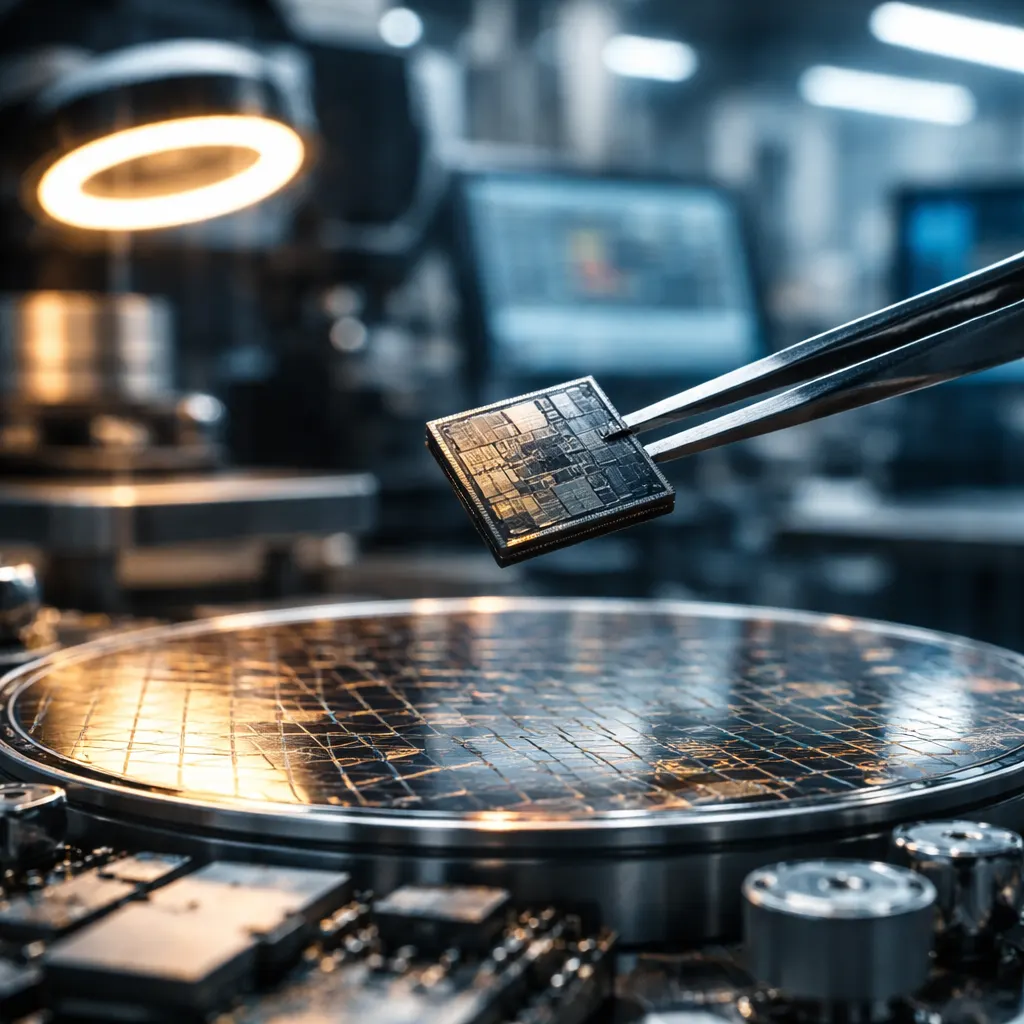
Beijing is steering loss-making artificial intelligence and semiconductor companies toward its $28 trillion equity and bond markets instead of relying on government subsidies, according to a new report from Bloomberg. The strategy fast-tracks initial public offerings for strategically important firms and opens additional bond channels, attempting to finance China's chip and AI expansion the way America does—through public equity and corporate debt rather than state grants. The shift gives companies access to roughly $26 trillion held by Chinese households, the world's largest savings pool.
Memory-chip manufacturer CXMT pulled in approximately $9.8 billion through its Shanghai Star board listing and closed 466% higher on its first trading day, briefly becoming mainland China's most valuable stock and surpassing ICBC. The company was the first to complete a new "preliminary review" pilot that allowed regulators to resolve key issues before a formal filing, taking it from submission to trading in under eight months. GPU designer Moore Threads surged 425% on its Shanghai debut and now plans a Hong Kong listing "at an appropriate time," while testing-equipment maker Semight Instruments climbed 876% when it debuted in April. Chinese tech firms have raised roughly $217 billion via IPOs and bonds over the past two years, though the report notes US peers still raised more than $6 for every $1 Chinese companies secured.
The report describes a coordinated framework built since 2025 by the People's Bank of China, the China Securities Regulatory Commission, and the Ministry of Finance that combines bank lending, bond issuance, and long-term investment for technology. Major Chinese tech names are borrowing at an average bond coupon of about 1.9% this year, roughly 300 basis points below US peers, according to Bloomberg's tally. Tech loans reached 22% of new corporate lending in the second quarter, but most of that still went to mature companies because lenders prefer stable cash flows to loss-making research and development—which is why the state is now pushing the equity route so hard.
The report identifies domestic memory and GPU challengers with genuine engineering roadmaps as the main beneficiaries if the pipeline holds, along with Hong Kong's exchange as a secondary venue and mainland brokerages underwriting the flow. But Bloomberg notes the piece doesn't break out how much of the $217 billion actually funded new fabrication plants or research versus refinancing older debt, and it doesn't name the specific process nodes CXMT or Moore Threads can produce at scale under US export controls. The framing that this represents a decisive "break" from subsidies is the reporter's characterization, not an official policy statement, and July's tech-stock wobble already forced authorities to intervene to steady prices. The risk that lingers is the one Beijing has spent a decade trying to avoid: a retail-funded bubble in strategically favored stocks. If capital markets become the primary funding vehicle for national technology priorities, policymakers must balance the imperative to channel household savings into semiconductors against the danger of turning strategic assets into speculative plays that ultimately erode public confidence in both markets and industrial policy.