
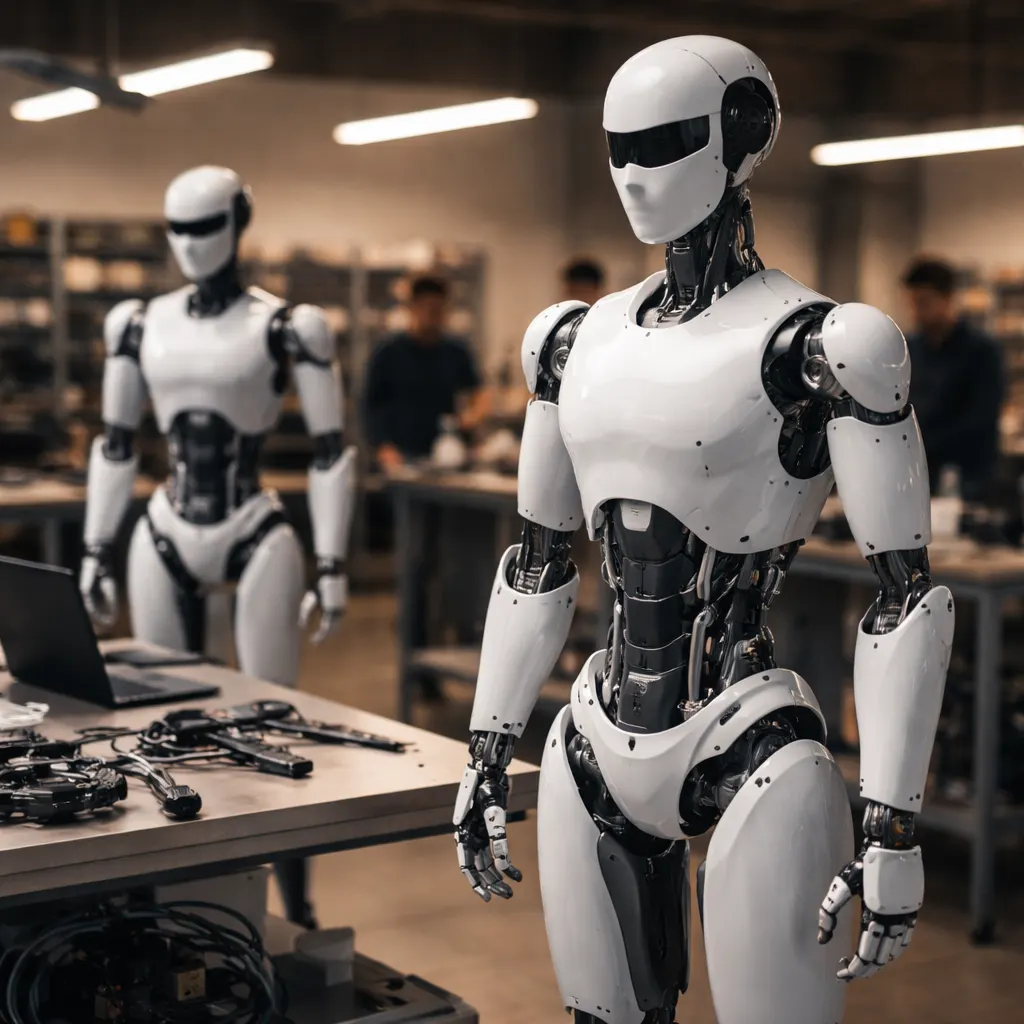
Feather Robotics, a humanoid startup founded in 2025, has surpassed $1 million in revenue by selling modular robots that developers can customize for real-world tasks, according to a report published by TechCrunch on September 24, 2026. The company positions itself as the "Android of robotics," offering a platform that allows engineers to build applications on top of its hardware and software toolkit rather than waiting for a general-purpose robot breakthrough that may be years away. Unlike Tesla or Figure, which are building both the physical robot and the foundational AI systems simultaneously, Feather provides ready-to-deploy hardware that works with existing AI models from providers like Nvidia, Skild, or Physical Intelligence.
The startup's robot costs $30,000, roughly half the price of Unitree's H2 Edu model, and features a modular design that lets developers adjust components like arm lengths for different applications. Feather raised $7.6 million in a pre-seed round led by Gradient Ventures and has spent only a fraction of that funding, according to the report. The company's robots are already operating as cooks in restaurants and performing cleanup duties in science laboratories, though Feather hasn't disclosed specific customer names. After a year of field testing to resolve technical issues, the startup is preparing for a major product launch.
Co-founder Hoa Mai told TechCrunch that successful hardware companies like Nvidia or Apple "started with a product that worked and was deployable, and then they added complexity over time," contrasting this with Tesla's approach where "you can't buy a Tesla robot today and develop on top of it." Mai, whose previous humanoid startup was acquired by 1X, partnered with Parsa Bakhtiari, a former Tesla Model 3 engineer who once reported directly to Elon Musk. According to Gradient Ventures general partner Darian Shirazi, Feather is the only U.S. startup developing a modular humanoid platform, occupying a category distinct from domestic robots like Sunday or general-purpose machines from Figure and Tesla.
Feather's strategy rests on the belief that robotics value will emerge from an ecosystem built around its hardware platform. Mai acknowledged the company drew inspiration from Chinese robotics firms like Unitree, but new restrictions on foreign-made models entering the U.S. market have positioned Feather as a uniquely domestic alternative. Shirazi argues the $30,000 price point creates a substantial market opportunity compared to hiring human laborers at $50,000 to $60,000 annually plus training, HR, and support costs. The report notes that while the market for physical AI companies remains small today, Mai expects "thousands" of such application companies to exist within five years, creating demand for a common hardware platform.
Feather's bet is that developers need hardware they can program today rather than waiting for a "ChatGPT moment" in robotics that founders and investors agree hasn't arrived yet. The company aims to power the coming wave of physical AI applications by providing the modular foundation that enables experimentation across diverse use cases, from food service to laboratory work. For businesses weighing robotics investments, the tension between specialized platforms and general-purpose moonshots will shape not just which vendors survive but how quickly automation economics become viable across industries. The modular approach may prove either a pragmatic bridge to the future or a detour that fragments development efforts when integrated systems eventually mature.