
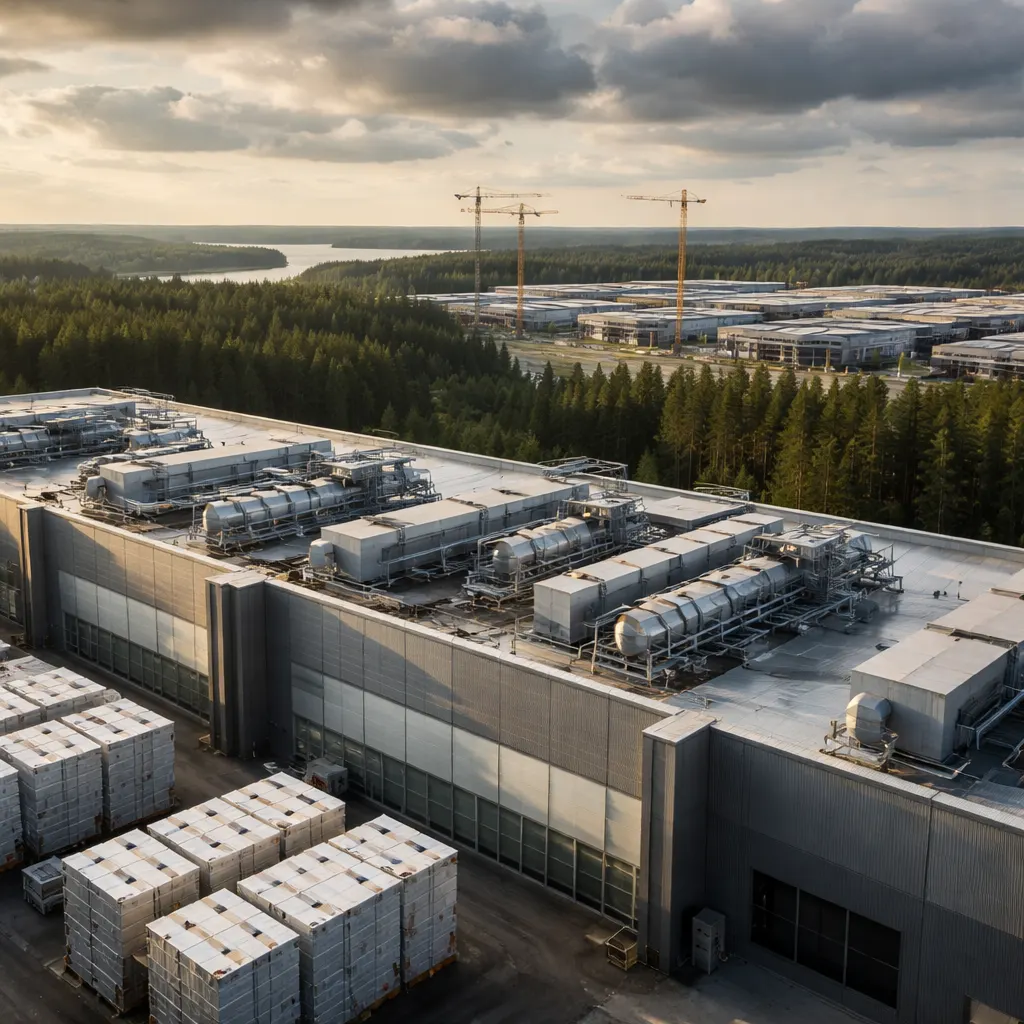
Google is committing at least €13 billion to Finnish data centers and digital infrastructure in 2027 and 2028, the company's largest European investment to date, according to an announcement covered by Channel Insider. The buildout responds to rising demand for AI computing capacity and will expand Google's European footprint beyond its existing Hamina facility to three additional northern Finland locations. The investment represents a significant escalation in the company's regional infrastructure strategy, bringing hundreds of local suppliers and thousands of jobs into a multi-year construction and operations timeline.
The Finnish expansion will span data centers in Kajaani, Muhos, and Vaala, adding to Google's current Hamina operation. The company estimates the buildout will generate more than 37,000 jobs across Finland, including roughly 16,000 construction positions. Once facilities are operational, Google projects they'll sustain about 7,000 jobs each year through direct hiring and companies providing equipment and services. More than 600 Finnish suppliers worked with the Hamina data center between 2023 and 2025 across construction, operations, and network infrastructure, establishing a local technology ecosystem the new projects can draw from.
Energy planning is already underway for the northern sites, with Google collaborating with Fingrid and Business Finland to choose locations near current grid infrastructure. The company has signed a 22-year agreement with Fortum connected to the Loviisa nuclear plant, while wind contracts and a planned 94-megawatt battery system near Kajaani provide additional power support. Elisa, a major Finnish telecom provider, is supplying connectivity for the new data centers, and Nokia is working with Google on optical and IP networking, reinforcing existing supplier relationships as spending moves into additional locations.
The report advises Google Cloud-focused systems integrators and managed service providers serving European enterprises to start by identifying customers already facing compute availability constraints or planning larger AI deployments. Partners should map how much capacity each customer expects to need and when, then evaluate whether future Finnish infrastructure could meet data-location and performance requirements. The report emphasizes that services work doesn't have to wait for new capacity—partners can prepare customers by improving data readiness, reviewing access controls, and designing migration paths that remain useful across deployment locations. However, the report cautions that Google hasn't specified how much additional customer-facing compute the investment will create, and partners should confirm service availability, accelerator access, and support commitments before changing customer architectures around Finland or promising delivery dates based on the investment alone. For channel partners operating in the European market, positioning around hyperscaler capacity expansions requires balancing customer expectations against infrastructure timelines that remain outside their direct control. Energy procurement woven into AI infrastructure planning also signals a shift in how large-scale deployments will be structured going forward.