
Maven Robotics has emerged from stealth mode after securing $100 million in funding from RoboStrategy, LocalGlobe, Vine Ventures, and XTX Markets Ventures, according to a report published by TechCrunch on September 10, 2026. The Santa Clara-based startup, founded in 2024 by CEO Hamza Derbas and his brother Khalid, won its first major contract despite having only "a cartoon of a robot and a team of people" by focusing on end-to-end workflow automation rather than selling individual robots. The company now operates as many as eight robots working 16-hour shifts with uptime of 99% or higher after two years of deployment with its initial customer and additional partners.
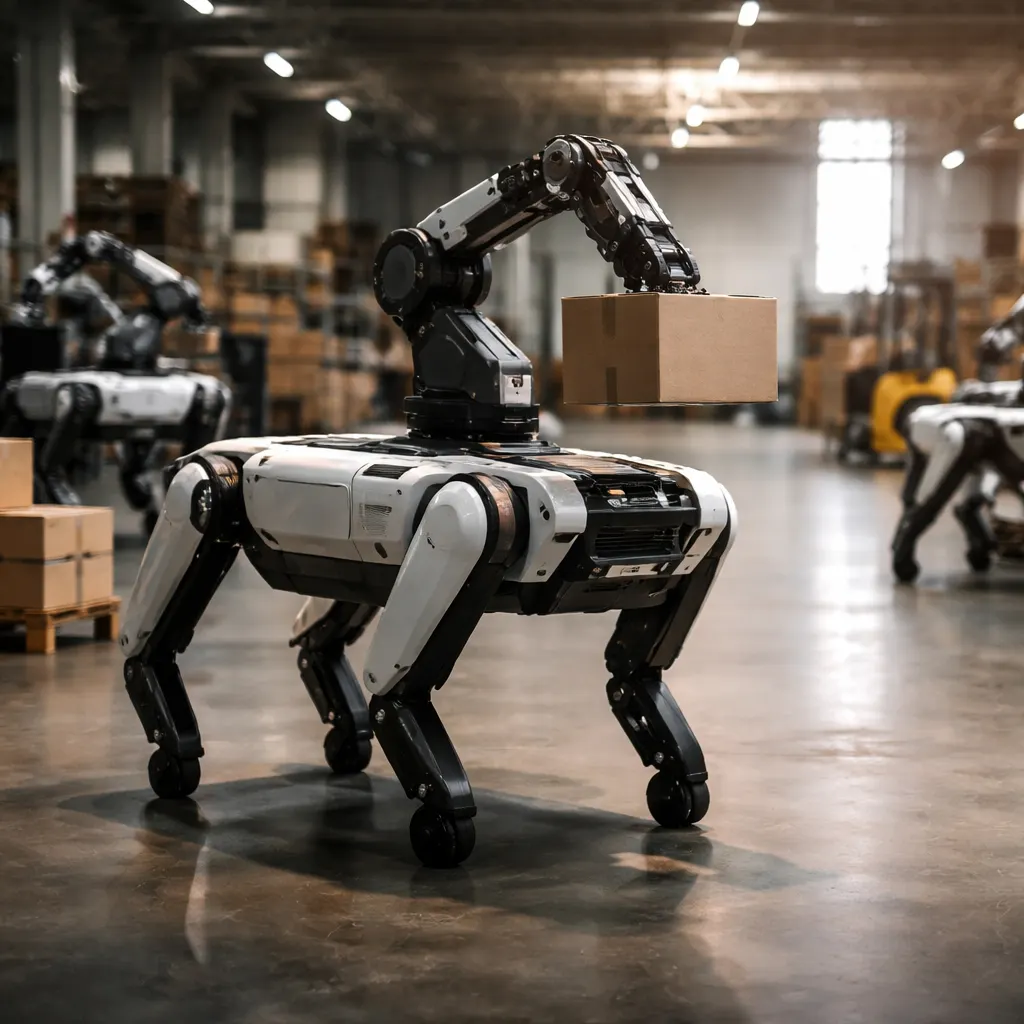
The startup's current fleet of wheeled robots can travel at speeds up to 10 miles per hour and feature dual arms capable of lifting as much as 30 kilograms each. These machines specialize in "mixed palletizing" — taking wooden pallets loaded with boxed products from various factories at distribution centers and assembling new pallets with mixed goods destined for retail stores. With the fresh capital, Maven intends to manufacture 250 third-generation robots while beginning development on a fourth-generation platform. The company draws on talent from autonomous vehicle projects, particularly self-driving car teams that developed advanced methods for training autonomous hardware using real operational data through rapid feedback loops that return information from working robots within minutes or hours.
According to CEO Hamza Derbas, Maven differentiates itself by tackling complete tasks autonomously: "It hooks in from one side to a warehouse management system; product goes on trucks on the other side." The company's approach proved decisive when it beat out four established robot manufacturers for its first contract with a large consumer goods company after Derbas requested factory visits instead of pitching technology. "We saw how people were working; we zeroed in on flows we could immediately bring value to," Derbas told TechCrunch. Jack Pearson, an investor at RoboStrategy who supported the company, noted that Maven stands apart through its industrial systems expertise rather than a research-oriented culture focused on learning or particular architectures.
Maven's task-by-task strategy targets workflows that currently rely entirely on human labor, such as warehouse workers who must assemble custom pallet mixes based on real-time retail demand that can shift within 48 hours of products reaching store shelves. The company positions itself against competitors like Agility Robotics — set to go public this fall in a $2.5 billion SPAC transaction — by using wheeled bases instead of two-legged designs, which Derbas argues "make zero sense" and "are very complex, unreliable, and add unnecessary cost" when return on investment drives industrial decisions. While palletization represents an $80 billion market opportunity, Maven's next targets will demand robotic manipulation skills that don't yet exist, requiring the startup to gather more operational data and develop capabilities for handling materials before advancing toward automation and fabrication tasks. The company has created pincer-shaped gloves that let humans mimic the gripper form factor it wants for future robots, supplementing its internal systems and third-party technology sources.
Maven's immediate focus remains solving individual customer challenges in sequence, with Derbas emphasizing that "if you focus on solving problems and you pick sizeable problems, each problem is a multi-billion-dollar market." The startup's philosophy prioritizes practical deployment over model development, with Derbas stating: "We're not in the race for models — we're in the race to solve industrial labor and make this work possible at the scale the world needs." The competitive landscape for industrial robotics will likely hinge on whether Maven's incremental, customer-driven path proves more durable than breakthrough advances from frontier AI labs developing general-purpose physical models. Yet the broader automation sector may find that pragmatic execution trumps technological elegance when factory owners demand reliability over innovation.