
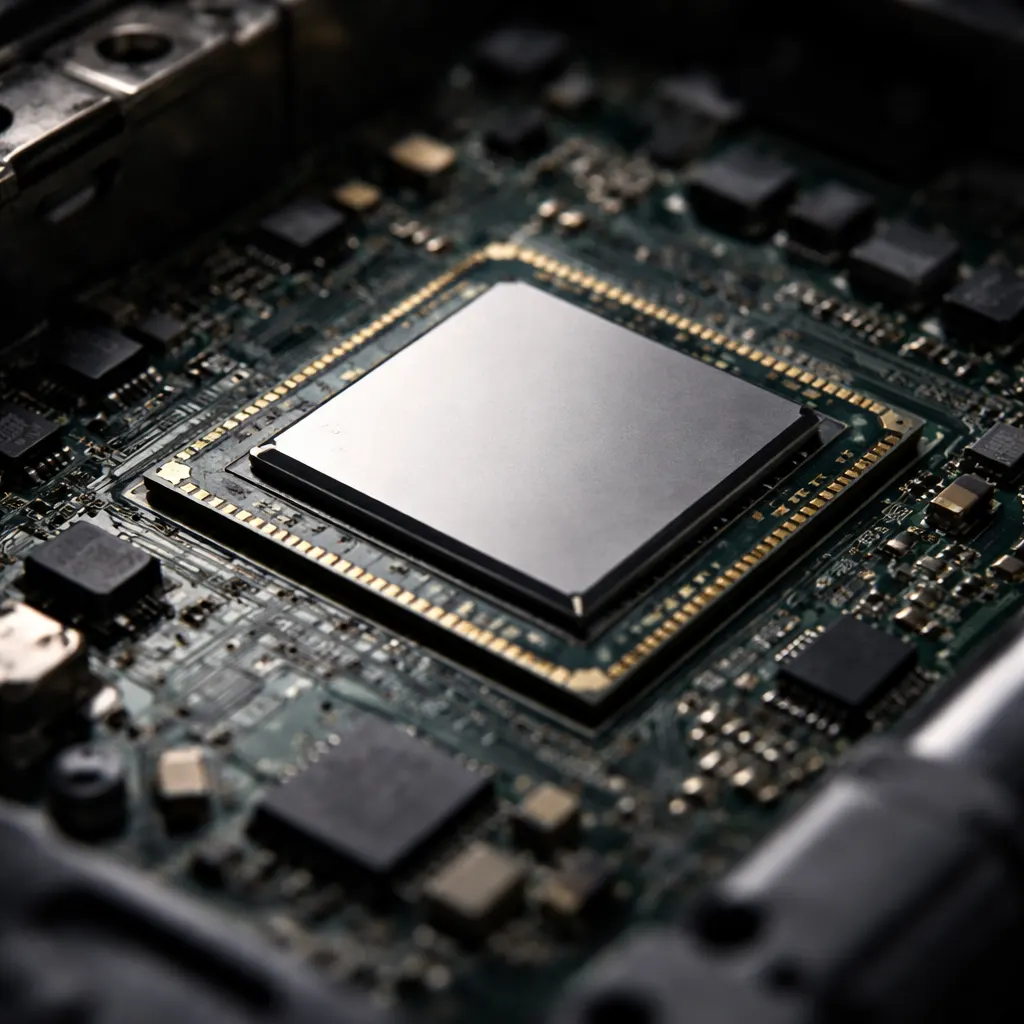
Ukrainian military intelligence has recovered an Nvidia Jetson Orin module from the wreckage of a Russian S-71 Monochrome cruise missile, according to a report released this week by the Defense Ministry's Intelligence Directorate (GUR). The discovery highlights how Western technology continues to reach Russian weapons systems despite sanctions and Nvidia's 2022 exit from the country. The agency argues the find demonstrates that current export control measures aren't preventing advanced components from flowing into Moscow's military supply chain.
The chip recovered from the missile debris is a Jetson Orin NX 16GB unit bearing the identifier TE980M-A1, which Nvidia launched in early 2023. That's more than a year after the company shuttered its Russian operations in 2022 following Moscow's invasion of Ukraine, meaning the hardware must have reached Russian hands through indirect channels after direct sales ended. The S-71M is an air-launched weapon with autonomous features that can reportedly hunt for and strike targets using optical sensors and onboard processing. Photos released by GUR show the heavily charred Nvidia component, and the intelligence directorate noted that Chinese-manufactured electronics were also found in Russian armaments.
"The use of this component may indicate the use of artificial intelligence technologies in the missile," GUR stated. According to the report, information about the S-71M indicates it can function with human supervision or in fully autonomous mode. Nvidia told The Register that Orin modules are consumer-grade products sold to diverse customers for various purposes, with military uses not part of their intended design, and that the chips aren't supposed to be available in Russia. The company explained that "pre-owned Jetsons are available through many reseller channels" and that while it can't track products after sale, it will "take appropriate action" if it determines any customer is breaking U.S. export controls.
The report explains that Orin systems are built specifically for use cases like autonomous platforms, making them capable hardware for the missile's reported functions even though they're not datacenter-class equipment. U.S. export controls have blocked shipments of advanced chips to Russia and China, and chipmakers have responded to China-specific limits by manufacturing hardware designed to meet U.S. export regulations, while third parties have reportedly used smuggling networks to get restricted higher-end parts into China. It's unclear exactly how the Nvidia part ended up in Russian possession, but GUR noted that the salvaged hardware proves Russian technology manufacturing still falls short of producing equivalent domestic components.
"The discovery of Nvidia Jetson in a new Russian missile once again demonstrates the need for increased sanctions pressure and coordination of the efforts of the civilized world," the intelligence agency concluded. The report frames the evidence as proof that existing export control regimes are failing to prevent Western technology from reaching Russian weapons targeting Ukraine. The resale market for consumer electronics creates enforcement challenges that current policy frameworks haven't solved, leaving chipmakers with limited visibility once products enter distribution channels. The tension between commercial availability and strategic control will likely intensify as more capable edge computing platforms become standard consumer products, forcing policymakers to choose between restricting everyday technologies and accepting some leakage into adversarial hands.