
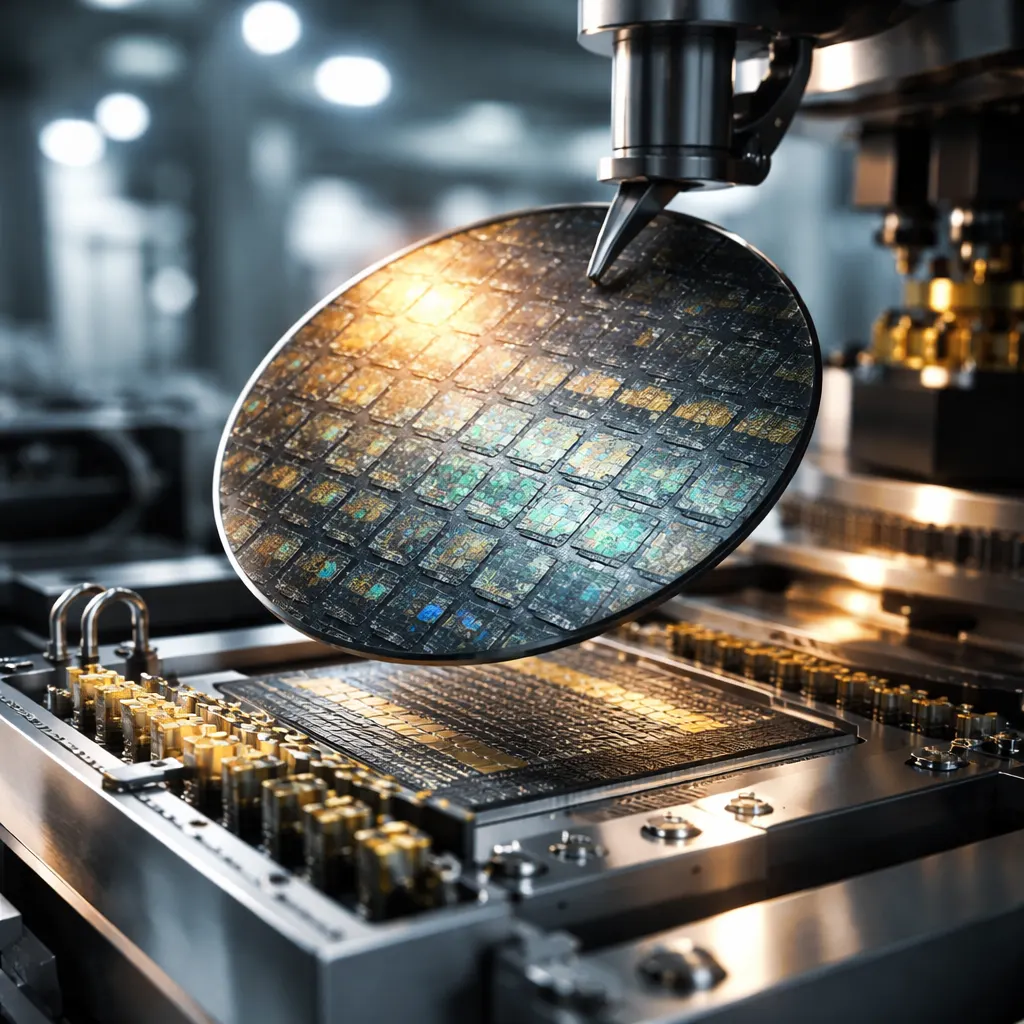
Samsung has increased prices at its contract chipmaking foundry by as much as 15% for new orders as artificial intelligence demand tightens access to advanced manufacturing capacity, according to a report from Channel Insider citing industry sources. The South Korean company lifted rates in July across multiple production processes, with customers in China and the United States facing the steepest increases. The price hikes mark a potential turning point for Samsung's foundry division, which has reportedly operated at a loss since 2022 even as the company's memory business has thrived on AI-related demand.
The price increases varied by geography and manufacturing process, the report states. For Samsung's 4-nanometer SF4 process, Chinese and American customers saw prices climb 10% to 15% compared to the previous month, while Taiwanese clients faced increases of 5% to 10%. The company also raised costs for its 5-nanometer SF5 wafers by 10% to 15%, and 8-nanometer production became nearly 10% more expensive. Demand from Chinese chip companies has proven strong enough to surpass what Samsung can currently handle, driven partly by US restrictions on advanced chipmaking equipment that have limited China's ability to expand cutting-edge production domestically. Samsung's Pyeongtaek SF4 line in South Korea has operated at full capacity since late 2025, manufacturing logic chips for clients including Qualcomm alongside base dies for Samsung's high-bandwidth memory products.
BNK Investment & Securities analyst Lee Min-hee told Reuters that "if Samsung raises prices from here, its foundry business could potentially become profitable as early as next year, earlier than previously expected." The company has expanded manufacturing partnerships with major technology firms, the report notes, including Tesla and Apple announcing Samsung manufacturing arrangements last year, and Broadcom expanding memory and foundry collaboration in July. Nvidia CEO Jensen Huang said in March that Samsung would help produce the Groq 3 language processing unit, an AI inference chip, while Google is also reportedly in discussions about SF4 production with Samsung.
The pricing power Samsung now enjoys stems from industrywide capacity constraints rather than a major technological breakthrough, according to the report. By setting rates just below Taiwan Semiconductor Manufacturing Co.'s rising price ceiling, Samsung is capitalizing on the sector's manufacturing shortfall. TSMC dominates the global foundry market with more than 70% of revenue in the first quarter of 2026, compared with 7% for Samsung, according to Counterpoint Research estimates cited in the report. Artificial intelligence demand has consumed much of the advanced manufacturing capacity at TSMC, the world's leading contract chipmaker, creating opportunities for Samsung to capture overflow business. For hardware developers, higher foundry prices could push AI hardware costs upward, particularly as chip designers compete for access to advanced manufacturing capacity.
Relying on spillover demand carries risks for Samsung's long-term competitive position. If TSMC increases capacity or AI infrastructure spending slows, some chip design companies could shift more production back to their preferred foundry, though switching manufacturers typically requires additional engineering, validation, and expense. Samsung's future market standing will depend partly on whether its next-generation 2-nanometer manufacturing yields can compete effectively with TSMC's technology. The company's ability to convert temporary pricing leverage into sustained profitability remains an open question, particularly if the current supply crunch eases or customer preferences reassert themselves once capacity constraints relax. Channel partners planning infrastructure investments should recognize that foundry economics remain fluid, with pricing advantages tied more closely to transient market conditions than to permanent shifts in competitive balance.