
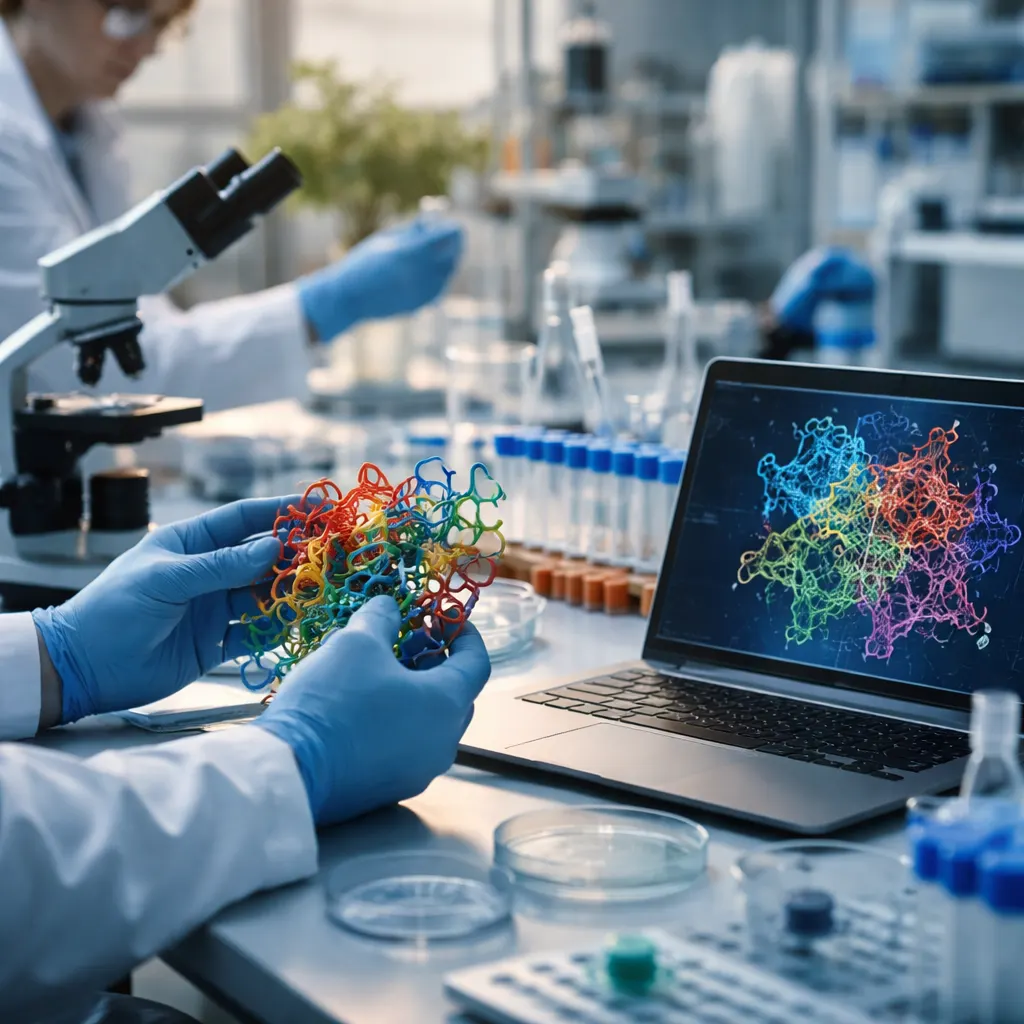
A new scientific initiative is using artificial intelligence to design and test molecules and biological functions that have never existed in nature but are physically and chemically possible, according to AI BioDesign, a project launched by the Allen Institute, the University of Washington, and the Fred Hutchinson Cancer Center. The effort is led in part by David Baker, who won the 2024 Nobel Prize in Chemistry for his work in computational protein design. The researchers aim to build databases, models, and tools that could serve as foundations for future medicines and technologies, including potential treatments for cancer and neurodegenerative diseases, as well as enzymes capable of breaking down plastics in the ocean.
The project represents a fundamental shift from traditional biology, which has historically focused on studying solutions created by billions of years of evolution. Baker and his team describe lofty goals: creating a world where cures for new diseases are developed in weeks rather than decades, where air, water, and soil are cleaned through pollutant removal and reimagined industrial processes, where crops can thrive in conditions that previously killed them, and where molecular machines extract critical minerals from waste and repair infrastructure. All proteins are constructed from the same amino acids, but they can be arranged in countless combinations to create structures never seen before. The natural world as it exists today represents only a small portion of what might be physically possible, the researchers note.
Baker explains that computational design allows scientists to evaluate many risks before a molecule is ever created in a lab. "We can screen designs computationally, test them extensively in contained laboratory settings, and subject them to increasingly realistic experimental validation before considering any real-world application," he states. According to Baker, the primary risks of exploring novel molecular territory aren't much different from those tied to any new biological technology—unintended interactions with living systems, unexpected environmental effects, or misuse. He advocates for governance structures that include monitoring and logging all synthetic DNA that's manufactured to record the sequence and its creator, creating a practical barrier to misuse and a record of any attempts with harmful intent.
The report explains that machine learning has dramatically improved scientists' ability to observe patterns that can be used for biological design, though science often progresses in stages where researchers first observe that something works and only later understand why. Strong experimental evidence can justify moving forward with projects, Baker says, but deeper understanding remains an important objective for both research and scientific inquiry overall. Much of what can't be achieved today stems from a lack of understanding or data that defines the parameters for how specific systems function or fail—which is the core of the AI BioDesign program. Proteins are the molecular machines that life has developed to create all organic matter known on Earth, and unlocking their full potential requires deriving engineering principles that make innovative new ideas achievable, including ones scientists can't yet imagine.
Baker argues that decisions about which molecules to design should be guided by a balance of potential benefits and potential harms, with applications addressing major challenges in health, sustainability, or human well-being having a strong case for development, while designs creating significant risks to public safety, security, or the environment deserve heightened scrutiny and, in some cases, clear restrictions. Leaders in the field compare the potential of these methods to historic transformations such as industrialization, electrification, and the digital revolution. The effort to explore completely novel regions of biology inevitably raises difficult questions, but the researchers believe the advantage of today's computational tools is the ability to anticipate and minimize risks before designed molecules ever leave the lab. The regulatory frameworks that govern other powerful technologies will need to evolve alongside advances in AI and biotechnology, ensuring oversight keeps pace with capability while preserving the promise of molecular engineering to address humanity's most pressing challenges.