
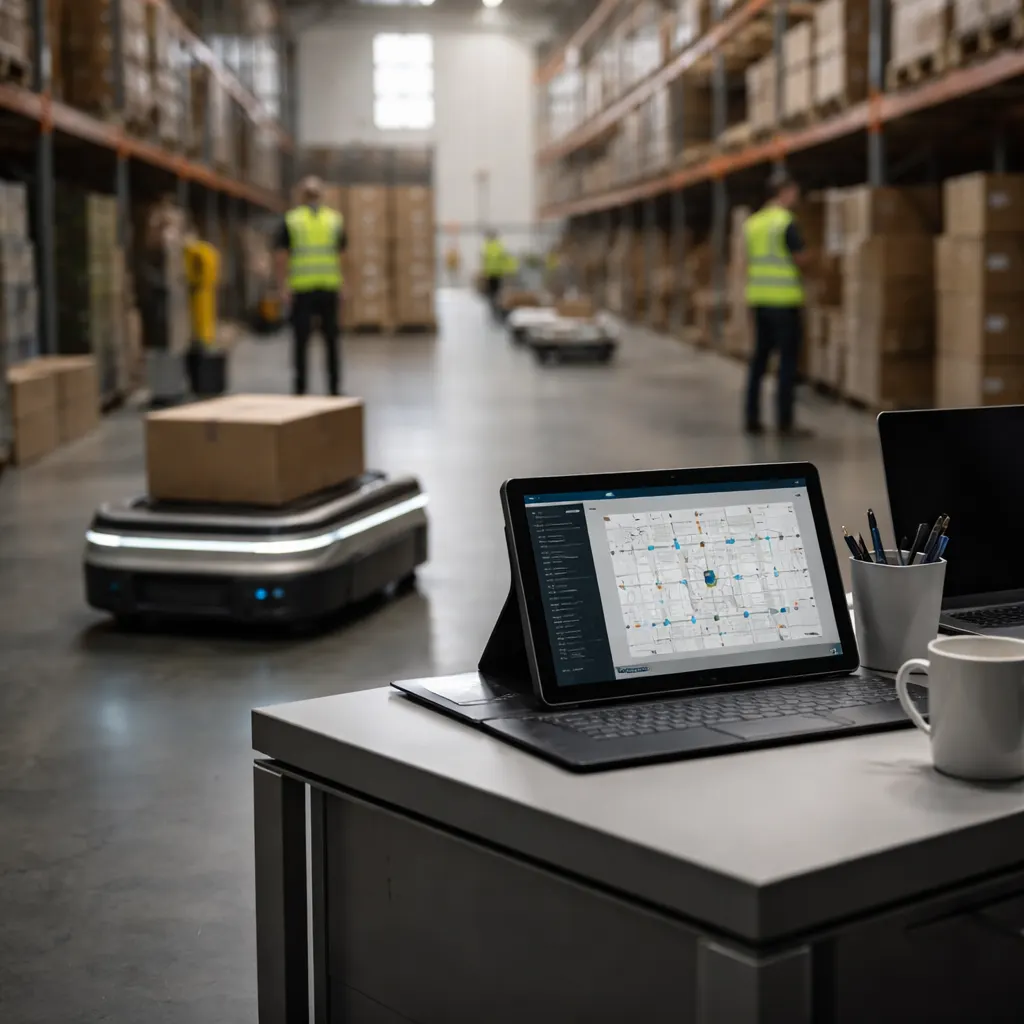
A robotics startup that doesn't build robots emerged from stealth mode Tuesday with $8 million in seed funding, arguing that the best route to successful robot deployment is skipping hardware altogether. Destro has created an AI intelligence layer designed to make robots function effectively in logistics environments, partly by coordinating human workers at the same time. The company's approach stands apart from most new robotics firms, which concentrate on discovering the optimal physical design or creating AI models capable of controlling mechanical appendages.
Destro began with a trial program at one Yusen Logistics facility in the Pacific Northwest, deploying three cart-moving robots manufactured by Miva Robotics and controlled by Destro's Vision operating system, which relies on open-weight vision-language-action models—AI systems that translate camera feeds and commands into robot motion. Human employees unload items from one truck into separate carts while the robots locate filled loads and transport them to designated locations. The operation is managed by Destro's Mothership operating system, which provides autonomous direction to workers, carts, and trucks simultaneously. Following the initial trial's success, Destro is scaling up to a complete deployment of 26 robots at the original site and launching a separate pilot with 17 robots at Yusen's Southern California facility.
Founder Manthan Pawar, who holds a master's degree in robotics from NYU Tandon and has roughly eight years of experience in U.S. supply chain and robotics, said the company is "on path to be cash-flow positive at the end of this year." Pawar attributes Destro's competitive advantage to understanding customer challenges rather than focusing on engineering possibilities. Richard Brunelle, who oversees automation for Yusen Logistics' American operations across approximately 30 U.S. facilities, told the outlet that Destro prevailed over two other prominent robot startups because of "its ability to apply autonomous direction to the whole process"—one competitor offered point-to-point cart movement without managing loading operations, while another provided fleet management tools but required human orchestration.
The company faces potential obstacles with tasks demanding greater dexterity and manipulation, according to the report. Generic robot hardware and open-source models haven't yet demonstrated capability for these operations, and it remains uncertain whether firms developing foundation models, highly dexterous appendages, or general-purpose humanoids will license those technologies to a company like Destro or attempt to capture that market segment directly. Pawar intends to replicate this cross-dock loading workflow across thousands of additional warehouses handling similar work. Base10 Partners and Bonfire Ventures led the seed round, with CoFound Partners also participating, based on confidence in this expansion strategy. For the moment, competition from futuristic robot manufacturers likely isn't pressing—Brunelle stated he hasn't identified a viable application for bipedal humanoid robots, though he's assessing a possible trial with a wheeled humanoid, and emphasized that automation must "solve a real operational problem" rather than simply showcase interesting technology. The company will present at TechCrunch Disrupt from October 13-15. Pawar's bet rests on the assumption he's identified the layer of the technology stack where value will concentrate, positioning Destro to benefit from research investment flowing into new AI models and robot components without building those components itself. Whether orchestration software can maintain a defensible moat as hardware and foundation models improve remains the central question for companies pursuing this middleware strategy.