
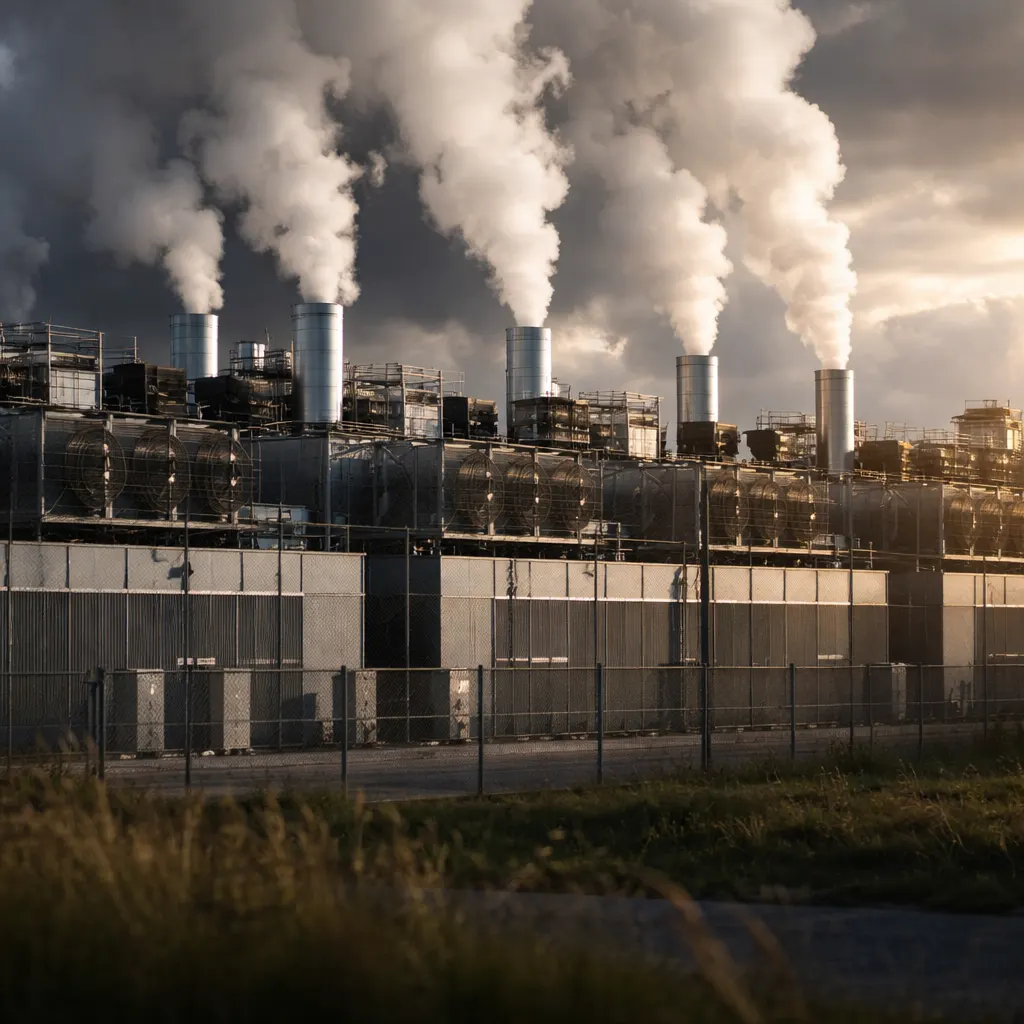
The Trump administration's weakening of environmental regulations to accelerate AI data center construction is increasing health risks for Americans, according to a report released this week by a group of former EPA officials. The alumni of the Environmental Protection Network identified 30 federal policy changes since January 2025 that they say worsen the public health threats tied to data center pollution. They're calling on the president to adopt a "Data Center Health Protection Pledge," though they acknowledge the request may be futile given the administration's direction.
Among the 30 policy actions documented in the report, 17 specifically reference AI or focus on data centers. These changes include executive measures and proposals designed to limit renewable energy initiatives while relaxing pollution standards and granting exemptions to existing factories and power plants from certain requirements. The policy shifts came after EPA administrator Lee Zeldin announced at the start of Trump's term his objective of turning America into "the AI capital of the world" through deregulation, followed by the White House and his agency rolling back dozens of rules while slashing staff and budgets at the US EPA. Trump issued an "AI Action Plan" in July 2025 that recommended "streamlining or reducing regulations" under the Clean Air Act, Clean Water Act, and Superfund law to speed up permits for data center projects and chip manufacturing facilities. The report cites research from UC Riverside, Caltech, and the Rochester Institute of Technology estimating that air pollution linked to AI could cause up to 1,300 early deaths and exceed $20 billion in public health expenses by 2028.
"You would think that an industry buildout of this magnitude, billed as a revolution, would mean more vigilance from EPA," Lynn Goldman, a pediatrician and former EPA assistant administrator, said at the briefing accompanying the release. "Instead, EPA is doing just the opposite, thinking first about industry's needs and weakening or reconsidering limits on toxic chemicals and harmful pollutants." Goldman also noted that the pollution danger extends beyond proximity to the facilities themselves: "You do not need to be near a data center to be affected, because the pollution doesn't just come from the data centers themselves." The former officials point out that the agency, originally established to "protect human health and the environment," is failing to serve as the necessary watchdog as generative AI infrastructure reshapes the American landscape.
The report argues Trump has created policy conditions that favor new natural gas infrastructure to supply power-intensive data centers, from turbines placed directly at facilities to power stations constructed exclusively for technology firms. Meanwhile, growing demand for advanced chips required by generative AI is renewing production of forever chemicals that persist in the environment and accumulate in human bodies. The Environmental Protection Network warns that the administration's deregulation campaign and opposition to renewable energy mean the surge of new AI data centers increasingly runs on polluting energy sources that can harm Americans' health even far from any data center location. The organization notes the health toll could climb even higher when accounting for the policy alterations outlined in their analysis.
Marc Boom, the network's senior director of public affairs, said during the briefing that "a more polluting AI buildout is not inevitable. It depends on the choices government makes now." The former EPA staff members contend the United States can prevent those losses by reinstating clean air and water protections and rebuilding federal agencies' enforcement capabilities. They argue EPA should be tracking how this infrastructure expansion affects pollution levels, identifying exposed populations, assessing health consequences, and making that information publicly available—which they say should define a Data Center Health Protection Pledge in practice. An EPA spokesperson responded that "in each action EPA has taken, the agency has returned regulations to the best reading [of] the Clean Air Act after years of overreach by previous administrations," while affirming the agency's dual commitment to protecting human health and the environment alongside making America the AI capital of the world. The tension between racing to dominate AI infrastructure and safeguarding public health will likely define technology policy debates as long as the current administration prioritizes deregulation over environmental oversight. Companies investing in data center capacity may eventually face political or legal pressure to address health impacts regardless of whether federal rules currently require it.