
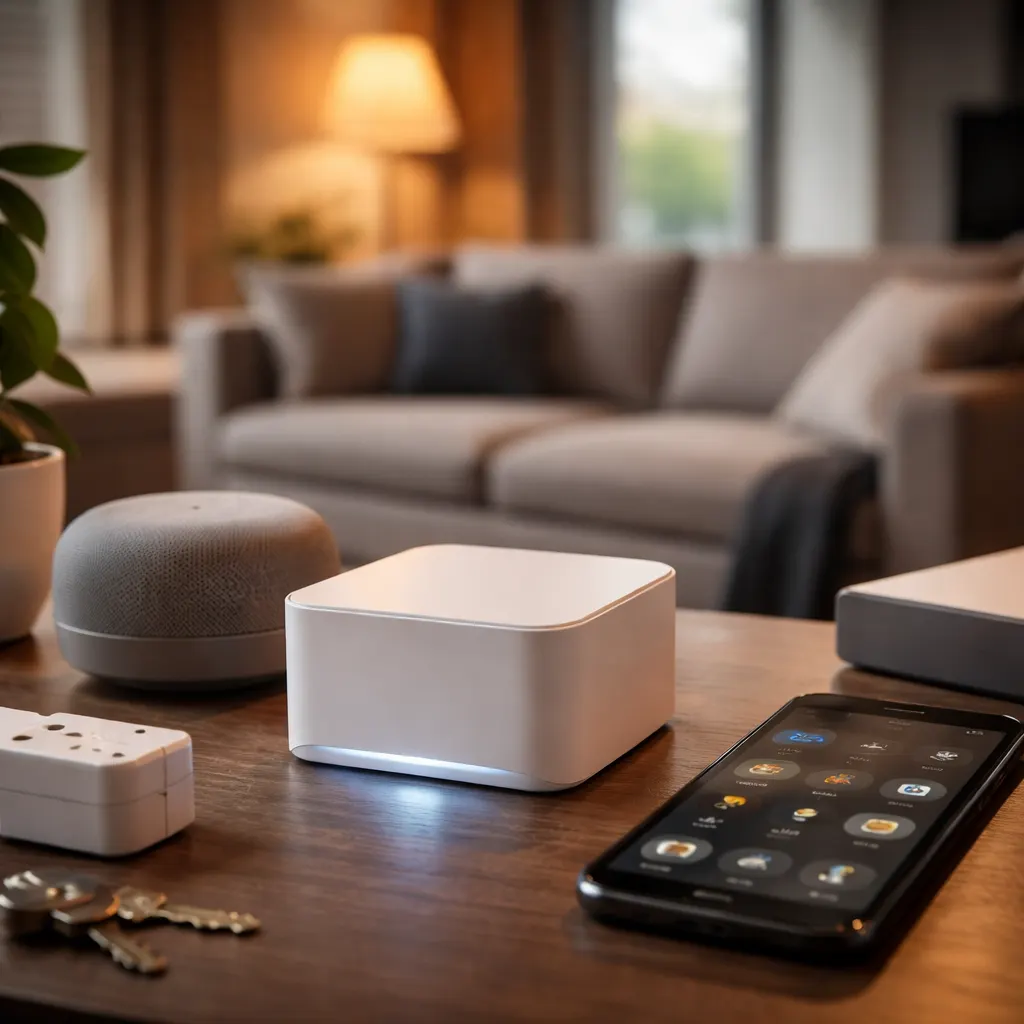
Home Assistant, the open-source smart home platform, is renaming its Cloud service to "Link" in a symbolic break from cloud-dependent technology, founder Paulus Schoutsen announced this week. "Big tech ruined the cloud, so we're out," Schoutsen told The Verge in an interview at the Z-Wave Summit in Boca Raton, Florida. The shift reflects a broader strategy to make Home Assistant a mainstream alternative to Google Home, Amazon Alexa, and Apple Home while maintaining its philosophy of local control and user privacy.
The platform currently operates in roughly 2.7 million homes, according to Schoutsen's estimates—still a small fraction compared to the reach of Amazon Alexa, Google Home, Samsung SmartThings, and Apple Home. Home Assistant Link retains the same functionality as the old Cloud service, offering remote access to local Home Assistant installations for $6.50 monthly or $65 annually, alongside internet-dependent features like Alexa and Google voice integration, text-to-speech, speech-to-text, and encrypted backups. The rebranding addresses confusion among new users who mistakenly believed Home Assistant itself ran in the cloud, when in reality it operates entirely on local hardware and controls devices without internet dependency. Link is operated by Nabu Casa, Home Assistant's commercial partner, with 60 percent of profits funding the non-profit Open Home Foundation that oversees the platform.
Schoutsen pointed to recent industry failures as evidence of cloud dependency's harm to consumers, citing Nest's shutdown of servers for early thermostats, smart TVs transmitting user data without consent, and Weber discontinuing support for the June Oven's cloud services. "Now you have a dumb oven that cost $1,500. It's crazy," he said, noting that consumers have grown accustomed to and disappointed by such outcomes. According to Schoutsen, Link differs from conventional cloud services because it provides no access to user data—all traffic is encrypted and invisible to the company. "You don't have to trust me not to misuse your data because I just don't have your data," he explained. The platform plans to integrate the HACS community store next month, making user-built integrations simpler to discover and install, while a "No Device Left Behind" initiative will help users incorporate analog and legacy equipment like old receivers, air conditioners, and solar panel inverters using serial, IR, and Modbus technology.
The push away from cloud dependency comes as Home Assistant works to reduce its steep learning curve, which Schoutsen identifies as the main obstacle to mainstream adoption. The platform's comprehensive functionality creates overwhelming choice for newcomers, he acknowledged, contrasting it with Apple Home where "there's like nothing you can do." Over the coming year, the team plans to launch a successor to the Home Assistant Green hub designed for setup as straightforward as onboarding a Philips Hue hub, alongside simplified dashboards and AI-powered tools to reduce complexity. Schoutsen views artificial intelligence as a solution rather than a complication: "AI is going to solve the complexity problem, and our biggest weakness is becoming our biggest strength," he said, noting that agents could configure the software automatically since users want solutions rather than software itself. The platform's breadth—capable of aggregating data and controls across disparate smart home devices—could position it as a foundational layer connecting homes to AI agents or platforms like Apple Home, which Schoutsen frames as "a win for Home Assistant" even if users never interact with the platform directly.
The rebrand may accelerate adoption among privacy-conscious consumers, though Home Assistant's success depends less on replacing existing ecosystems than on becoming the invisible infrastructure that makes them interoperable. If manufacturers commit to local control and open standards—a shift Schoutsen is pushing through a consumer database of non-cloud-dependent products—the platform could avoid the fate of cloud-dependent devices now collecting dust. The approach trades simplicity for durability, betting that users burned by discontinued services will eventually seek alternatives that don't stop working when a company changes its mind.