
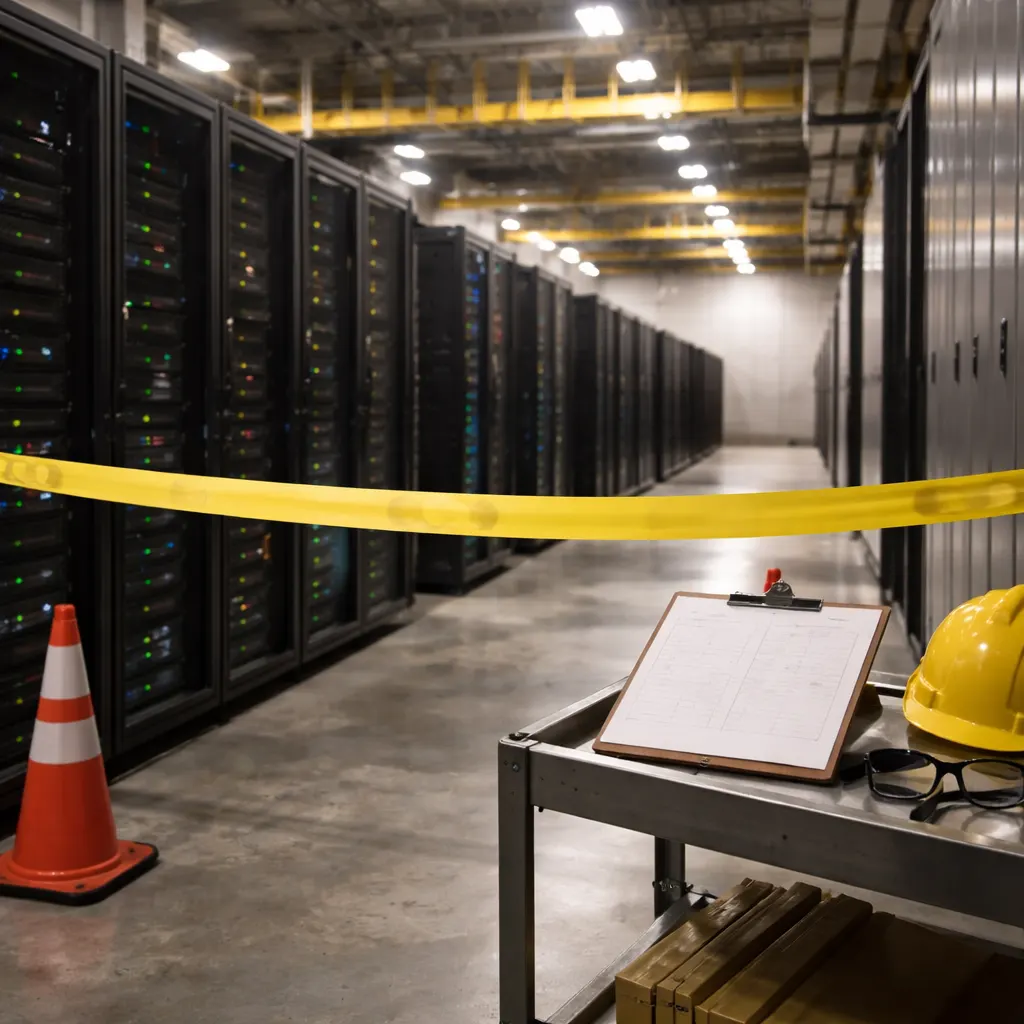
Governor Greg Abbott announced Monday that all new data center projects in Texas will require audits by both the Public Utility Commission of Texas and the state's grid operator, the Electric Reliability Council of Texas (ERCOT), according to a report published August 4 by TechCrunch. The move comes as Texas—second only to Virginia in data center capacity—faces mounting pressure on its electrical infrastructure from the tech industry's rapid expansion. What was once a developer-friendly haven is now pumping the brakes.
The scale of the grid strain is stark. ERCOT's interconnection queue stood at 233 gigawatts in January, but that number more than doubled in under six months, reaching 474 gigawatts of new connection requests as of Monday, the report states. Around 90% of those pending connections are data centers, according to the grid operator. The current queue represents more than five times ERCOT's total peak demand, meaning even a fraction of those proposed projects could overwhelm the state's power system. While many requests are preliminary paper proposals that often fizzle out as development progresses, the sheer volume has forced state officials to intervene.
Abbott has directed regulators to collect detailed information about proposed data centers, including their on-site and off-site electricity and water demand, noise-mitigation efforts, light controls, use of tax incentives, and ownership details, the report notes. The governor had previously attempted a voluntary survey to gather this data, but most companies didn't respond, prompting him to take a heavier regulatory hand to compel compliance. According to the report, data centers and crypto-mining facilities have pushed electricity prices higher in Texas, though prices remain relatively affordable compared with other states.
Texas has historically favored lighter regulation than many other states when it comes to development—Houston famously lacks zoning codes, and the state maintains a business-friendly regulatory environment, the report explains. But data centers have become a flash point across the country, including in Texas, driven by tech companies and developers scouring the U.S. for places to build. They've been drawn to Texas' loose regulations and seemingly abundant power supply, the report states. While utility-scale solar capacity grew fourfold between 2021 and 2025 and wind and solar have helped ERCOT keep pace with growing electricity demand, according to the Energy Information Administration, the exponential rise in data center proposals has outstripped even those gains.
Depending on what emerges from the audits, Texas' days as a data center mecca may be coming to a close, the report concludes. Abbott clearly wants to head off the trend of rising electricity prices before it accelerates further. The regulatory shift marks a turning point for a state that has long prided itself on minimal intervention—one where infrastructure reality is now colliding with development ambition. For companies banking on Texas as their next expansion site, the era of easy approvals appears to be over, and the question now is whether other states will follow suit as their own grids face similar pressure.