
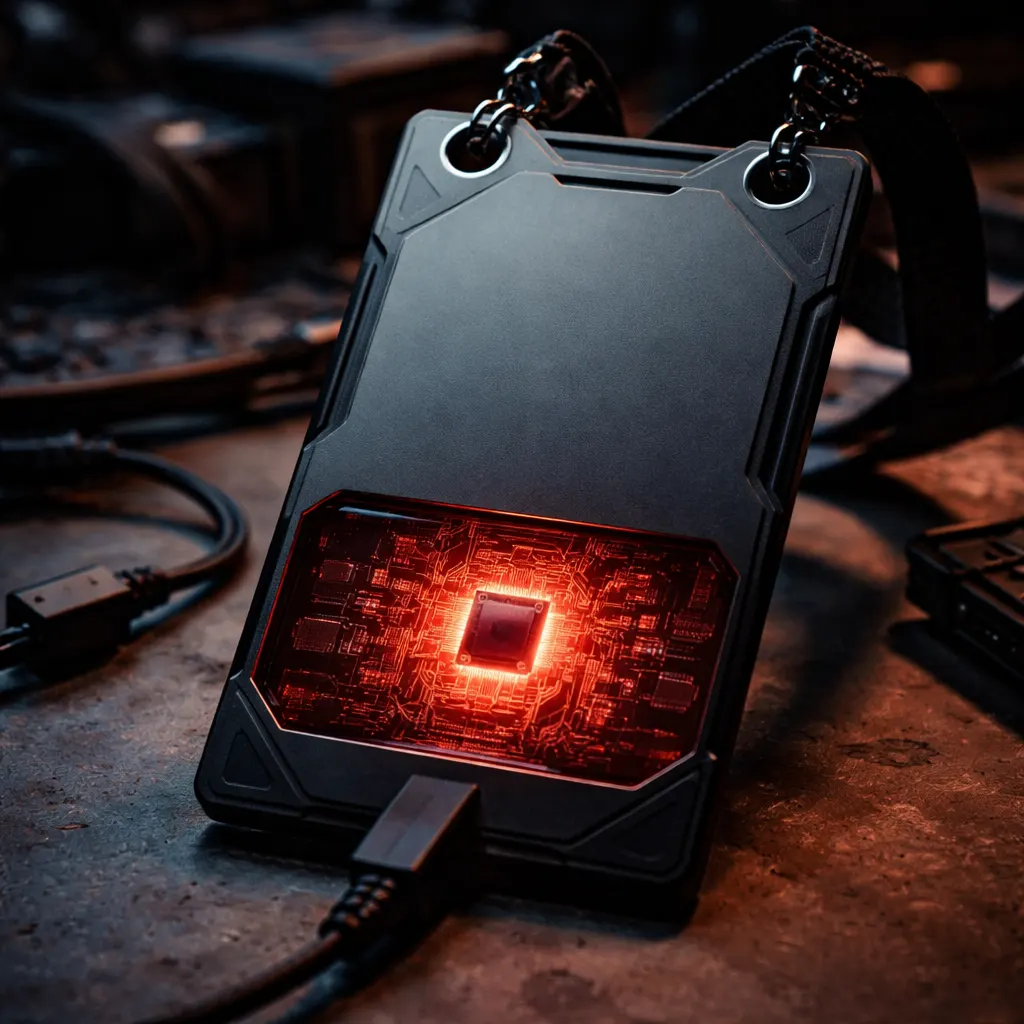
This year's Defcon conference badge includes an innovative open source chip designed to advance security, transparency, and trustworthiness in computing, according to a new report from WIRED. Hardware hacker Andrew "bunnie" Huang created the badges, which feature the Baochip-1x—a "mostly" open source microcontroller three years in the making. The chip is packaged so researchers can peer inside to check the silicon itself and compare what they see against the published design, rather than having to trust that the manufactured chip matches what the designers intended.
Huang has published the source code for the Baochip's operating system, firmware, processor core, cryptographic engines, and input-output system on GitHub, making these components available for inspection and use. Unlike conventional chips encased in opaque plastic, the Baochip is packaged so infrared light can be shone through the back of the silicon, allowing the chip's internal structures to be visually inspected. The 27,000 Defcon badges represent the chip's first major distribution—until now, it's been distributed only in a small development release. The badge's detachable module can be removed and used after the conference as a hardware security token, giving the badge a second life beyond Defcon. The hardware uses a 350 MHz RISC-V processor with 2 megabytes of SRAM and 4 megabytes of RRAM, and it has four 700MHz PicoRV32 cores for doing input-output.
Huang tells WIRED he's been working on "this kind of story arc" for years "to try and get a chip that we can trust down to the very core, down to the transistor." He describes the badge's removable module as "probably the world's first open source security token that you can fully inspect all the way down to the bootloader [and] transistors." The chip runs an operating system written in Rust and includes secure boot, a true random number generator, and hardware features intended to harden it against attacks. According to Huang, the chip will be particularly resistant to remote, nonphysical attacks, and he estimates it could withstand attacks involving tens of thousands of dollars in resources—though an adversary with millions of dollars and a sophisticated hardware-analysis lab could likely defeat it.
Building a new chip typically costs millions of dollars for fabrication, but Huang got a break three years ago when Crossbar reached out wanting to create a new open source and secure chip. Huang agreed to assist on one condition: that they let him piggyback on their manufacturing run by placing his CPU on their chip wafer, allowing both designs to share the same manufacturing run rather than requiring Huang to fund a separate run. The concept behind the chip matched perfectly with the conference theme this year—agency—which Defcon defines as the technologies we use and the choices we make that increase self-determination. Defcon founder Jeff Moss wanted the badges to have a life beyond the conference and not be something people would just throw in a drawer or a landfill after the event, and he thought Huang's chip could be a more secure alternative to existing authentication tokens and wallets.
Huang is cautious about overhyping the chip's security capabilities, saying "I actually think it's one of the most secure chips you can get out there, but I [also] think most chips have been oversold in terms of security." He likes the fact that the chip will be stress-tested by Defcon attendees and knows they will likely hack them and expose flaws that will help him make them even more secure. Today the chip can function as a YubiKey-like security token, but in the future it could become an HSM or run other software such as Linux. Huang plans to expand the chip's features himself, but he also expects Defcon participants to build on what he's provided and make the chips their own.