
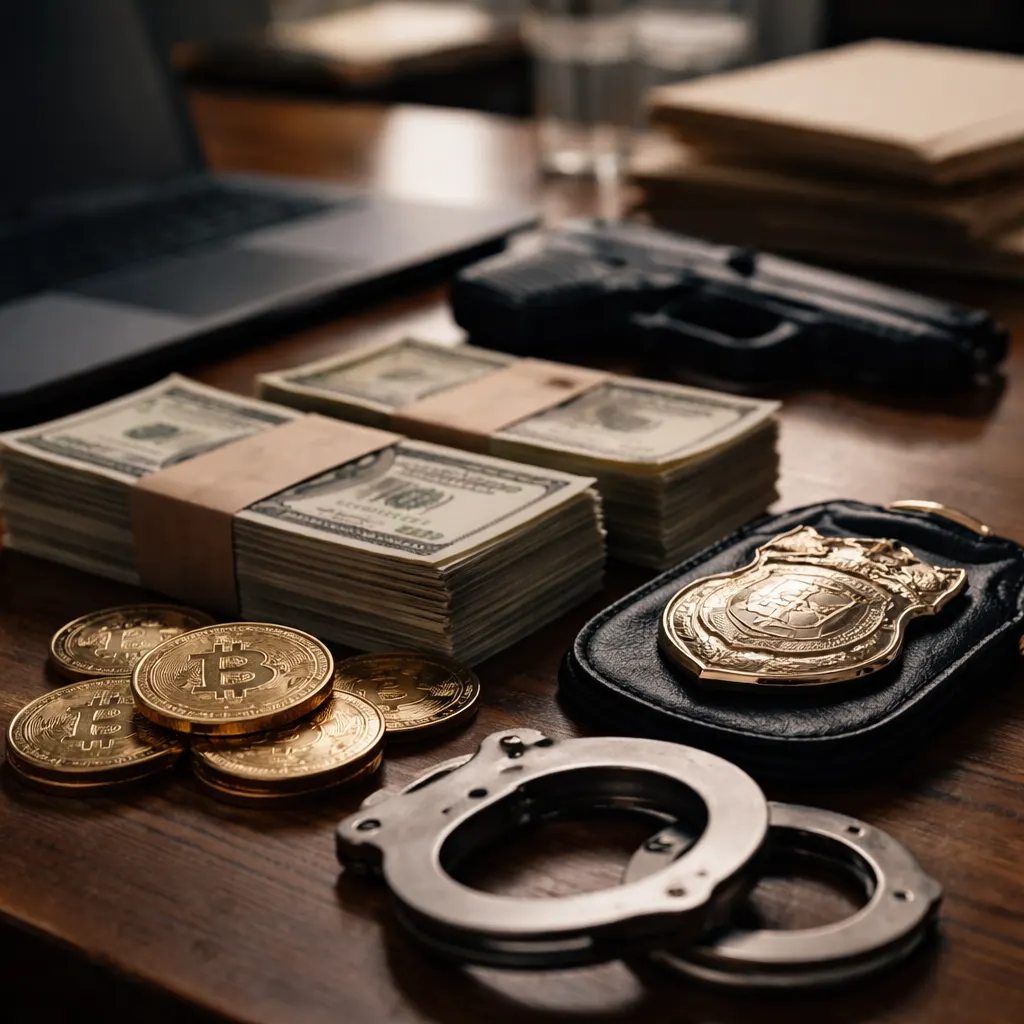
A former National Crime Agency officer who stole Bitcoin during an investigation into the dark web marketplace Silk Road 2.0 has been ordered to hand over more than £1.8 million ($2.4 million), according to a report published by The Register on September 30, 2026. Paul Chowles, 44, from Bristol, exploited his role analyzing seized devices to take 50 Bitcoin from a convicted criminal's cryptocurrency holdings. The confiscation order reflects the explosive growth in Bitcoin's value since the theft took place nearly a decade ago.
Chowles stole 50 of the 97 Bitcoin recovered from Thomas White, a convicted administrator of Silk Road 2.0, between May 6 and 7, 2017, according to the report. The coins were worth approximately £60,000 ($79,000) at the time of the theft but had soared to more than £4.4 million ($5.8 million) by July 2025, when Chowles received his sentence. The Crown Prosecution Service calculated the total benefit from his criminal conduct at £1,970,759.27, though Liverpool Crown Court set his "available amount"—the assets he can actually pay—at £1,810,678.93. Law enforcement later recovered 30 of the stolen coins, leaving 20 still missing. Chowles had led the effort to analyze data and extract cryptocurrency from White's seized devices, having previously worked on the NCA's investigation into the original Silk Road marketplace before U.S. and European authorities shut down Silk Road 2.0 in November 2014.
Luke Clements, a specialist prosecutor at the CPS Proceeds of Crime Division, said confiscation orders are "a powerful tool in ensuring that crime does not pay," the report states. He noted that Chowles "exploited a position of trust for personal gain, stealing assets that had already been recovered through law enforcement action." The prosecution emphasized that authorities will "pursue offenders' assets relentlessly" and seek to recover criminal proceeds wherever they're hidden, according to Clements. Liverpool Crown Court sentenced Chowles to five years and six months in prison on July 16, 2025, after he pleaded guilty to theft, transferring criminal property, and concealing criminal property. The NCA dismissed him from his position five days earlier.
The theft came to light only after White persistently claimed someone inside the NCA had taken his Bitcoin, according to the report. Chowles had transferred the 50 coins from White's "retirement wallet" to an address he controlled, then split them into smaller amounts and routed them through Bitcoin Fog, a mixing service designed to obscure cryptocurrency transactions. NCA investigators initially assumed White had moved the missing coins himself because of his technical expertise, and by late 2021 they had written them off as untraceable. But White maintained that NCA staff must have stolen the cryptocurrency because investigators held the private keys to his wallet. When Merseyside Police met with NCA officers in early 2022 to discuss White's allegation, Chowles attended that meeting—then Merseyside Police opened an investigation and arrested him in May 2022. Investigators found an iPhone linking him to an account used to transfer Bitcoin, along with searches for a cryptocurrency exchange, plus notebooks in his office containing usernames, passwords, and statements related to White's cryptocurrency accounts. The case shows how volatile cryptocurrency values can magnify both criminal gains and law enforcement recoveries years after an offense occurs. Internal personnel with privileged access to seized digital assets represent a persistent vulnerability that agencies handling cryptocurrency must address through stricter controls and independent oversight.