
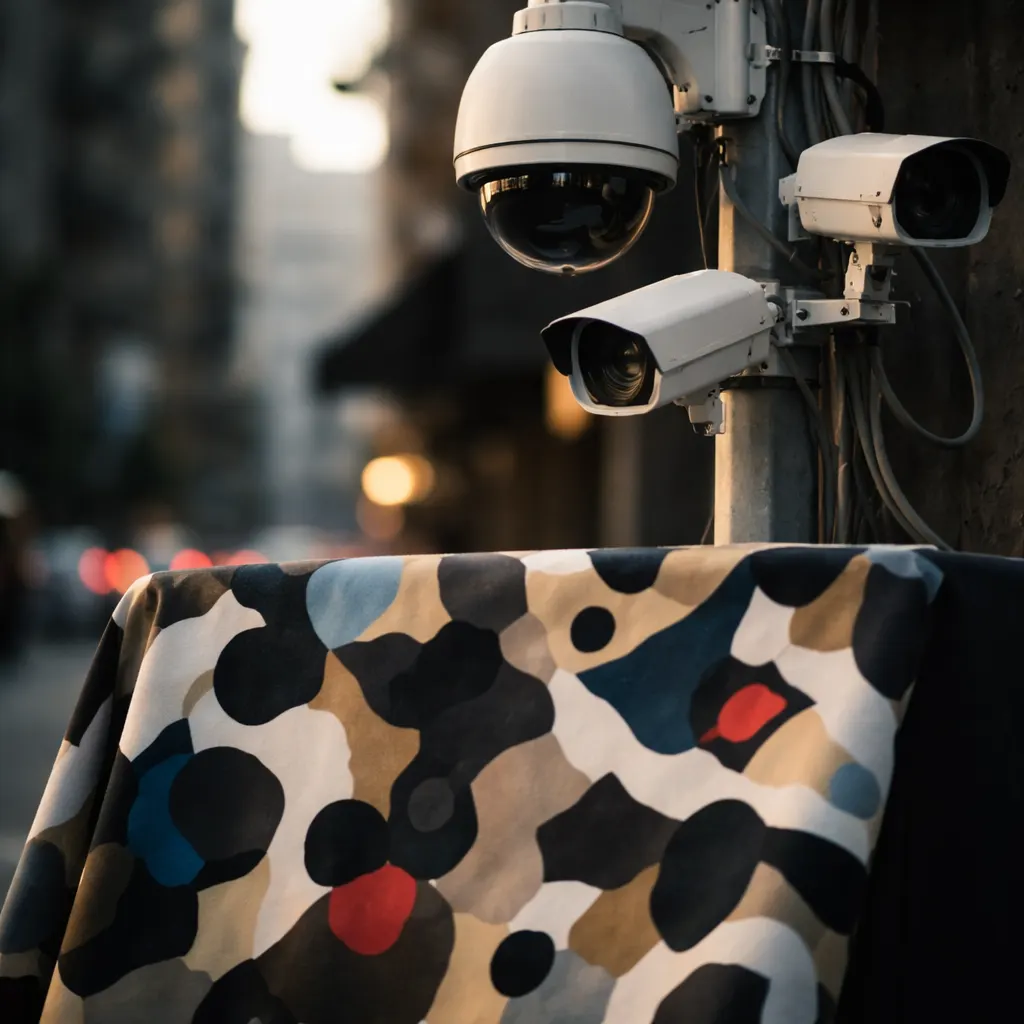
A cybersecurity researcher has created computer-generated patterns that can prevent widely deployed surveillance cameras from detecting people and vehicles, according to a report published by TechCrunch on Friday. Bill Swearingen spent the past year running 31 million tests to produce patterns that, when printed on clothing or objects, block automatic detection by license plate readers and surveillance cameras used across America. His project, called noRecognition, allows individuals to escape the algorithmic surveillance systems that law enforcement relies on to sift through vast amounts of footage.
Swearingen's patterns don't stop cameras from recording video footage. Instead, they scramble the camera's ability to identify objects, people, or faces, preventing the cameras from triggering any detection alerts. The system works against 11 open-source detection algorithms he tested, including software that powers Flock license plate readers, Axon body-worn cameras, and cameras running Clearview AI. At the Def Con cybersecurity conference in Las Vegas on Friday, Swearingen ran his first real-world test by covering a 2009 Toyota Yaris with one of his newest patterns. The demonstration proved the pattern was effective at defeating a Flock camera's detection, though the wheels posed a challenge, he said.
Swearingen, who co-founded cybersecurity meet-up SecKC in Kansas City, described his motivation as rooted in privacy concerns. "Privacy is a fundamental right," he told TechCrunch, characterizing his patterns as a way to let people "opt-out of being tracked." He recounted wanting to attend a protest last year but feeling uncomfortable that cameras could track people exercising their constitutional rights to free expression. By blocking the camera's ability to detect what the pattern covers, the person becomes a needle in a haystack again until someone knows where to look, the report states.
The project evolved from a proof-of-concept test lab into a reinforcement learning model, essentially a self-contained system that trains itself on which patterns work and which don't against specific camera algorithms. Swearingen essentially taught his model "how to paint," he explained. Each time a pattern failed and an algorithm detected it, the model would try again repeatedly until it defeated multiple algorithms at once. The model now creates new patterns every minute, with each batch mathematically better than the last. The noRecognition project has launched a crowdsourcing campaign to fund early merchandise featuring the patterns, from T-shirts to hoodies, with potential for pattern-printed skins for vehicles. Swearingen said he's keeping his strongest patterns off the internet to prevent camera makers from defeating them, but his models continue grinding out new patterns. "Every failure improves my model, and so [the patterns] keep getting better and better," he said.
The project represents early proof that avoiding algorithmic detection in public spaces is possible, with the next step focused on getting the patterns into the hands of people who want them. Swearingen said the aim is for patterns to be high quality with resolution good enough to work from a distance while also looking aesthetically fashionable. The work continues as his models refine new patterns designed to stay ahead of surveillance technology. For organizations weighing the balance between public safety tools and civil liberties, the technology poses questions about whether surveillance systems can remain effective when countermeasures become widely accessible. The escalation suggests a technical arms race where neither detection nor evasion holds a permanent advantage.