
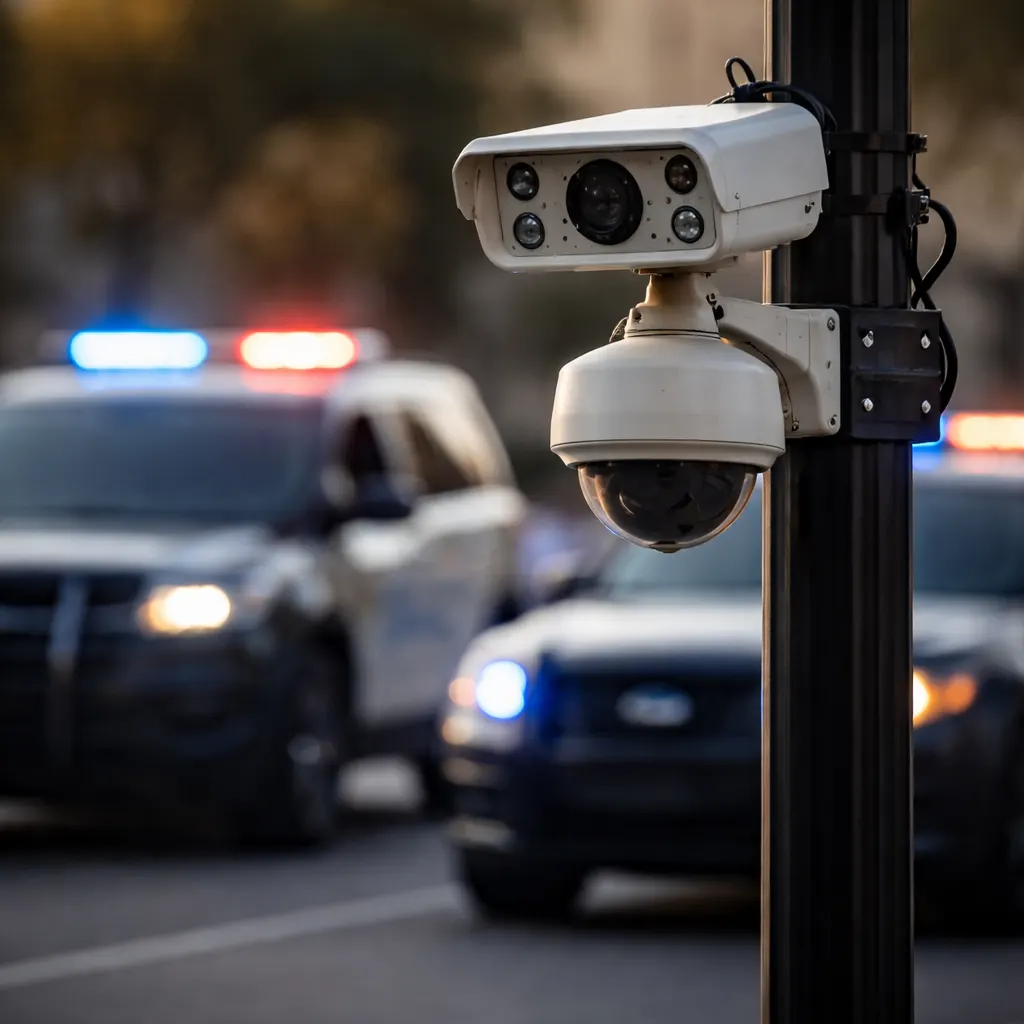
Flock Safety, the police-tech company operating roughly 120,000 automatic license plate readers across the United States, announced platform changes last Thursday aimed at stopping officers from misusing the system for illegal purposes including stalking, according to an analysis published by MIT Technology Review. The Washington Post recently documented 50 instances where officers exploited systems from Flock and rival companies, frequently to stalk and harass women—one Wisconsin woman said her police officer ex-boyfriend ran searches on her vehicle 179 times. The analysis argues that Flock's design decisions about what information to gather, who can access it, how long it's stored, and how broadly it's distributed have established the terms of the exchange between public safety and individual privacy.
The company's new safeguards contain significant gaps, the analysis finds. Officers must now input a criminal case number before conducting searches on Flock's platform, but the company confirmed to MIT Technology Review that it doesn't authenticate those case numbers—meaning an officer can simply type in a fake one. Flock functions largely as a nationwide network where police in one city or state can query data gathered in another, and departments can hold onto that information for months or years. Yet Flock itself acknowledges that 90% of searches occur within seven days of an incident. The company recently adjusted its suggested retention period to seven days, though in practice agencies can retain data for as long as they choose.
Chad Marlow, a senior policy counsel at the ACLU, half-joked that the most acceptable Flock contract by his standards is "one that is never signed," the analysis reports. He stressed that the best approach to limiting surveillance isn't through new Flock guidelines but through new legislation. Flock CEO Garrett Langley, for his part, said he'll "probably always have a different view than the ACLU." The criticisms have sparked a mounting backlash that's already prompted some cities to cancel contracts and some states to attempt passing laws to restrict or prohibit license plate readers entirely.
The analysis explores alternative design frameworks Flock could have chosen that would narrow its surveillance scope while preserving crime-solving capabilities. For instance, a system could mandate case numbers that align with police department records—a more invasive integration, but also a much stronger protection and one that creates a more valuable audit trail. For kidnapping or missing persons cases, which Flock cites more frequently than any other use case, searches connected to an active Amber Alert or similar emergency could potentially access broader data from neighboring cities. That would maintain the network's value in urgent situations without forcing people to accept widespread monitoring. Since license plate readers have existed since the 1990s for tolls and ticketing, Flock's business model—and recent $8 billion valuation—depends on transforming its cameras into a massive network that gathers extensive data and gives police departments a modernized method to interpret not just their own information but others' as well.
Cities have terminated contracts with the company, with some switching to competitors while others are pausing as residents consider how they want this technology deployed and draft new regulations for police to follow. The outcome may be that communities negotiate their own agreements about how technology can be used to solve crime and how much surveillance people should have to tolerate for it to do so. The question isn't whether technology should play a role in fighting crime, but whether people should blindly accept the terms of the bargain Flock has offered. How agencies balance the immediate appeal of crime-solving tools against the longer-term erosion of civil liberties will likely determine whether surveillance becomes a shared governance question or a fait accompli. The stakes extend beyond any single vendor to the fundamental architecture of public safety infrastructure in an era when private platforms increasingly mediate government power.