
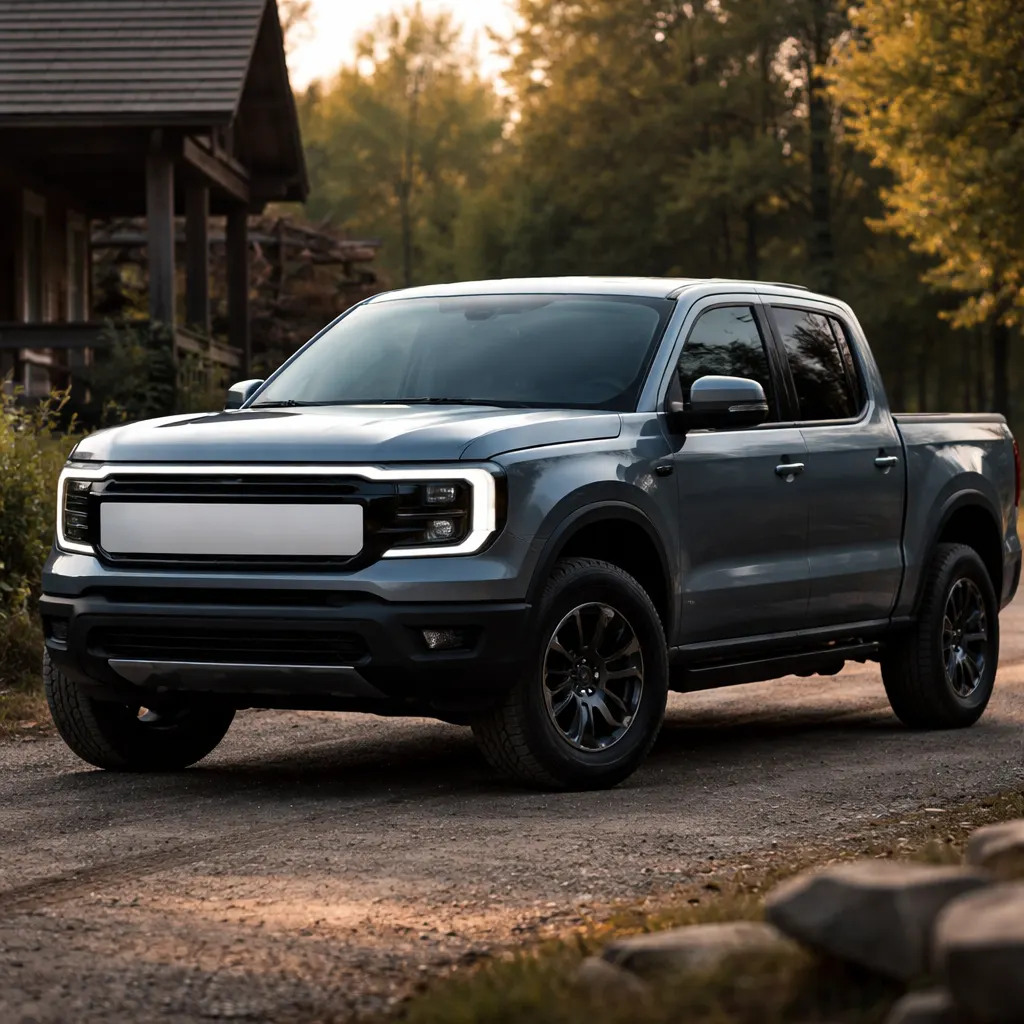
Ford has revealed the first vehicle from its next-generation electric platform: a midsize electric truck called Fathom with a starting price of $28,350, according to a report published today by The Verge. The automaker has spent nearly a year teasing what it calls a "Model T moment" built on innovative manufacturing processes designed to deliver big capabilities at low prices. The Fathom represents the company's attempt to enter the affordable EV truck market with a fully equipped vehicle that undercuts competitors by thousands of dollars.
The base Fathom will come standard with features including a large, high-resolution touchscreen running integrated Apple Maps, support for both Android Auto and Apple CarPlay, power windows, and a stereo system—equipment that's notably absent from its closest competitor, the $24,950 Slate Truck, which strips out such amenities to hit its lower price point. Ford's truck aims to offer greater interior volume than a Toyota RAV4 while seating more than the Slate's two-person default configuration, which requires a $5,000 optional kit to expand to five seats. The Fathom will also include an open cargo bed and a front trunk, plus all the sensors required to operate Ford's hands-free Blue Cruise system, though activating that feature will likely cost an additional $2,495 as a one-time fee or $495 per year. Production is scheduled to begin at Ford's renovated Louisville Assembly Plant next year, with customer deliveries expected before the end of 2027 and pre-orders opening early next year.
The report explains that Ford plans to achieve the Fathom's aggressive pricing through high-volume manufacturing combined with a radical reworking of its assembly process. Vehicles built on the company's Universal Electric Vehicle platform will be constructed differently than traditional automobiles, with the front, rear, and middle sections assembled simultaneously on parallel lines before being joined together at the final stage. The automaker will also simplify vehicle construction itself to reduce both parts counts and labor expenses. According to the report, production capacity was never the obstacle that held back Ford's earlier electric vehicle ambitions—instead, insufficient demand from buyers and dealers hampered the company's battery-powered initiatives, leading to billions in losses and the cancellation of the F-150 Lightning.
The Fathom's starting cost sits close to half that of the discontinued Lightning, a difference the report suggests should help Ford avoid repeating past failures. The Slate Truck will reach customers later this year, giving it roughly a 12-month head start over the Fathom in what the report characterizes as a potential race to the bottom in the budget electric truck segment. Ford's ability to deliver a feature-complete vehicle at just $3,400 above the bare-bones Slate's price hinges entirely on manufacturing scale and streamlined production, the same strategy employed by high-volume furniture liquidators. The stakes are clear: Ford needs both a lower entry price and renewed buyer enthusiasm to succeed where its previous electric truck efforts failed, and the Fathom represents the company's bet that simplified manufacturing can finally make affordable EVs profitable. Whether dealers and customers will embrace this new approach remains the critical unknown, particularly given the cautionary tale of the Lightning's demise despite its premium positioning and capabilities.