
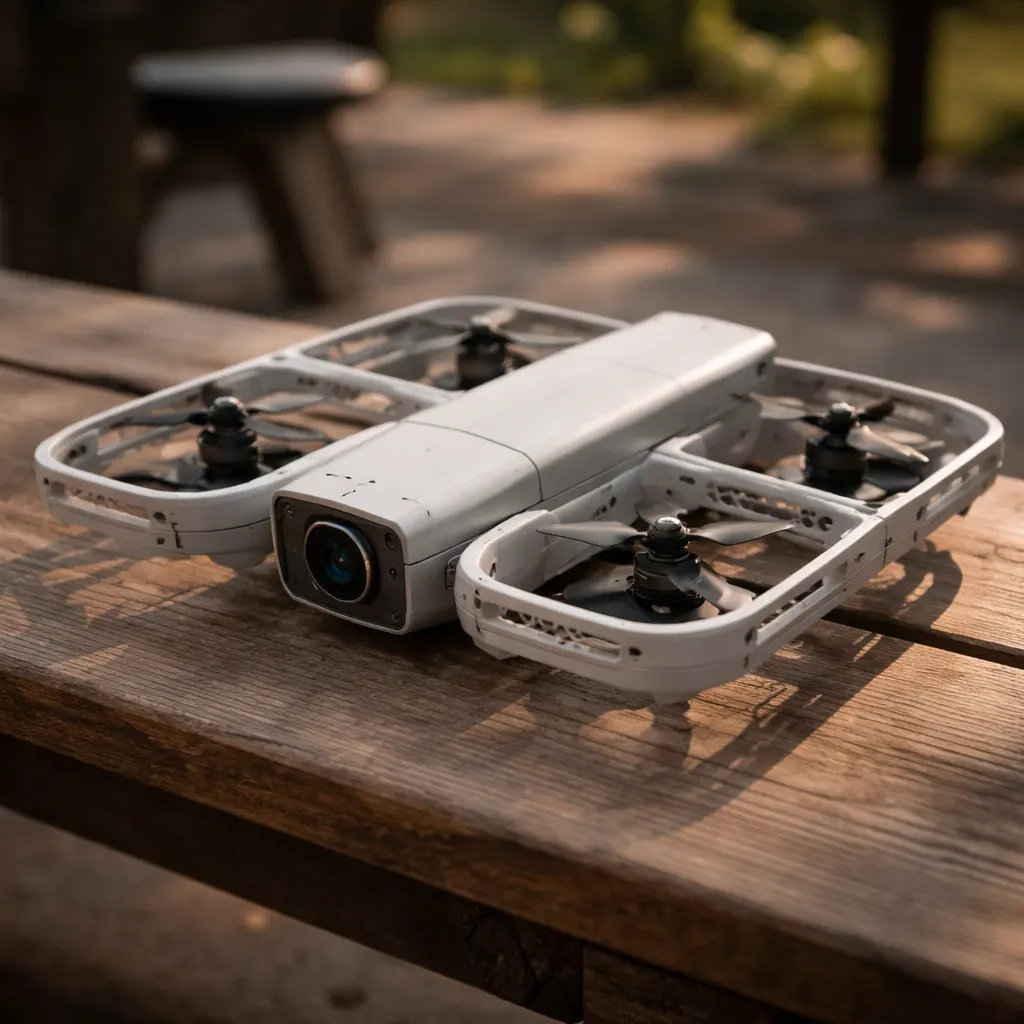
Zero Zero Robotics is attempting to bypass the US government's foreign drone ban by marketing its latest $750 Versa as a handheld camera with detachable propellers rather than as a drone, according to a report published this week by The Verge. The FCC approved the device on August 9th, and the company launched it on Indiegogo shortly after, telling customers it meets all regulatory requirements. But the strategy carries significant risk: the FCC retains authority to reverse its certification within 30 days, and that window hasn't closed yet.
The loophole works because the December 2025 foreign drone ban affects all drone manufacturers' radio certifications, requiring each to prove their products are either US-made or pose no national security threat, but the ban only targets cameras from DJI and Autel Robotics by name under the 2025 National Defense Authorization Act. HoverAir submitted paperwork only for the camera portion of its device, accurately informing the FCC's private certification agent that HoverAir cameras aren't banned from US approval. The snap-on propeller wings that enable flight don't contain wireless radios and connect through physical copper contacts, potentially exempting them from FCC review entirely since the agency only certifies devices with wireless components inside.
The company's global marketing director Anita Facundo told The Verge that "The Flight Kit is an accessory that extends VERSA's capabilities. Therefore, HOVERAir is in full compliance with the applicable regulatory requirements." The Verge notes that HoverAir's floating Aqua drone became one of the first casualties of the ban when it couldn't ship to US customers in December 2025, though the company did offer refunds when that became clear. Only 12 Indiegogo backers appear to be purchasing the Versa as a camera alone, with most opting for the flight-capable configuration.
The strategy's vulnerability lies in how the FCC's ban covers not just complete drones but also "UAS critical components," and the agency has explicitly stated that cameras fall into that category. Because HoverAir's camera contains radios and houses many of the essential systems that enable the drone to operate, the FCC could determine it qualifies as a critical component despite being sold separately from the propellers. While the FCC typically outsources initial certification decisions to private Telecommunications Certification Bodies, it's likely to conduct its own review now that HoverAir is publicly pursuing this workaround. The agency possesses a rarely used tool allowing it to cancel any certification within 30 days of approval, and that deadline hasn't passed for the Versa.
The Verge warns US customers against backing the Versa until the FCC clarifies its position on the device, noting that drones, routers, robots, and other connected devices now face uncertain regulatory futures. The report observes that HoverAir has a pattern of incorporating distinctive features into its products, including a pocket-sized foldable design, water-landing capability, and in-case charging, with this regulatory gambit representing its boldest differentiator yet. For companies navigating overlapping hardware and software jurisdictions, regulatory arbitrage increasingly shapes product architecture in ways that prioritize approval pathways over user experience. When compliance strategy becomes a core product feature rather than a background concern, the resulting designs may optimize for legal interpretation rather than functional coherence.