
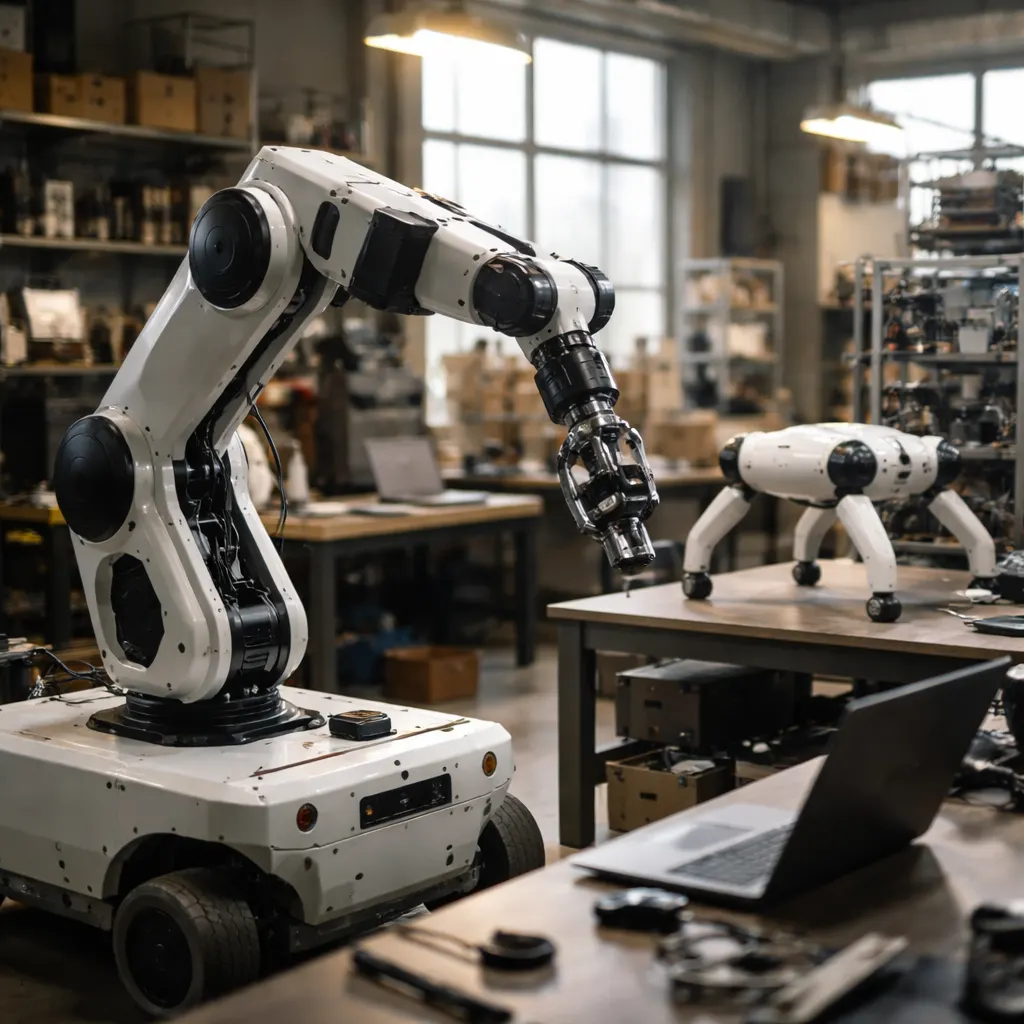
A robotics startup based in India has assembled machines with far fewer Chinese components than nearly any competitor in the US market, according to a report published last week by WIRED. Ati Robotics, founded in 2017, initially focused on developing motors for autonomous vehicles before pivoting to produce its own robots, including tuggers and pallet movers designed to transport tons of materials through large facilities. The company's founder, Saurabh Chandra, believes the decision to develop proprietary hardware naturally reduced dependence on Chinese suppliers, positioning the firm to capitalize on new US restrictions that banned imports of Chinese-made robots due to national security concerns.
Ati Robotics currently operates several hundred robots across warehouses and factories, serving more than 50 clients in total. Two of the company's top-selling models—a 10,000-pound tugger and a pallet mover—incorporate very few parts sourced from China. The startup's first humanoid robot, designed to move heavy bins, is scheduled to enter service later this year. While that humanoid model includes the full arm and actuator manufactured in Bangalore, certain components such as the harmonic drive and frameless motor currently come from China, along with battery cells that could alternatively be sourced from South Korea or Japan.
According to Chandra in an interview with WIRED, the company managed to keep hardware development costs down by locating its research and development operations in Bangalore, where labor expenses are lower. The founder explained that Bangalore was experiencing an electric vehicle boom in two-wheeler and three-wheeler categories, and the power profiles of those vehicles closely matched the requirements for robotics applications. Chandra said the company leveraged components and supply chains developed for the EV industry, noting that automotive parts are typically reliable, produced in high volumes, and cost-efficient—though engineering work with vendors was necessary to adapt them for robotic use.
The Federal Communications Commission's recent decision to prohibit new models of humanoid robots and other advanced devices from China could slow growth for many smaller US robotics firms, even as investment in robotics startups reached record levels this year in both deal count and dollars invested, according to PitchBook data cited in the report. Many of those companies primarily develop software while continuing to depend on Chinese suppliers for hardware. Ati's approach of building its own hardware—a strategy Chandra says many advisers warned against—has created what the company describes as different levels of "supply chain resiliency" across its product line. The startup uses induction motors, meaning even the magnets inside the motors don't originate from China, representing a distinct choice from many other robot manufacturers.
Ati Robotics stands to gain from trade restrictions that penalize competitors still tethered to Chinese manufacturing, though the company's path illustrates the ongoing challenge of completely eliminating dependencies on a supply chain that dominates global hardware production. For robotics firms weighing the trade-off between development speed and supply chain autonomy, the shifting regulatory landscape may soon make that decision for them.