
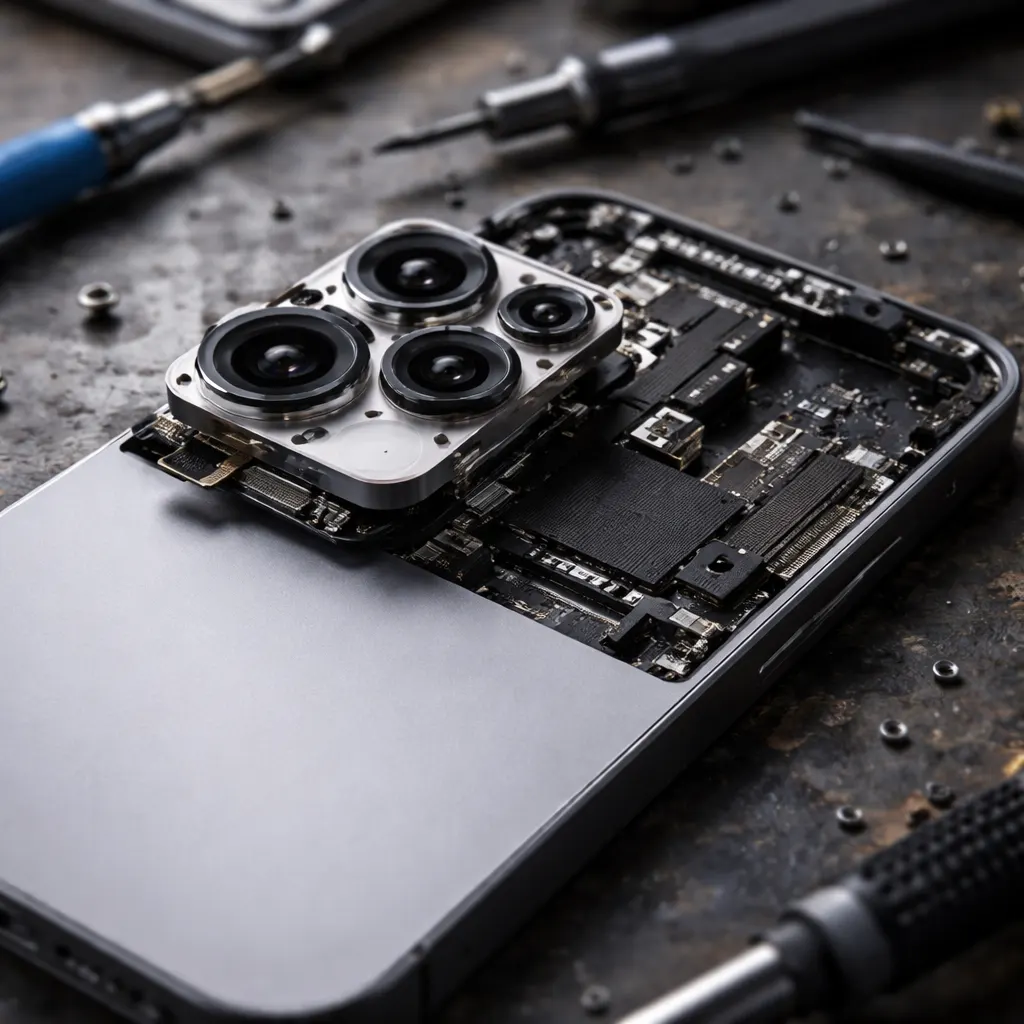
Apple's iPhone 18 Pro and Pro Max earn a mixed 7 out of 10 repairability score despite some improvements, with a new camera mechanism described as "about as close as it gets" to impossible to repair, according to a teardown published by iFixit on September 21, 2026. The repair advocacy group found that design choices around the variable aperture camera and a fragile screen frame create what it calls "uncomfortable repairability tradeoffs" that haven't improved from last year's model.
The iPhone 18 Pro's main camera features an aperture built from six tiny blades, each roughly as thick as a human hair, with tolerances so tight that iFixit rates any damage to the camera as likely requiring replacement of the entire assembly. Apple hasn't yet released pricing for the new component, but the camera assembly for the iPhone 17 Pro costs $249, and the variable aperture addition is expected to push that figure higher. The battery remains relatively easy to swap thanks to a screwed-in metal tray, but accessing it requires removing the screen first. During four teardowns, iFixit's team damaged the plastic frame holding the screen in place three times, though the organization hasn't yet determined whether this represents a widespread design flaw or isolated incidents.
According to iFixit director of sustainability Elizabeth Chamberlain, the variable aperture mechanism delivers limited practical benefit. "Samsung tried it and dropped it, citing 'limited functional benefit at smartphone camera levels,' and we basically agree," she stated in the teardown. The aperture doesn't significantly improve picture quality because even at its widest setting the opening remains small, while the compact sensor and short focal length restrict background blur compared to dedicated cameras. Chamberlain told The Register that "the screen troubles and likely expense of camera repairs make us more worried about repairs in the 18 Pro" compared to the previous generation.
The report explains that the aperture's minimal impact on depth of field stems from fundamental physics: smartphone sensors and lenses are simply too small for the aperture change to produce the dramatic background blur seen in larger cameras. Any moving parts in a camera assembly make repairs harder, and it's unclear whether Apple will continue the feature in future models. The screen frame issue compounds the problem because breaking it during battery or internal component replacement could force a full display swap, negating any repairability gains elsewhere in the device. iFixit notes the same plastic frame has been present since the iPhone 15 Pro but caused far less trouble in previous years, leaving the team uncertain whether the 18 Pro's adhesive or frame material has changed.
For owners of recent iPhones, the modest improvements don't justify an upgrade, the teardown concludes. Photo quality differences are small enough that most users won't notice them, while the new camera introduces expensive failure points without meaningful performance gains. "We say it every year, and it's especially true this year: skip the upgrade," Chamberlain wrote. "The most sustainable phone is the one already in your pocket." The calculus may shift as repair networks face pressure to stock costly camera assemblies while contending with screens that risk damage during routine service. Manufacturers chasing marginal hardware differentiation may find themselves undermining the durability consumers increasingly expect from premium devices.