
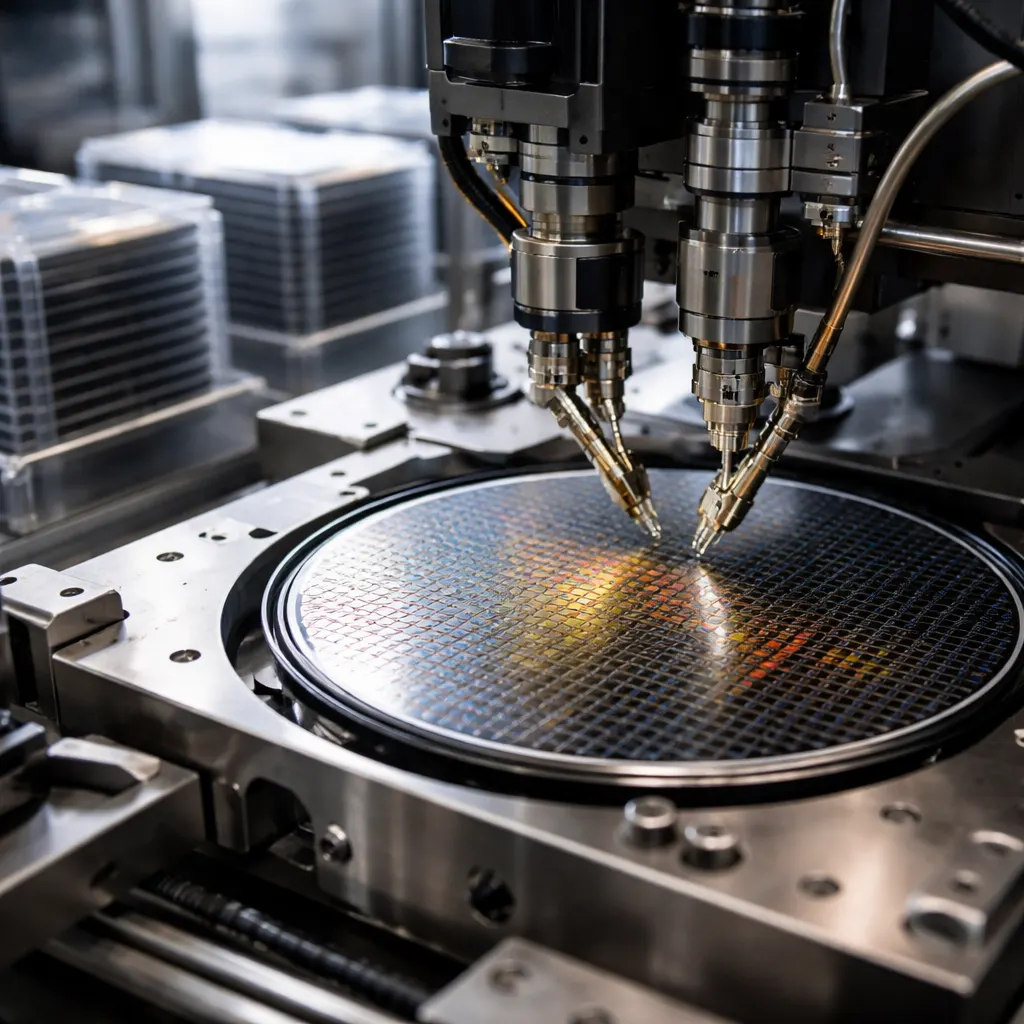
Samsung Electronics and SK Hynix began evaluating etching equipment from China's Advanced Micro-Fabrication Equipment roughly two years ago at their Chinese memory manufacturing facilities, according to a Reuters report. The testing reflects a strategy to protect against potential US restrictions on not only new equipment purchases but also servicing and repair of Western-manufactured tools already operating in their Chinese plants. Samsung told Reuters it hasn't evaluated AMEC machinery for its China operations and hasn't weighed doing so, while SK Hynix wouldn't comment on the matter.
Deutsche Bank projects that four Chinese equipment suppliers—Naura Technology, AMEC, Piotech, and ACM Research—will each pull in over $1 billion in sales during 2026, collectively seizing 25% to 30% of China's anticipated $28 billion wafer-fabrication equipment market this year. The regulatory backdrop shifted sharply between 2023, when the US Commerce Department gave Samsung and SK Hynix's Chinese facilities "validated end user" status that let them bring in controlled American equipment without case-by-case permits, and 2025, when Washington pulled that designation. Both companies later secured annual licenses covering 2026 equipment imports. Each win for qualification inside a Samsung or SK Hynix production line represents service contracts and consumables sales that previously went to Applied Materials, Lam Research, or KLA, which Reuters identifies as confronting a sustained competitive threat from these Chinese manufacturers.
The report notes the account doesn't reveal which technology nodes are hosting the AMEC tool trials, how advanced the qualification work has become, or whether any production wafers have actually run through Chinese-made equipment. Reuters itself points to remaining obstacles including extended qualification timelines, narrower service infrastructure, intellectual-property questions, and possible political backlash from Washington. Those unknowns separate a contingency plan from an actual reworking of the supply chain.
The testing effort sits at the intersection of two forces reshaping semiconductor manufacturing. US export restrictions aim to constrain China's domestic toolmaking sector, yet the same on-again, off-again licensing framework creates exactly the uncertainty that pushes global chipmakers toward qualifying local alternatives for equipment they can't readily replace. Every qualification cycle handed to a Shanghai-based supplier builds the reference customer base those firms need to close sales elsewhere in China's fast-growing fab landscape. The pattern suggests that controls designed to slow an industry can inadvertently accelerate its path to credibility. Policymakers face a dilemma where tighter restrictions may drive the very diversification they hoped to prevent, while looser rules risk technology transfer—leaving little room for a stable middle ground that satisfies both national security hawks and multinational manufacturers.