
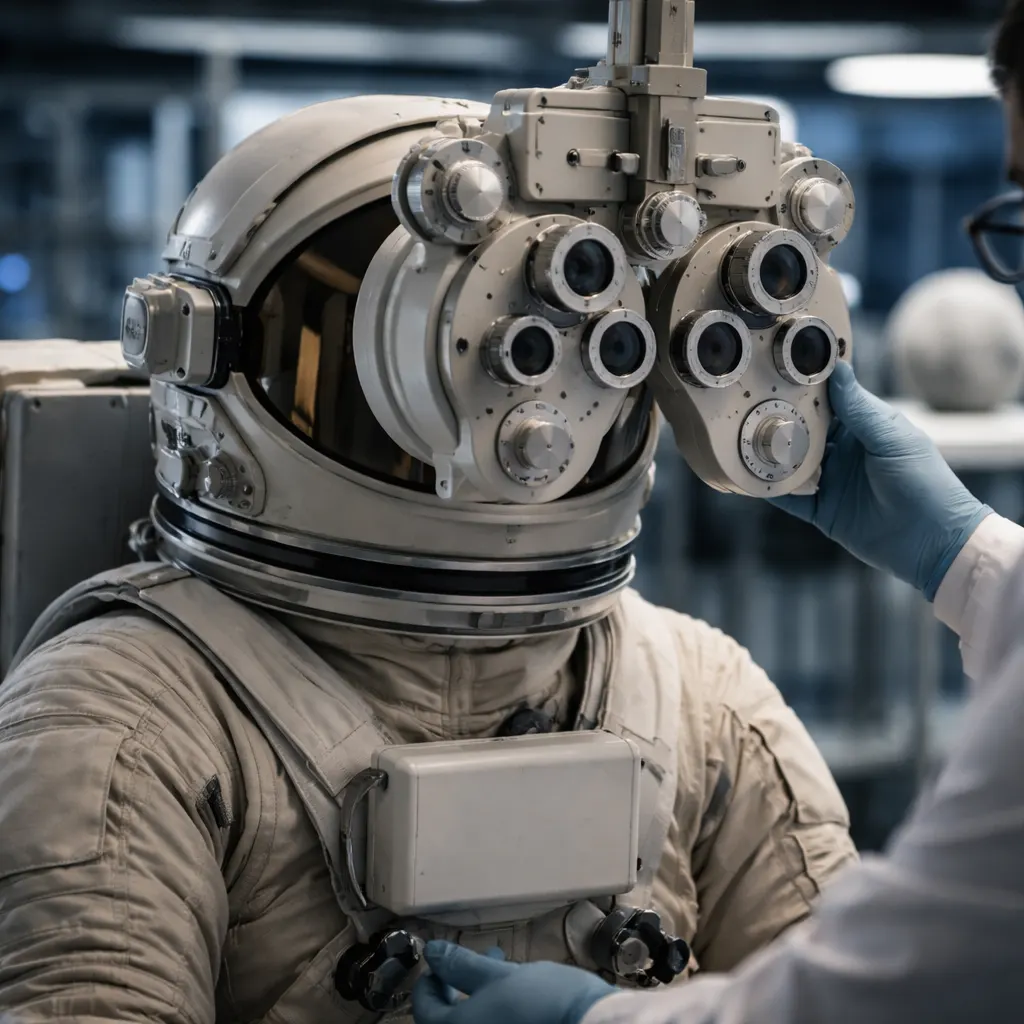
The European Space Agency has commissioned a British startup to develop a compact eye-scanning device that could help solve a condition affecting roughly 70 percent of astronauts on the International Space Station, according to a report by Wired. The initiative comes as space agencies prepare for the Artemis lunar missions and other deep space flights, where communication delays will make ground-based medical support impossible. The condition, called spaceflight-associated neuro-ocular syndrome, causes potentially permanent vision damage that has left some astronauts with moderate visual impairment after months in orbit.
The syndrome's effects can be severe: NASA astronaut John Phillips launched to the ISS in 2005 with 20/20 vision and returned six months later with 20/100 vision—a level considered moderate visual impairment. During spaceflight, bodily fluids unconstrained by gravity accumulate in the head, compressing eyeballs, inflaming the optic nerve, and displacing the retina forward. While some damage reverses upon return to Earth, space agencies worry about both the immediate operational danger of astronauts losing sight during missions and the long-term health consequences.
"The eye condition SANS is a serious health risk facing astronauts on long missions," Rebecca Evernden, director of the UK Space Agency, stated in the report. Medical engineers aim to deepen their knowledge of the syndrome and its underlying causes so they can address any ocular harm, and ultimately treat or prevent the problem entirely. The ESA hopes the new device will produce more frequent data on retinal deterioration and potentially offer early warnings that changes are underway—even before they translate into vision loss.
Scientists currently monitor spaceflight's impact on the human eye aboard the ISS using a modified version of equipment found in optometry offices, but the device is bulky and requires real-time remote guidance from experts on the ground. As astronauts travel deeper into space, lengthening communication delays with Earth will render this approach unfeasible. Siloton, the startup founded by physicists in 2020, uses quantum technology to compress core components of eye-testing machinery onto a photonic chip smaller than a coin. The company is already collaborating with the UK's National Health Service to let patients with retinal conditions scan themselves at home, and according to cofounder Euan Allen, the ESA's needs are essentially identical—just in a completely different setting. Technical hurdles include avoiding batteries because of fire risk and determining where the binocular-sized equipment would be stored in spacecraft where space is scarce.
The ESA expects the automated device will allow astronauts to examine their retinas more regularly without needing ground support, generating richer datasets on eye degeneration as humans venture farther from Earth. Allen expressed confidence that highly trained, younger astronauts with fully functioning eyes will cooperate more easily than elderly patients whose sight is already failing—the population his company currently serves. He noted that innovations developed for space will improve the home device destined for the NHS, and vice versa, with all the research and development work ultimately strengthening products headed to healthcare systems. For organizations planning extended human presence beyond low Earth orbit, the stakes extend beyond operational safety to whether crews can return home with their vision intact—a threshold that will shape the pace and ambition of exploration itself. The convergence of healthcare miniaturization and space medicine may redefine how both industries approach remote diagnostics when expert intervention is out of reach.