
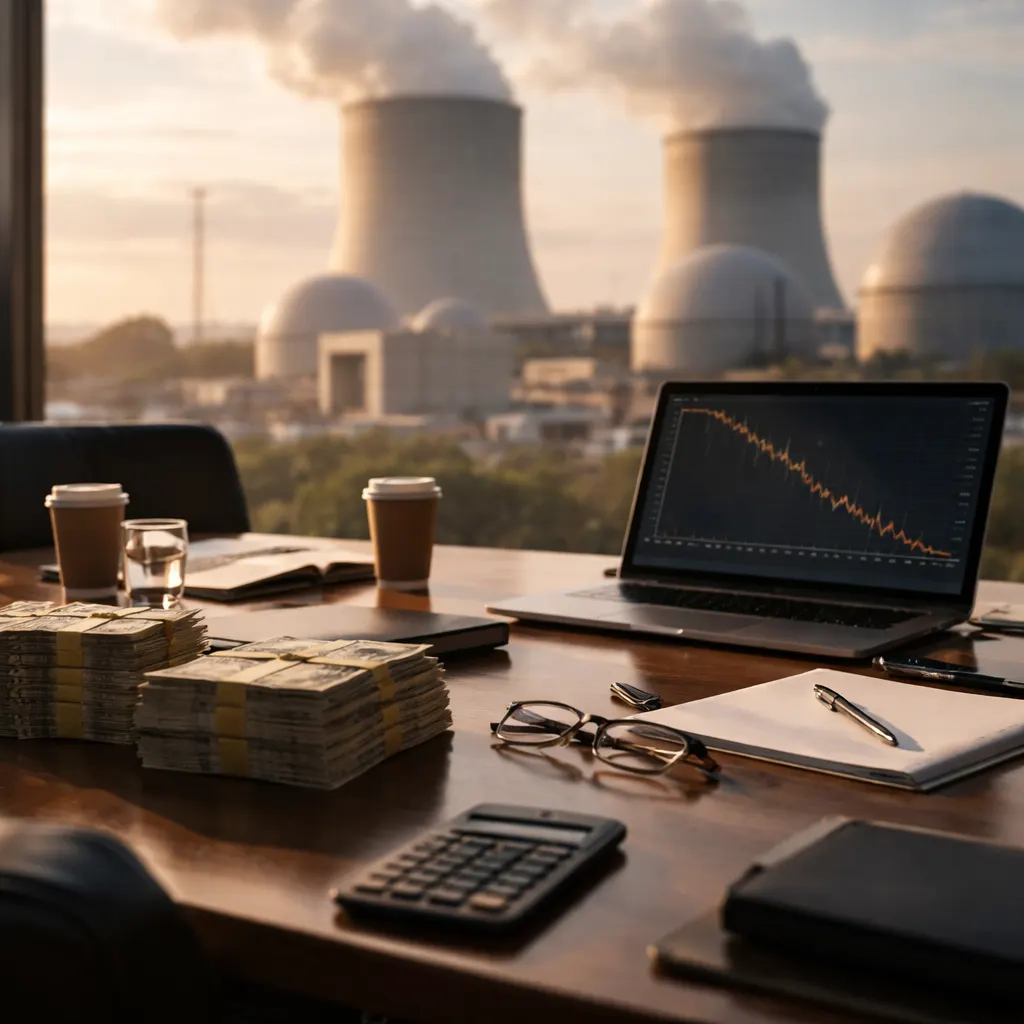
Investors have pumped more than $6 billion into nuclear energy startups so far in 2026, setting an all-time high for the sector, according to a new analysis from Crunchbase. The surge is driven by expectations that artificial intelligence will dramatically increase demand for electricity, the report says. But the analysis warns that enthusiasm for nuclear companies in public markets has weakened recently, with several high-profile IPOs now trading well below their peak prices.
This year's total funding far exceeds any prior period, including 2025, which previously held the record, Crunchbase data shows. The number of funding rounds is also at historically elevated levels. A handful of heavily financed companies captured most of the capital: Massachusetts-based Commonwealth Fusion Systems raised $1 billion in July for what it calls the world's first commercially viable net energy fusion machine, while Valar Atomics secured $1 billion across two Series B rounds for its grid-independent reactor technology. The report charts 11 of the year's largest funding rounds in the nuclear sector. In the past six months alone, at least three nuclear companies went public with initial valuations above $1 billion, but most have since fallen sharply. X-energy, a small modular reactor and fuel engineering developer based in Rockville, Maryland, debuted in April at a $12 billion valuation and has lost roughly half its value since then. Summer IPOs from Standard Nuclear in Oak Ridge, Tennessee, and Deep Fission in Berkeley, California, are both trading well below their former highs. Even Oklo, the Sam Altman-backed fission company that helped spark the nuclear IPO wave with its 2024 SPAC listing, has seen its shares drop about two-thirds from their peak roughly a year ago.
The report notes that it's unclear whether the recent stock declines reflect doubts about the technical viability of nuclear startup goals or simply a sense that prices had climbed too high. In the U.S., growing public opposition to massive data center construction has also affected energy companies hoping to supply power to those facilities and contributed to investor wariness, the analysis finds. The report also points out that next-generation nuclear technology remains in early stages. Over recent decades, the U.S. Energy Information Administration reports, very little nuclear capacity has been built due to steep capital costs and extended licensing and approval timelines. Scalable fusion power hasn't yet come online anywhere.
Still, the report observes that a wide range of nuclear projects are advancing. Multiple companies developing small modular reactors and microreactors have active projects in Texas, Idaho, Utah, and Tennessee, according to the EIA, with a longer list of projects in late-stage planning. The substantial capital raised in recent months from both public offerings and private investment rounds has given startups the financial runway to continue moving forward despite the recent public market pullback. For companies betting on nuclear's role in powering AI infrastructure, the tension between deep-pocketed private backers and skittish public investors will test whether technical ambition can translate into sustained market confidence. The gap suggests that while venture capital remains willing to fund long-cycle energy bets, public shareholders may demand clearer milestones before rewarding the sector with premium valuations.