
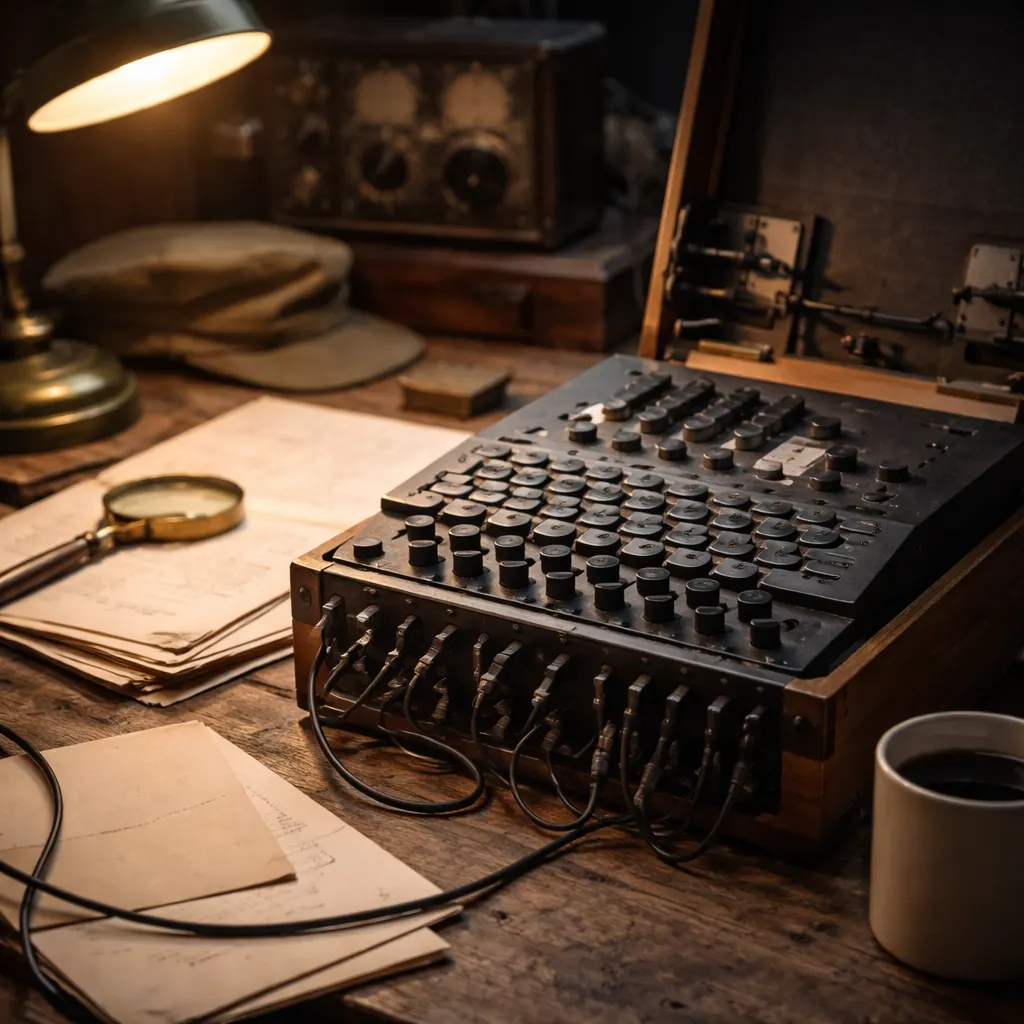
Two cryptanalysts have decoded a pair of Enigma messages that remained unbroken for decades, using large language models from OpenAI and Anthropic to solve puzzles that had stumped human researchers since 2005. The breakthroughs, announced in a report published September 25 by TechCrunch, demonstrate how modern AI systems can replicate the kind of cryptographic work Alan Turing performed during World War II when he built the Bombe computer to crack Nazi Germany's encrypted communications. While the war-era decryption effort broke most Enigma messages, a small number of archival communications stayed locked away, typically because of transcription mistakes or encoding errors made by the original operators.
Developer Carter Leffen instructed OpenAI's newest model, Astra, to locate and decrypt an unsolved Enigma message from a database. The model conducted its own archival investigation, identified context clues, constructed a working simulation of the Enigma machine, and successfully recovered the plaintext of a message that had resisted decryption for two decades. Leffen then used Astra to create an interactive website that walks through the entire problem. Separately, on September 21, cybersecurity executive Jack Willis contacted cryptology researcher Frode Weierud to report that he had used Anthropic's Claude Opus 5 model to break a different unsolved message. Willis gave Claude considerably more direction, and the model ultimately leveraged the known signature of a specific officer's name to decrypt the communication.
Weierud, a retired electrical engineer who runs the Crypto Cellar website hosting Enigma message databases and cryptology resources, confirmed Leffen's solution last week and said it left him in "awe." According to Weierud, "GPT–6 Astra is behaving like a very professional cryptanalyst and archive researcher." He noted that what the AI accomplished in two days would require weeks or even months of human effort, adding that he personally spent several weeks investigating the German federal archive files the Astra model referenced. The report notes that just seven unbroken Enigma messages now remain, along with one message where the plaintext is known but the encryption method still can't be explained.
The success of these AI models stems from their ability to perform multiple research tasks simultaneously and autonomously. The Astra model's logs reveal discussions of archived messages in a "private collection" not hosted on Weierud's public website, though he remains uncertain whether the model actually accessed them or found them shared elsewhere online, or perhaps tapped into the German government's public archives. The models' capacity to search databases, recognize patterns in historical context, build functional software simulations, and apply cryptographic techniques without explicit programming for each step mirrors the analytical process human cryptanalysts follow, but at dramatically accelerated speed. These particular Enigma messages stayed encrypted not because the underlying cipher was too difficult, but because human transcription errors and operator mistakes created irregularities that broke the standard decryption approaches researchers had applied for years.
The breakthroughs suggest that AI systems may soon solve the remaining handful of encrypted Enigma communications that have eluded human cryptanalysts for decades. The report indicates that with only seven messages still unbroken, and AI models now demonstrating the ability to conduct independent archival research and build their own decryption tools, the complete record of intercepted Enigma traffic may finally become readable. The parallels to Turing's original work are striking: just as the Bombe represented an early computer designed to automate cryptanalysis during wartime, modern language models are now passing what might be called "Turing's other test"—not distinguishing human from machine intelligence, but matching the cryptographic problem-solving that defined his career. As AI agents grow more capable of autonomous research and technical simulation, the boundary between tasks requiring human expertise and those machines can handle independently continues to shift. The technology's willingness to pursue leads through private archives and government databases without explicit instruction hints at both the potential and the unpredictability of deploying these systems on complex historical puzzles.