
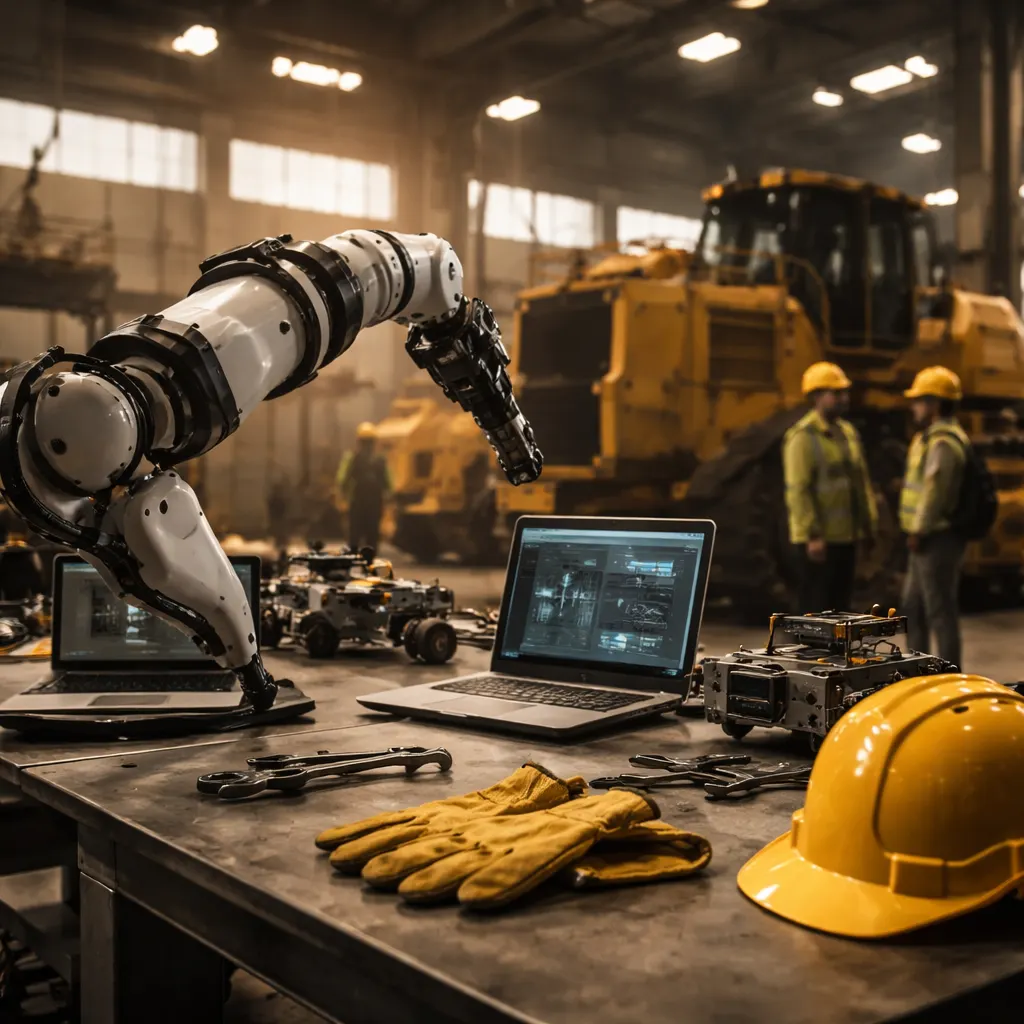
Industrial equipment manufacturer Caterpillar is committing $100 million over the next five years to train its 118,000 employees in artificial intelligence, autonomy, and robotics, the company's CTO revealed in remarks reported by TechCrunch on August 30. The investment reflects how the company is applying decades of experience automating mining equipment to deploy AI across construction sites, quarries, and its own internal operations. Chief technology officer Jaime Mineart told the outlet during a fireside chat at the Ai4 conference in Las Vegas earlier this month that the firm now operates roughly 1.6 million connected assets worldwide, generating more than 16 petabytes of structured data.
The company's product line now includes automated haul trucks, drilling equipment, underground loaders, dozers, and remote-controlled construction machinery, all supported by a software command center, fleet management tools, and remote terrain intelligence. One recent addition is the Cat AI Assistant, which enables field technicians to use voice commands while standing beside a machine to access repair procedures, diagnose issues, and identify necessary parts before starting work. The assistant relies on proprietary information collected from Caterpillar's connected machines. The firm also uses AI to scan sites and create digital twins in manufacturing for operational analysis, as well as deploying AI agents to modernize legacy code, generate and test new software, and catch defects earlier in the development cycle.
According to Mineart, the toughest challenge in autonomy and physical AI isn't building the technology itself but integrating it into customer worksites and existing workflows. She noted that the transition requires rethinking how people work alongside the technology and how current processes must change, with some operators shifting from controlling a single machine to supervising multiple machines from a remote command center. Mineart said the company draws on experienced operators to help train AI systems, tapping into institutional knowledge accumulated over decades. The Cat AI Assistant is now in use by customers, operators, and technicians, she added.
The training investment comes as Caterpillar reaps financial benefits from the broader AI infrastructure boom. The company's quarterly revenue hit an all-time high of $20.5 billion in the second quarter, driven by strong demand for power-generation equipment deployed in data centers. Sales in its power-generation division surged 72% to reach $3.10 billion, and CEO Joe Creed remarked that "no one is slowing down" regarding demand for cloud computing and generative AI infrastructure. Mineart emphasized that the company is in "this super exciting time" where it can transfer all the learning from mining automation into far more dynamic environments like jobsites, quarries, and construction sites. The workforce training program signals that even as machines grow more autonomous, successfully deploying AI at industrial scale depends as much on preparing people as perfecting algorithms. Companies rushing to integrate AI may find that the costliest bottleneck isn't the technology itself but the organizational redesign required to make it work in practice.