
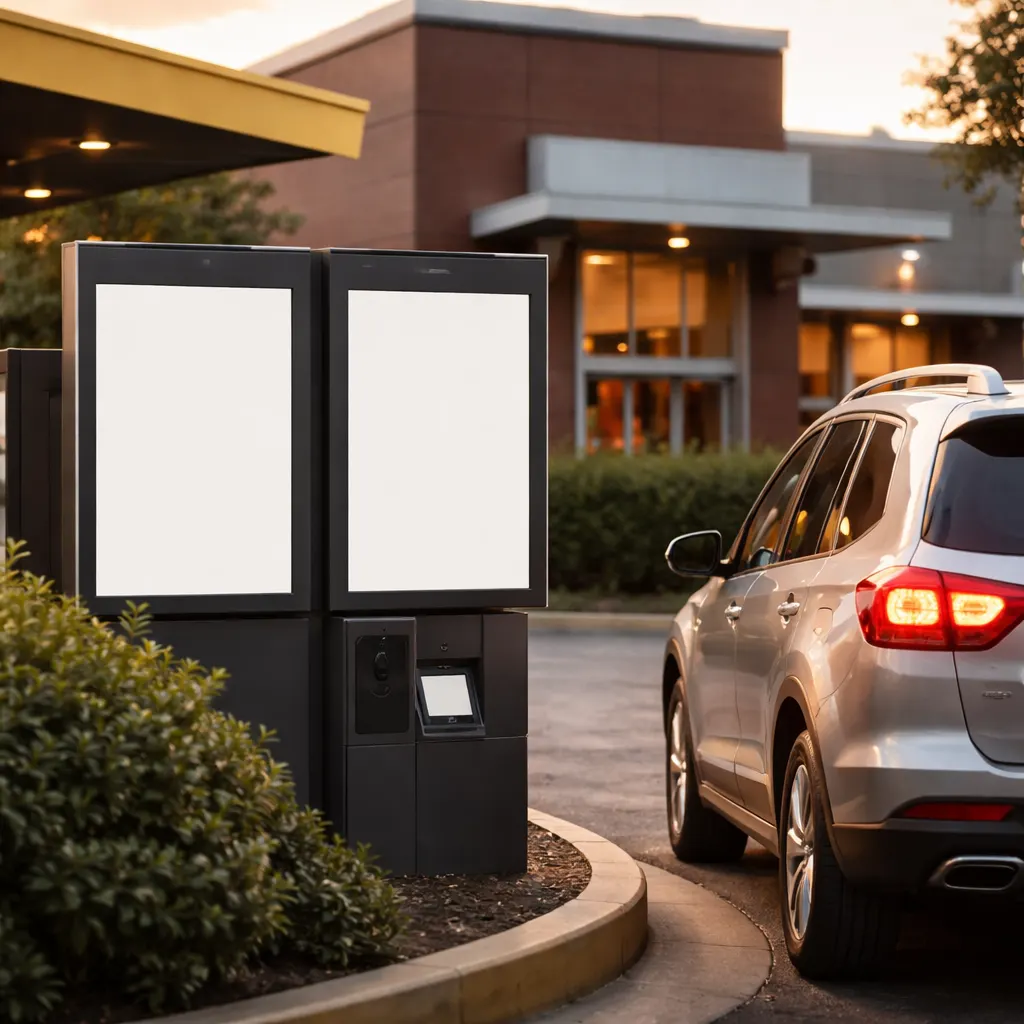
McDonald's is testing a new AI voice assistant called Archy at a handful of US drive-thrus, two years after shutting down a similar system that ran for three years at about a hundred locations, according to an analysis published by CIO. The company's first automated order-taking effort, launched in 2021, didn't collapse because the technology made too many errors—it collapsed because the system couldn't recognize when it was making errors. That distinction is reshaping how the chain approaches putting AI in front of customers.
The earlier system struggled with multiple accents and dialects, and franchisees grew frustrated with infrequent updates and costs that never justified replacing human workers, the report notes. When the QSR Drive-Thru Report audited three major chains using automated voice systems in 2025, it found AI achieved 81% accuracy when handling orders independently. But when the system got stuck and handed the conversation to an employee, accuracy jumped to 95%. The gap wasn't about how well the technology listened—it was about what happened when the machine didn't understand the customer. Most incorrect orders came from customizations or requests that deviated from standard menus, meaning a small group of customers accounted for the majority of errors. The system appeared correct nearly all the time in aggregate, while specific customers routinely received something different from what they ordered.
The report finds that the core issue wasn't AI accuracy but whether the system knew to pause and transfer control when it couldn't complete a task. For three years, employees stood near drive-thru speakers who could have resolved issues immediately, but they didn't step in because nobody—and nothing—called them. The moment when an automated system is left alone with a customer, with no one monitoring, doesn't show up in any performance metric, yet it's the only moment that matters when something goes wrong. CEO Chris Kempczinski told analysts in August 2024 that restaurant managers were overwhelmed by multiple product launches in just a few weeks, each requiring separate training, and with drive-thru service generating around 70% of US business, pressure builds quickly on the front line.
The case for revisiting AI became urgent after service times lengthened and customer satisfaction dropped, the report explains. But returning to a failed initiative requires understanding what went wrong, and the most obvious explanation isn't always correct. What's needed now is rigorous testing to ensure the system redirects customers when it misunderstands them, not just when a product is out of stock or off the menu. The employee who takes over must see what's already happened and have the authority to resolve the issue without forcing the customer to start over. Before deployment, someone has to document in writing what specific errors specific customers will tolerate and ask whether the organization accepts that outcome—a decision that can't be signed off by the tech team alone, because it's not a technical statement. The report concludes that reaching customers doesn't depend on systems never making mistakes; it depends on what teams do when systems make mistakes and know when to stop. Organizations shouldn't limit AI to areas where errors stay invisible, because the value will be invisible too—that's why McDonald's has returned despite the reputational cost it's already paid. The challenge for any business deploying customer-facing automation is deciding upfront which customers will bear the brunt of failures and whether leadership is willing to accept that trade-off. Success hinges less on perfecting the algorithm than on designing the handoff between machine and human so no interaction falls into a gap where no one takes responsibility.