
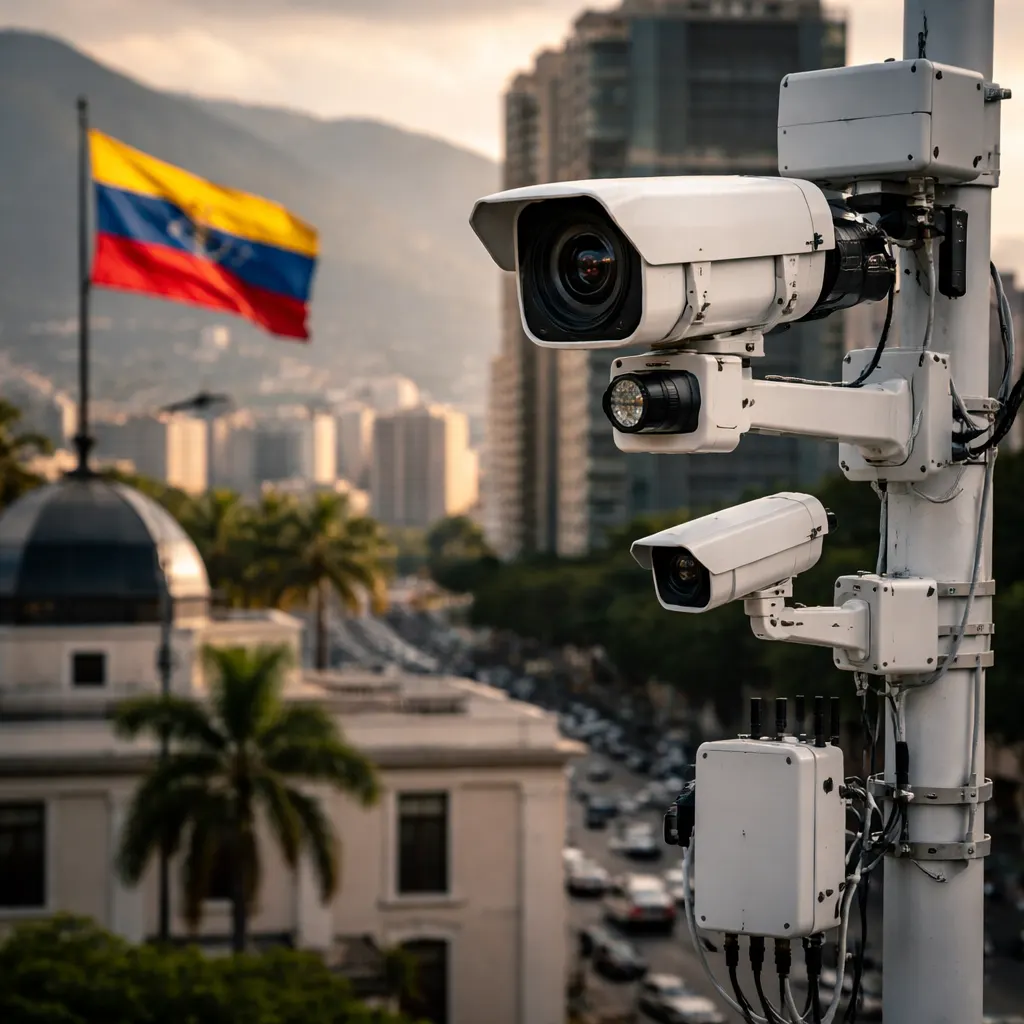
Venezuela is set to become one of the first nations outside China to deploy Beijing's latest generation of AI-powered surveillance systems, despite now being effectively controlled by the United States, according to a report published by the Australian Strategic Policy Institute (ASPI) this week. The think tank warns that the planned adoption will make Venezuela the most advanced user of Chinese surveillance technology in the Western Hemisphere, creating a paradox where Washington now oversees a government dependent on the very monitoring systems it has sought to restrict globally. The report calls on U.S. Secretary of State Marco Rubio, who effectively acts as the country's overseer, to dismantle the apparatus before it takes root.
Venezuela built its surveillance infrastructure a decade ago, relying heavily on technology from Chinese firms, the report explains. In 2025, then-vice president Delcy Rodríguez spearheaded an initiative that resulted in an agreement to bring in Chinese-built AI systems designed to enhance the state's existing monitoring capabilities. One company involved in that deal is iFlytek, which Washington banned in 2019 for its role in suppressing China's Uyghur Muslim population in Xinjiang. The U.S. took over Venezuela in January 2026 and installed Rodríguez as leader, yet ASPI researchers found no evidence she has abandoned her plans to expand Chinese surveillance technology in the country.
The report states that while Venezuelan authorities likely can't replicate "China's full-stack surveillance apparatus," there's concern that "Chinese or other AI tools could strengthen a domestically directed apparatus already used to manage dissent, restrict information and preserve political power." ASPI's analysts argue that this situation leaves Venezuelans in roughly the same position they occupied before the U.S. replaced former president Nicholas Maduro. The think tank warns that the planned systems will use large language model-based AI for surveillance and control, representing Beijing's newest generation of monitoring technology.
The arrangement creates a strategic vulnerability for Washington as it seeks greater influence in Venezuelan affairs, with U.S. leadership now effectively running a nation that depends on surveillance systems built by companies America has sanctioned. The report notes that Beijing recognizes both the opportunity this situation presents and the risks it poses to Chinese firms and political clout in the region, with China's leaders appearing to strengthen oversight of state-owned assets abroad to protect them. ASPI researchers explain that Venezuela's surveillance state was specifically designed to manage political opposition and control information flows, making any enhancement of its capabilities a direct threat to civil liberties even under new leadership.
ASPI calls on Rubio to take apart the surveillance infrastructure and push for political reforms, arguing that doing so would demonstrate democracies' willingness to counter China's efforts to export its monitoring technology and dismantle it wherever possible in defense of individual freedom. The report suggests that action in Venezuela could serve as a template for how democratic nations respond when they gain access to Chinese surveillance systems operating in authoritarian states. The stakes extend beyond one country: if the U.S. can't or won't remove Chinese AI surveillance from a nation it directly controls, it signals that such technology may be impossible to uproot once installed, regardless of who holds power. Markets may need to reckon with a reality where geopolitical control and technological sovereignty increasingly diverge, forcing difficult choices about which matters more in practice.