
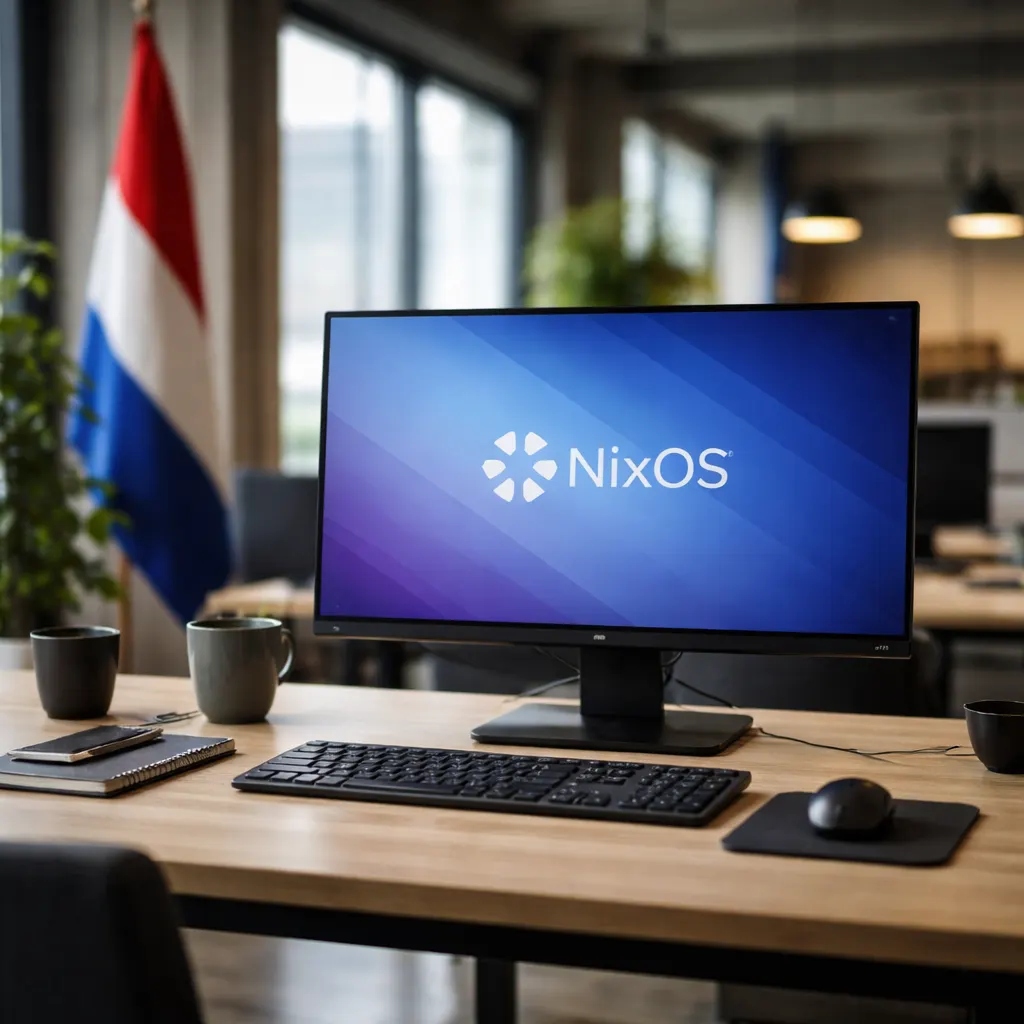
The Dutch government is supporting an initiative to create a free and open-source workplace environment for public administration, including a desktop operating system built on NixOS. The DAWO Project—which stands for "Digitaal Autonome Werkomgeving Overheid," or "Digital Autonomous Government Work Environment"—received detailed coverage this week on Dutch tech news site Tweakers.net, bringing the months-old effort into sharper public view. Rather than a standalone product, the initiative envisions a blueprint combining interchangeable elements for operating systems, cloud infrastructure, artificial intelligence, communications, and collaborative work.
The project gained official backing in July when the Dutch government's Interdepartmental Committee on Government Operations commissioned three government IT providers—DICTU, SSC-ICT, and the ICT division of DUO, the Education Executive Agency—to build a standardized, more sovereign digital workplace. Small-scale pilots are already running within Dutch public bodies, with development still in early stages. The Association of Netherlands Municipalities announced in April that four municipalities were participating in trials; that number has since grown to eight, though this remains a small share of the country's hundreds of municipalities. For its client operating system, the project first tested openSUSE, then moved to Fedora, before ultimately choosing NixOS.
The wider blueprint originates from the Ministry of the Interior and Kingdom Relations, with components including MijnBureau—a self-hosted workplace suite assembled from projects such as Nextcloud, Collabora, Element, and OpenProject. The MijnBureau developers are also working with France's La Suite and aligning their efforts with Germany's openDesk, the suite being adopted by the International Criminal Court following US sanctions against senior court officials. Tweakers cites these sanctions as a driving force behind the Dutch initiative. The project releases code through the Ministry's government-hosted Forgejo instance, with repositories also accessible via Codeberg for external contributors.
NixOS delivers more than a conveniently Dutch heritage. It isn't under the control of a commercial vendor, while its declarative configuration and reproducible deployments make it appealing for managing and auditing large machine fleets. The Nix packaging system was founded by Dutchman Eelco Dolstra; the first version of the NixOS distribution built with it came from another Dutchman, Armijn Hemel; and the NixOS Foundation operates from the Netherlands. The report notes that government interest brings both funding and momentum, observing that the prospect of public sector money is proving highly effective at spurring activity and cooperation in the free and open-source software world. The expansion from four to eight pilot municipalities signals that early testing hasn't derailed the initiative, though the pace remains measured as development continues. For public administrations wary of vendor lock-in and seeking greater digital sovereignty, NixOS's reproducible approach offers a path that balances technical rigor with autonomy—though whether this model scales beyond pilot programs will ultimately determine its impact on European government IT strategy.