
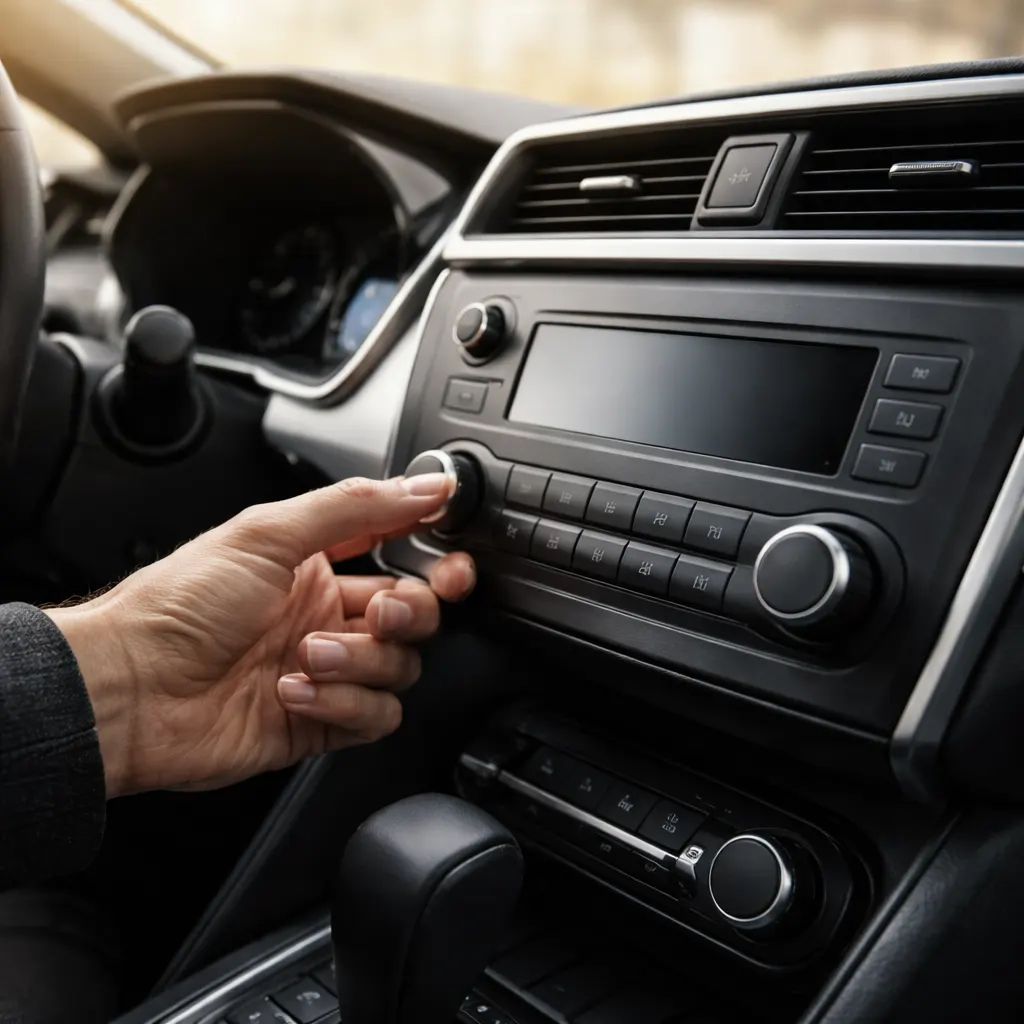
The U.S. House of Representatives passed legislation Wednesday that would mandate AM radio in all new vehicles at no additional charge to buyers. The AM Radio for Every Vehicle Act, which received overwhelming bipartisan approval, would direct the National Highway Traffic Safety Administration to require automakers to install AM radio as standard equipment in new cars, trucks, and SUVs. The bill now advances to the Senate, where it has already secured significant support from both parties.
The House vote comes after a growing number of manufacturers have dropped the century-old broadcast band from their vehicles. BMW, Rivian, Tesla, and Volvo have all moved away from AM radio in favor of software-defined vehicles offering streaming platforms like TuneIn and SiriusXM. Ford had also removed AM radio from certain models but has since reversed that decision. Electric vehicle makers have led this shift because electromagnetic interference from electric motors can disrupt the frequencies AM radio uses, which automakers say degrades signal and audio quality. Tesla's base Model 3 and Model Y versions don't include AM receivers, while Rivian's new R2 SUV lacks both FM and AM receivers, though it provides AM/FM radio through the digital platform iHeartRadio at no cost.
The Senate version of the bill, co-sponsored by Senators Ed Markey (D-Mass.) and Ted Cruz (R-Texas), has attracted 60 co-sponsors—a critical threshold for overcoming a filibuster. In a joint statement Wednesday, Cruz, who chairs the Senate Committee on Commerce, Science, and Transportation, and Markey declared: "This vote sends a clear message to car manufacturers that AM Radio is a lifeline that must be protected in new vehicles." According to the senators, AM radio serves as "an essential communication tool for tens of millions of Americans" across emergency response, sports, entertainment, and news. Proponents have argued that AM radio's ability to transmit signals over long distances makes it critical for delivering information during emergencies.
The legislation reflects a rare moment of Washington consensus driven by support from Democrats, Republicans, the broadcast industry, emergency responder organizations, and former Federal Emergency Management Agency administrators. Until recently, advocates for an AM radio mandate had been unsuccessful in their lobbying efforts. But the groundswell of bipartisan backing has pushed the bill closer to becoming law. If the Senate passes the measure, automakers could be required to include AM radio in new passenger vehicles within the next year, ensuring that the technology remains accessible even as the industry shifts toward electric powertrains and digital streaming services. The mandate would preserve AM radio as what supporters call a trusted resource for commuters and communities nationwide, particularly during crises when other communication networks may fail. For an industry navigating the tension between technological advancement and regulatory obligation, the outcome will test whether legacy infrastructure can coexist with the connected cockpit—and whether safety arguments can override cost and engineering preferences.