
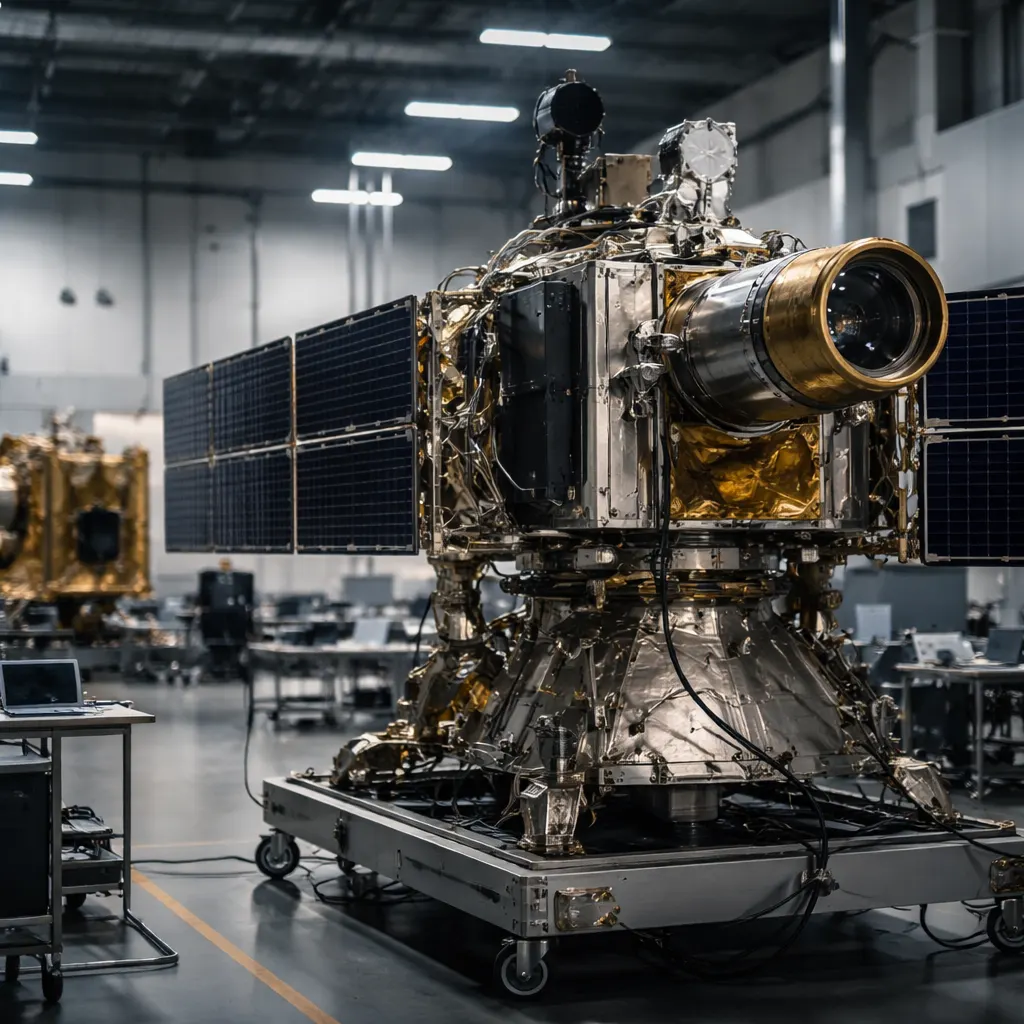
A Florida-based startup is preparing to launch the first system capable of transmitting energy between two separate satellites using lasers, according to a report in Wired. Star Catcher, headquartered in Jacksonville, will send its prototype aboard a SpaceX rocket this week to test whether concentrated solar power can be beamed across orbit to another untethered spacecraft. If the experiment works, it would mark the first successful laser-based energy transfer between two independent objects in space—a milestone for an industry concept that dates back decades but has become newly viable as launch costs drop.
The company's design involves satellites fitted with arrays of lenses that capture sunlight and convert it into specific wavelengths, which Star Catcher claims can deliver up to 10 times more power than ordinary diffuse sunlight. These satellites emit laser beams that function like wireless transmission cables, directing energy to other spacecraft that need it. Star Catcher announced $65 million in funding earlier this year, secured a $30 million award from the US Space Force, and signed 40 letters of intent from potential customers along with 10 power purchase agreements—long-term contracts that signal commercial demand. The company set a terrestrial record last year for beaming power on the ground, surpassing a previous mark held by DARPA, when it transmitted more than 1 kilowatt to standard solar panels—enough electricity to run a microwave. The satellite launching this week, called Protostar, will test whether its tracking technology can maintain a power connection to a cubesat as the distance between them changes.
Chief executive Andrew Rush says there isn't a power grid in space and that current satellite operators "just [go] on these little camping trips." According to the report, Rush describes Star Catcher as still in the "crawl" phase but progressing toward walking and then running, with plans to offer "meaningful commercial power provisioning services in orbit before the end of the decade." A researcher at the Max Planck Institute for the Science of Light, Hanieh Fattahi, notes that while launching hardware into orbit was once prohibitively expensive and made space-based power generation impractical, falling launch costs are now making orbital industries that can supply such energy more feasible. The Naval Research Laboratory completed a space laser experiment in 2023 that operated for 100 days, though the beam traveled less than 5 feet within a single unit and ran at only 11 percent efficiency—issues Fattahi says must be resolved alongside challenges like tracking systems, heat management, and ensuring equipment survives years in the cold vacuum of space.
The report explains that Google, SpaceX, and multiple startups are all planning to build data centers in space, but those facilities will require substantial power to operate. In a launch environment where each kilogram costs thousands of dollars, shrinking battery mass while adding more useful instruments—or in the case of space data centers, GPUs—can yield significant returns. Star Catcher's power nodes serve as both solar power plant and transmission line, promising more uptime and higher profit for satellite operators. Lasers offer an advantage over microwave-based systems, which can transmit more energy but need massive receivers, whereas lasers can strike much smaller targets. Rush frames what Star Catcher is building as transformational for the space sector in the same way reusable launch vehicles were, arguing that as the company expands its infrastructure in orbit, it will make larger and more capable industries in space more economical. The confluence of falling launch costs, commercial interest in orbital infrastructure, and proven ground-based power transmission records suggests the company's vision may be shifting from science fiction—where Isaac Asimov imagined it in 1941 and NASA studied it in the 1970s—toward operational reality. For a technology that's been theoretical for generations, the success or failure of this week's launch will signal whether space-based power grids can move from prototype to commercial service within this decade. The real test isn't just whether the laser hits its target—it's whether satellite operators and space data center builders will pay for power delivered through beams instead of batteries, fundamentally changing how orbital infrastructure is designed and financed.