
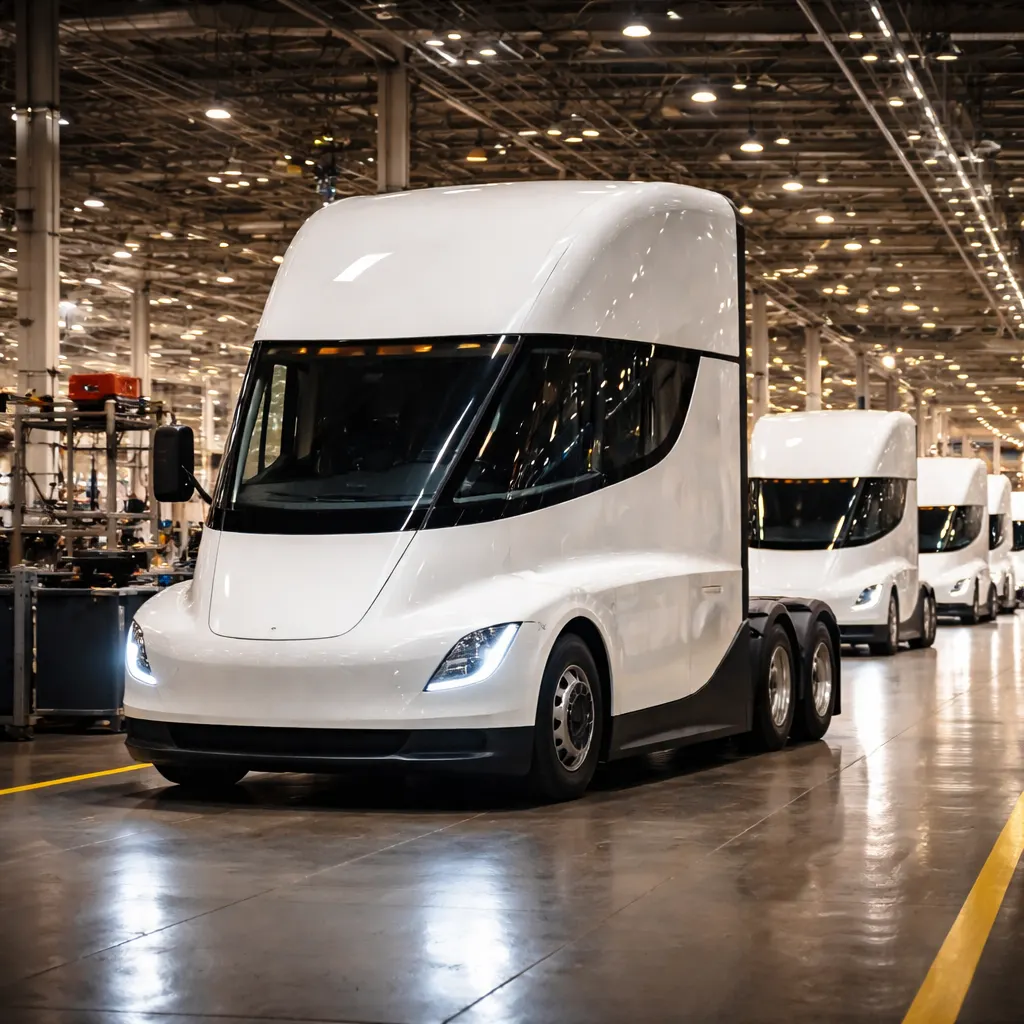
Tesla officially launched high-volume production of its Semi electric truck at a livestreamed event in Sparks, Nevada, nearly a decade after the vehicle's concept debut in late 2017, according to a report published by WIRED. The production milestone comes as CEO Elon Musk pushes for a $20 trillion company valuation based on robotics and autonomous driving, yet the Semi launch focuses squarely on conventional electric trucking. The event targeted fleet managers with a pitch centered on cost savings rather than futuristic technology.
The long-range Semi will deliver an estimated 500 miles on a single charge—roughly matching the average daily distance covered by US long-haul truckers—while the standard model offers an estimated 325 miles per charge, Tesla's vice president of Vehicle Engineering Lars Moravy confirmed at the event. Rival electric semi trucks advertise ranges spanning 155 to 430 miles, according to the report. This week, a coalition of shippers including Microsoft and PepsiCo ordered 2,500 Tesla Semis in what the report calls a record-setting purchase, with deliveries scheduled to start this year and continue over the next 18 months. If those vehicles reach customers, they would nearly double the current number of heavy-duty electric trucks operating on American roads. The group chose Tesla after "assessing price, performance, production capability, and service support," Meena Bibra of the Smart Freight Centre told WIRED, though carriers may also select electric trucks from Kenworth, Ride, and Volvo if those better suit their needs.
Musk said in a pre-recorded video that the truck "is going to make a ton of sense economically because the cost of electricity is much less than the cost of diesel, especially in these crazy times," referencing the ongoing Iran War that has pushed US diesel prices to record highs this month—nearly double what they were a year earlier. Tesla's Full Self-Driving (Supervised) driver assistance feature won't be available on the Semi yet, though Musk promised it would arrive "in the very near future." Enhanced Autopilot, the feature's predecessor, was originally promised during the 2017 concept unveiling.
Electric semis face steep challenges in the US market, where they currently represent a tiny fraction of sales compared to China's nearly 30 percent share of heavy-duty truck sales, the report notes. Upfront costs run two to three times higher than diesel equivalents, and charging infrastructure remains scarce—Tesla's website shows just two public megawatt chargers operating in the Los Angeles area, though Semi program head Dan Priestley said the company plans to open 30 by year's end. The Trump administration and GOP allies, whom Musk financially supported, eliminated billions in federal EV subsidies last year and are working to relax fuel economy standards for truck engines that would have imposed aggressive climate targets, the report states. Heavy trucks alone generate roughly 7 percent of US greenhouse gas emissions. Yet the record diesel prices create a fresh opening for electric alternatives, with the shipper alliance's pooled purchasing power helping drive down truck prices, according to the group. The collision of geopolitical fuel disruptions and domestic policy rollbacks may determine whether Tesla's long-delayed Semi gains traction beyond early adopters. For fleet operators weighing battery versus diesel, the economics hinge less on innovation than on how long crude oil stays expensive and whether charging stations appear fast enough to support regional routes.