
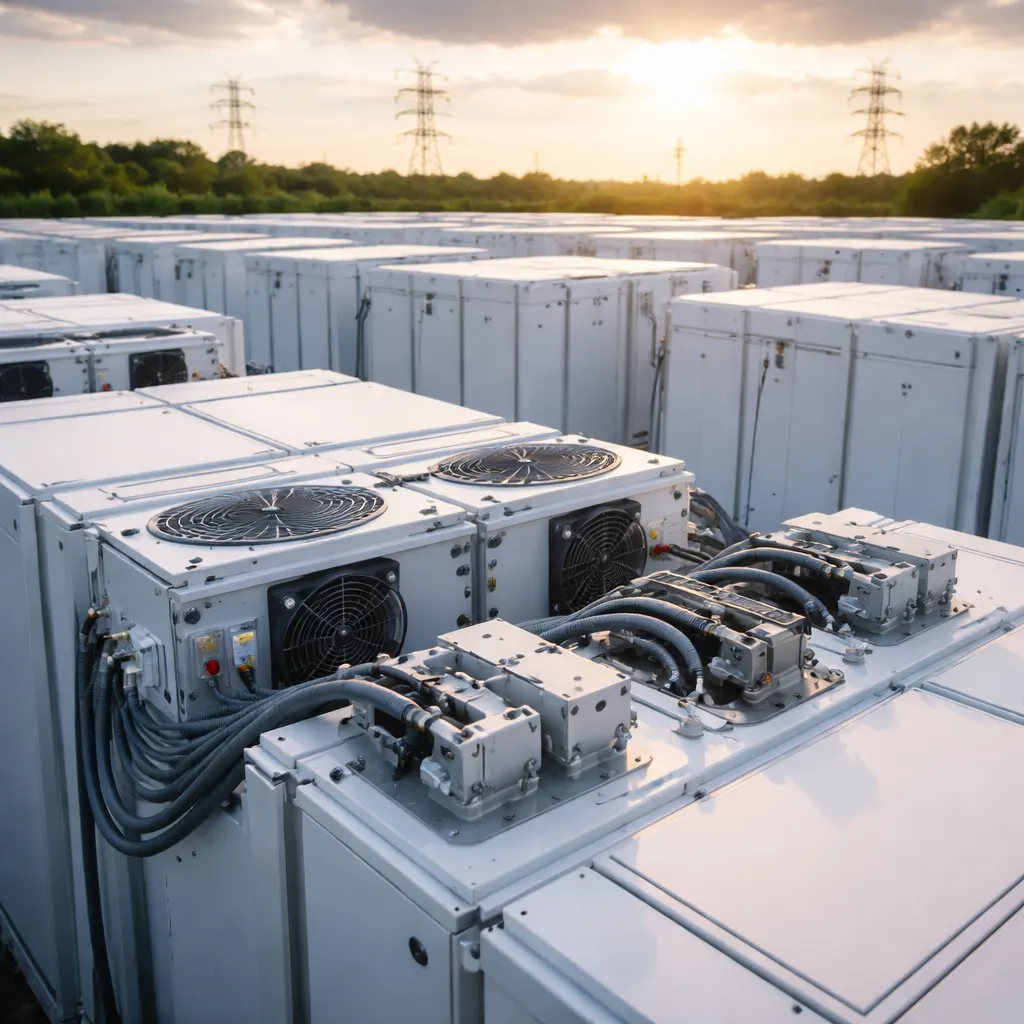
Battery installations reached an all-time high in the United States during the second quarter of 2026, with 20.2 gigawatt-hours of fresh capacity coming online, according to a new report published by Benchmark Mineral Intelligence and the Solar Energy Industries Association. That volume can power roughly 700,000 homes for a day. The surge is placing the nation on track to install 71 gigawatt-hours of batteries this year, a 20% jump from 2025.
Massive utility-scale systems drove most of the record-breaking quarter, with seven new gigascale battery projects — those exceeding one gigawatt-hour in capacity — going live during the three-month period. Behind-the-meter batteries, which encompass both home and industrial storage systems owned by property owners or companies rather than utilities, also expanded. Within the commercial sector, data centers accounted for roughly three-quarters of new battery deployments. Residential battery installations, however, experienced a steep decline, with home systems projected to fall 16% in 2026 compared with the previous year.
"It really came down to a handful of big projects," says Shan Tomouk, energy storage and energy lead for Benchmark Mineral Intelligence. The report attributes the residential slowdown largely to the expiration of a tax credit that subsidized home battery systems in 2025. Home installations are expected to rebound by the decade's end, Tomouk adds, while tax credits for nonresidential batteries have mostly remained intact.
The growth is fueled by falling battery costs and an urgent demand for additional energy storage as renewables like solar and onshore wind power get added to the grid, the report finds. Batteries represent a bright spot in the energy sector right now, with one analyst calling this "one of the strong sectors in the US." Nearly all systems currently coming online rely on cells manufactured in China, though some are assembled into complete storage systems domestically. Tariffs had already been pushing the industry toward American production, and starting this year, energy storage tax credits require projects to cap their dependence on Chinese-imported batteries.
A wave of manufacturing capacity is set to launch in the United States, but these facilities likely won't satisfy demand until at least 2030, according to the report, meaning prices could rise in the interim. Home battery systems should recover as the market matures, while utility-scale projects continue their expansion. The shift toward domestic battery production marks the next chapter for an industry riding momentum from declining costs and renewable energy's steady climb. Companies investing now in American manufacturing face a narrow window before domestic supply catches up with the sector's explosive trajectory, and those betting on reshored production must weigh near-term cost pressures against longer-term supply chain security.