
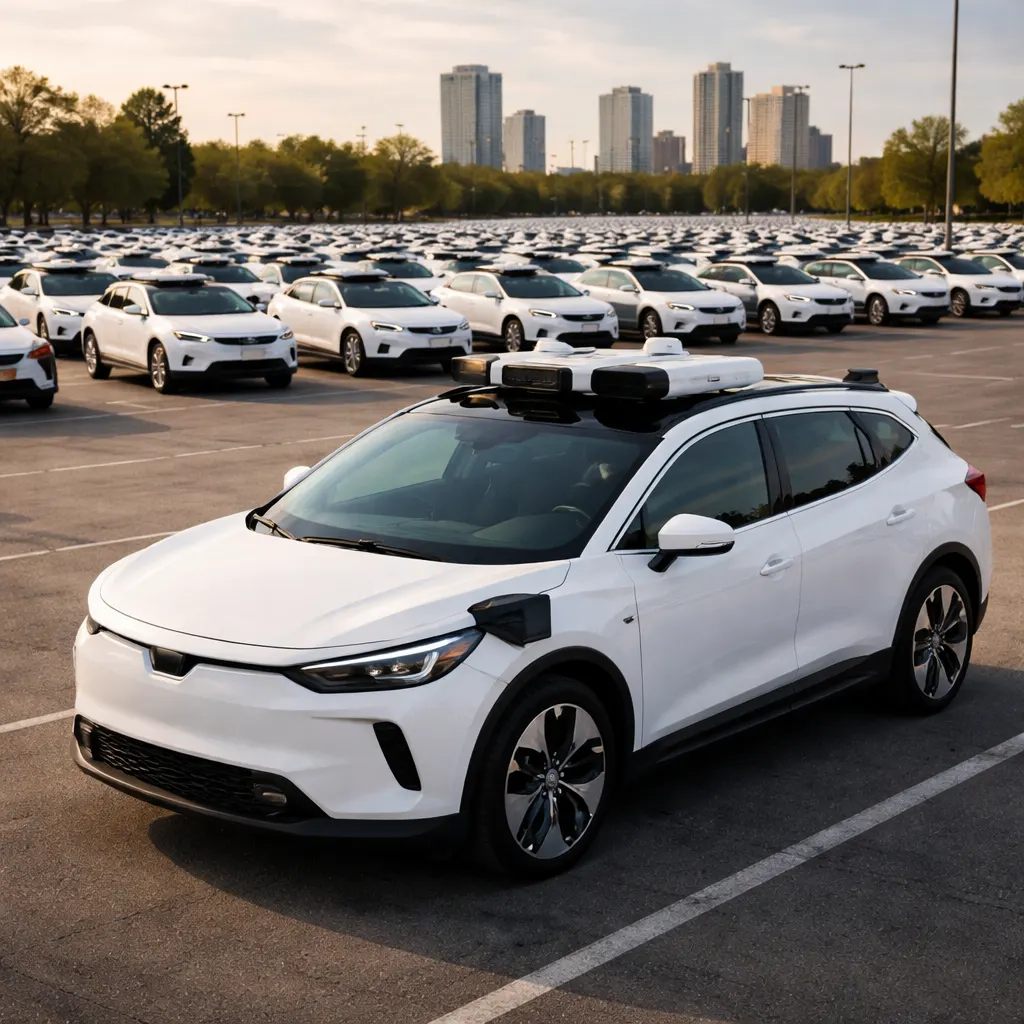
Waymo now operates roughly 4,000 robotaxis across the United States, but approximately 80% of that fleet is concentrated in just two states: California and Texas, according to a TechCrunch analysis of fleet data published September 24, 2026. The report reveals that while the Alphabet-owned company has expanded service to 15 cities and now handles 500,000 paid rides weekly, the geographic distribution of its vehicles tells a story of strategic focus rather than broad dispersal. The remaining 800 or so vehicles are spread across other states including Arizona and Florida, with the company betting heavily on a new Chinese-built minivan to drive its next phase of growth.
Texas has emerged as Waymo's fastest-growing market, with the fleet there expanding by 49% in just the past three weeks, reaching 1,102 autonomous vehicles registered in the state as of September 24. The surge comes after months of relative stability, with the Texas fleet inching from around 600 vehicles in June to more than 700 by late August before jumping in September. The recent growth is fueled by an influx of Ojai minivans, which now comprise roughly one-third of Waymo's Texas fleet. Meanwhile, California retains the largest share of vehicles overall, reflecting the company's Silicon Valley headquarters and years of early testing and development there. In September 2024, Waymo operated in just three cities — Phoenix, Los Angeles, and San Francisco — compared to today's 15-city footprint, with most commercial launches occurring in the past year.
The TechCrunch report, drawing on state vehicle registrations and data from the Texas Autonomous Vehicle Fleet Tracker, notes that most of Waymo's fleet still consists of white Jaguar I-Pace electric SUVs, but a growing portion are the new Ojai minivans. The Ojai robotaxi is equipped with Waymo's sixth-generation self-driving system and features an interior built for heavy use, an upgraded rider interface, and Google's Gemini AI serving as an in-car assistant. According to the report, New York-based research firm MoffettNathanson, tracking Ojai imports through detailed shipping records, said in its September report that Waymo is on track to import 5,100 of the vehicles into the U.S. by year's end.
The Ojai represents Waymo's bet on achieving mass scale and eventual profitability, but the vehicle's origins complicate that calculus. Underneath Waymo's technology, the Ojai is a minivan manufactured by Zeekr, a brand owned by China's Geely Holding Group, which also owns Volvo. The base Zeekr vehicles, built on the company's SEA-M platform designed for robotaxis and delivery vans, are shipped to the U.S. without Chinese connected-car technology and then sent to Waymo's Arizona factory for installation of the self-driving system. While the Ojai is meant to reduce costs, current U.S. trade policy imposes steep import tariffs on vehicles built in China, raising Waymo's expenses for every unit brought into the country. The report indicates Waymo appears willing to absorb that cost, with Texas clearly on the list for future Ojai deployments alongside Florida, where Waymo operates in three cities, and newer markets like Las Vegas. The strategic focus on Texas makes sense given Waymo's partnership with Uber launched in Austin in March 2025, which lets riders hail robotaxis through the Uber app, and subsequent expansions to Dallas, Houston, and San Antonio. For companies watching the autonomous vehicle space, the tension between scaling ambition and geographic concentration may define the next chapter of commercial robotaxi service, while the reliance on Chinese manufacturing amid tariff pressures raises questions about whether cost advantages can ever materialize under current trade conditions.