
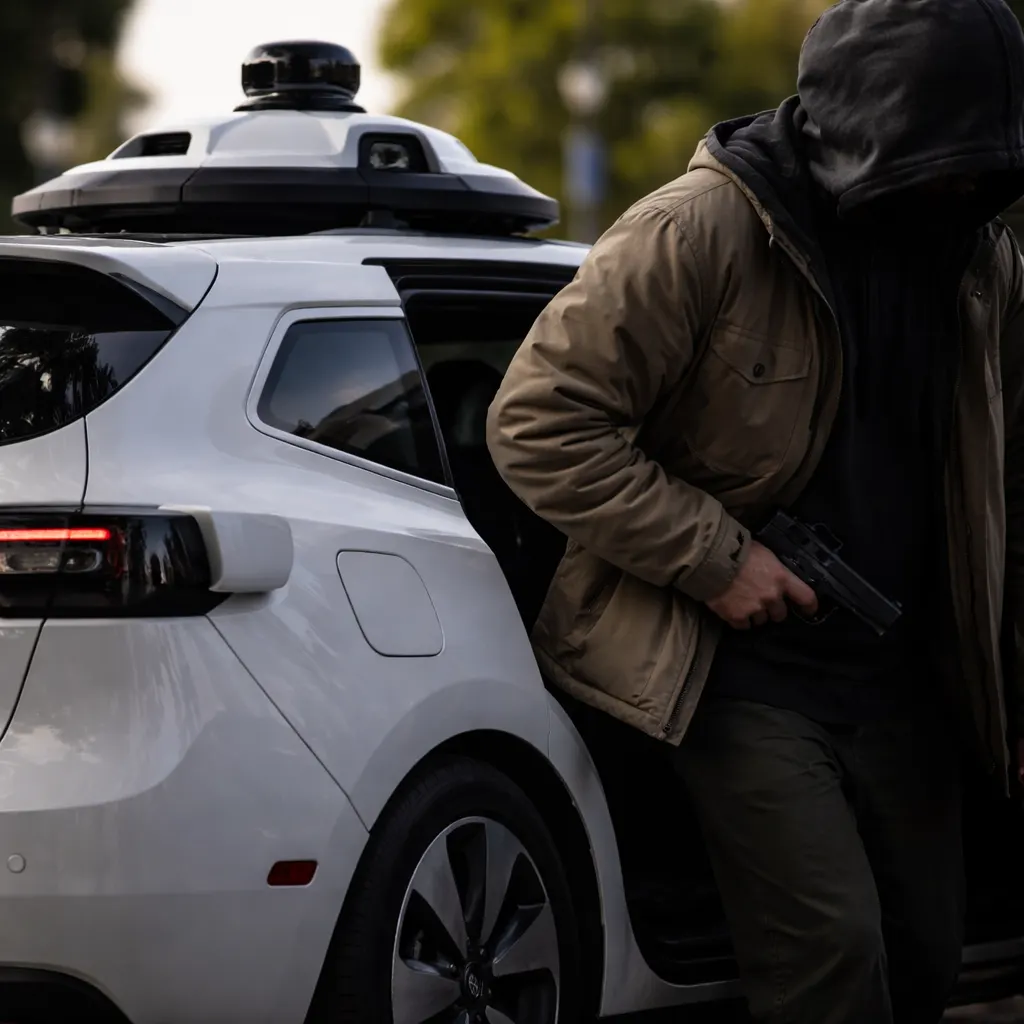
In early September, a Waymo robotaxi detected what it identified as a firearm inside the vehicle, pulled itself over, and contacted emergency services, leading to the arrest of two teenage passengers after police allegedly discovered a loaded AR-style "ghost gun," according to reporting published September 20th, 2026. The incident revealed that Waymo uses automated technology and internal cameras to monitor passenger behavior in real time, flagging potential violations of its terms of service and potentially initiating police responses without human drivers involved. The case has raised unanswered questions about privacy, surveillance, and what riders should expect when stepping into an autonomous vehicle equipped with cameras and artificial intelligence.
Waymo spokesperson Julia Ilina confirmed the company deploys automated technology to help its teams spot potential violations, including the presence of firearms inside vehicles. The company's terms of service ban riders from carrying weapons or anything resembling a weapon, such as toy guns, and require passengers to be at least 18 years old to ride alone in San Francisco—both restrictions the arrested teens allegedly violated. Waymo operates about 70 "remote assistance agents" at any given time across the US and the Philippines who provide advice to the autonomous system but don't directly steer or control vehicles. Law enforcement agencies have obtained search warrants for footage from Waymo's camera-covered cars on multiple occasions, including when the LAPD secured hit-and-run footage recorded by a nearby Waymo vehicle last year. During anti-ICE protests in Los Angeles, five Waymos were vandalized and set on fire amid concerns the vehicles might capture protester images that could be used for identification or arrests. Back in July, Waymo reported two teens to police for underage drinking and shooting a toy gun loaded with water beads from the vehicle, though it wasn't clear whether charges were filed.
Bob Somers, a former engineer at autonomous vehicle company Zoox, said he'd expect Waymo's system to search for a range of potentially dangerous weapons and behaviors, noting "if there is a certain set of objects detected, then that would probably loop in a remote operator to take a look at what's going on." Phil Koopman, a Carnegie Mellon University professor emeritus researching autonomous vehicle safety, explained that computer vision systems can be trained to recognize objects and potentially dangerous situations, saying "if you can train a computer to look at the road and decide how to drive, you can train a computer to decide if somebody's holding a gun"—though he added those systems are "never 100 percent accurate." The report notes Waymo didn't explain how its automated system determines whether something may be a firearm, how confident it must be before flagging an object, what role humans play between an automated alert and a police call, or what other violations might trigger a police response. A remote worker reviewing a flagged moment might lack the full context a human taxi driver would have, since they haven't experienced the entire ride and Waymo's interior microphones are generally active only during calls with Rider Support or when riders enable them.
The incident highlights a fundamental shift in what a robotaxi represents compared to a traditional cab. Hayley Tsukayama, director of state affairs at the Electronic Frontier Foundation, called Waymo's public policies "very broad," arguing riders shouldn't have to infer from language about "safety and security" that their behavior could result in a police response—adding that Waymo should clearly disclose that possibility before passengers enter the car. Waymo's camera policy says interior cameras can be used to check that in-car rules are followed and promote safety, and that the company may share certain data with law enforcement to comply with legal requirements or protect rider safety, but it doesn't specify that automated monitoring inside the vehicle may trigger Waymo itself to contact police. Without a driver in the front seat, robotaxis can feel more private than they actually are—in 2023, the San Francisco Standard spoke with four people who said they'd hooked up or had sex in Cruise robotaxis, illustrating how easily passengers can mistake the absence of a human driver for the absence of a witness. As robotaxis become more common, the report suggests riders may need to develop new expectations: a human driver can decide how to respond to what happens in their car, but in a robotaxi, cameras and software can flag interior activity, remote workers may get involved, and the vehicle can pull over while police are summoned. The technology that helped police potentially recover an illegal firearm this month also raises a basic question about whether a robotaxi functions as a ride with cameras for safety, a continuously monitored space, or a system that can call the cops on its own passengers. The distinction between operating as autonomous transportation and acting as a roving surveillance platform will likely shape both rider trust and regulatory scrutiny as these vehicles scale across cities.