
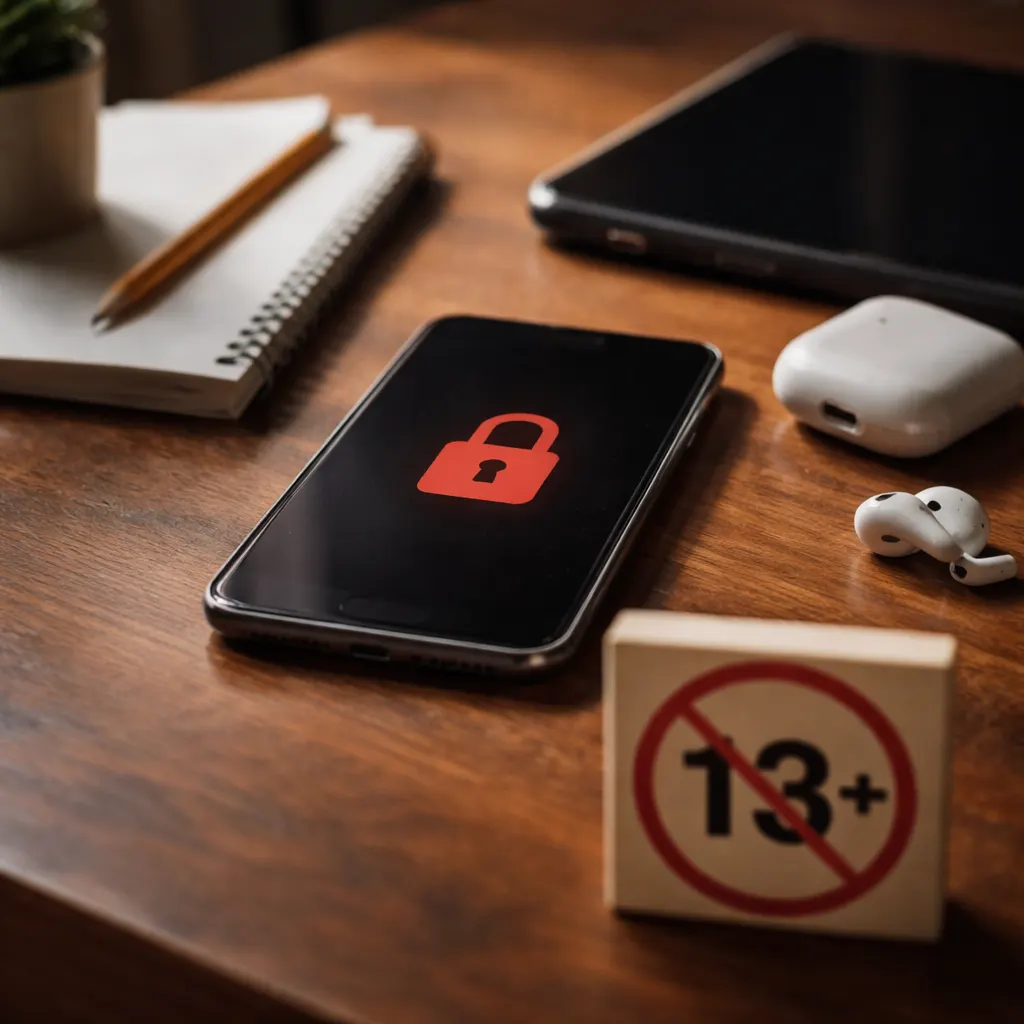
The European Union announced plans to ban social media access for all children under 13 across member states, with President of the Commission Ursula von der Leyen declaring the measure aims to liberate young people from platforms that "capture [of] their attention, their focus, their minds." The proposal, revealed during Wednesday's State of the Union address, forms part of a broader EU Kids Act that the Commission will present in full on Thursday. Children between 13 and 15 won't be permitted to hold personal accounts but can use parent-supervised mini accounts with restricted features for one hour daily.
The new framework establishes three distinct tiers of protection: a complete prohibition for those under 13, supervised limited access for 13- to 15-year-olds through guardian-controlled accounts capped at 60 minutes per day, and safe design requirements for platforms serving users up to age 18. Seventeen of the EU's 27 member countries are already developing or negotiating draft laws to shield minors online, including France, where the nation's highest court recently overturned a ban on social media for under-15s due to free expression concerns. The Commission plans to address addictive design features more comprehensively through a Digital Fairness Act coming this autumn.
"We do not have to accept addictive features, we do not have to accept children being drawn into ever more extreme content," von der Leyen told the European Parliament, adding that "Europe has the power to act; it is us who decide the rules, not Big Tech." Von der Leyen attributed sleep deprivation, anxiety, self-harm, and deaths among European children to social media exposure. Technology lawyer Arnav Joshi of Ashurst Perkins Coie suggested the tiered system represents "perhaps even a little bit more permissive" approach than sweeping bans enacted in Britain and Australia, though he warned that parental monitoring requirements could create a "chilling effect" on how children use services and raise privacy concerns.
The legislation faces practical challenges similar to those encountered in other jurisdictions, particularly around enforcement and age verification. Australian children have widely managed to evade that country's under-16 ban, and digital regulation partner Joanna Conway at Norton Rose Fulbright noted that making age checks precise without violating privacy rights or degrading user experience remains difficult. The EU launched an app earlier this year allowing members to prove they're over 18 for adult-restricted sites, which officials say can be adapted for other age brackets. Joshi expects the full legislative process—"cleaning up that mess, getting everyone on the same page, then running through the EU legislative process"—will likely stretch until 2029, though he believes companies will appreciate having one unified set of Europe-wide rules rather than navigating 27 different national frameworks. Platforms obligated to both implement parental oversight and conduct accurate age verification will need to balance child safety with fundamental privacy protections, a tension that could determine whether the rules achieve their stated aim of freeing young people from algorithmic manipulation without creating new harms. The regulatory model Europe chooses may influence how democratic governments worldwide approach the trade-off between protecting minors and preserving digital rights for an entire generation.