
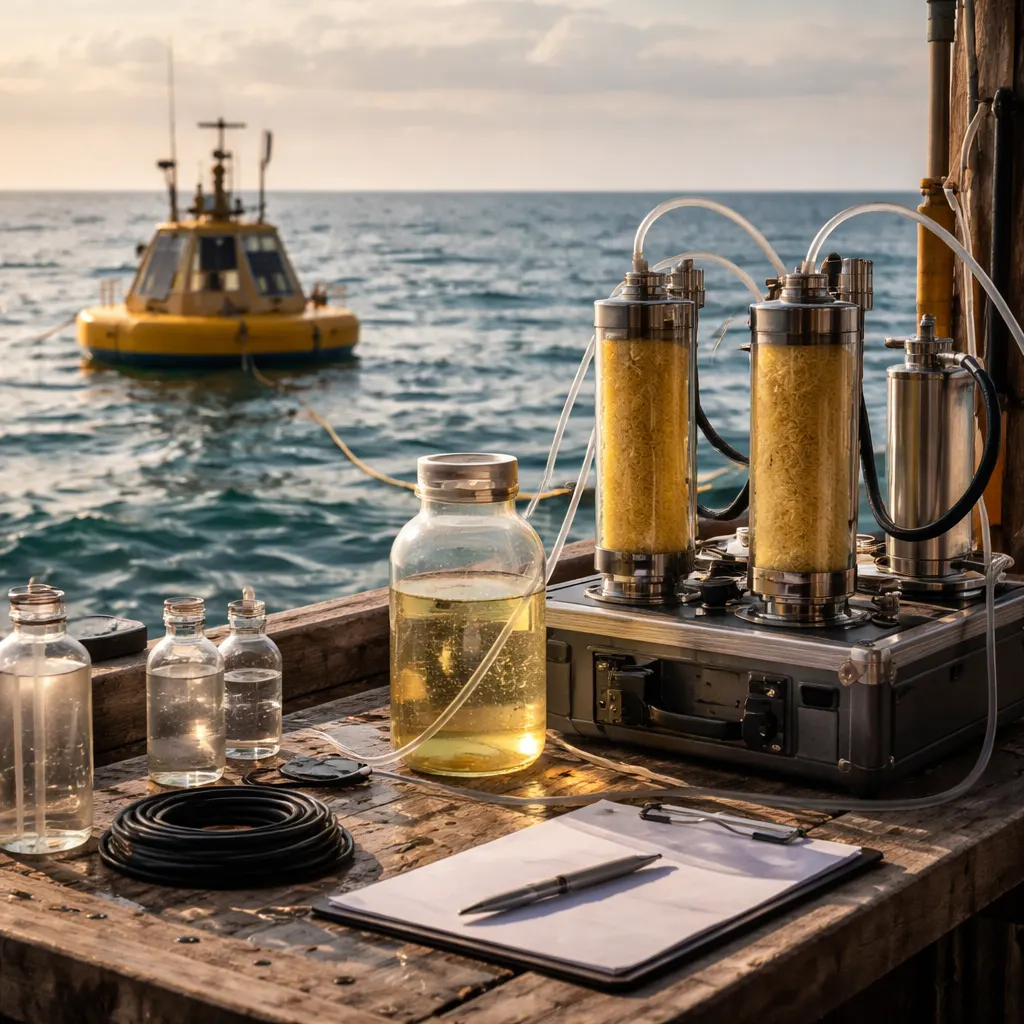
A clean tech startup says it has developed a way to extract uranium from seawater at costs that could compete with traditional mining, potentially unlocking access to 4 billion metric tons of the nuclear fuel. Fluxnium, which emerged from stealth this week with a $7 million seed round, told TechCrunch it has refined a national lab technology that uses polymer fibers to capture dissolved uranium from ocean water. The ocean contains enough uranium to power nuclear plants for roughly 50,000 years, according to founder and CEO Jeff Green, who described the resource as "a thousand times more than all identified hard rock mines combined."
The U.S. aims to triple its nuclear power plant capacity by 2050, but yellowcake uranium prices have climbed 75% over the past five years, according to the U.S. Energy Information Administration. America lacks significant domestic uranium reserves on land, and two-thirds to three-quarters of global supply comes from Kazakhstan, Uzbekistan, Russia, Namibia, Niger, and China, creating what Green characterizes as geopolitical risk. When the extraction technology was first demonstrated at a Department of Energy national lab, it could pull uranium from seawater at costs exceeding $200 per pound, more than double what Western suppliers charge today. Fluxnium has brought those costs down by increasing the surface area of the specially designed polymer fibers that attract uranium dissolved in seawater.
According to Green, the nuclear industry faces a structural uranium shortage if demand rises as projected during the current nuclear renaissance, with tech companies backing multiple nuclear startups to power AI data centers. The startup licensed its core chemistry from the Department of Energy and has continued refining how the fibers are produced and configured. Green, a serial entrepreneur who previously launched Stamps.com in 1996 and carbon removal startup 1PointFive in 2020, said the company's task is to "drive cost out of the supply chain, keep working through all the stages of the process to make it as low cost as possible."
The technology works by braiding the polymer material into long fibers that are suspended from buoys in the ocean for 30 to 60 days, similar to seaweed farming methods. After the fibers absorb uranium, they're retrieved and the uranium is extracted without producing toxic tailings, then purified into yellowcake that can be sold into existing supply chains like conventional mine output. Each fiber line can be reused multiple times, and much of the cost is tied up in manufacturing the fibers and ocean deployment. Green noted that none of the individual process components are novel on their own, and the company's seed round was led by Congruent Ventures with participation from Active Impact Investments and Constellation Energy, which runs the largest U.S. nuclear fleet. The approach could eliminate long-standing concerns about uranium scarcity and concentration of supply in politically sensitive regions, should Fluxnium prove it can scale the technology economically. Seawater extraction would diversify the fuel source for an industry that's seen renewed interest as energy-intensive AI infrastructure drives demand for baseload power, though the startup will need to demonstrate it can consistently produce uranium below current market prices across multiple deployment cycles to win commercial contracts.