
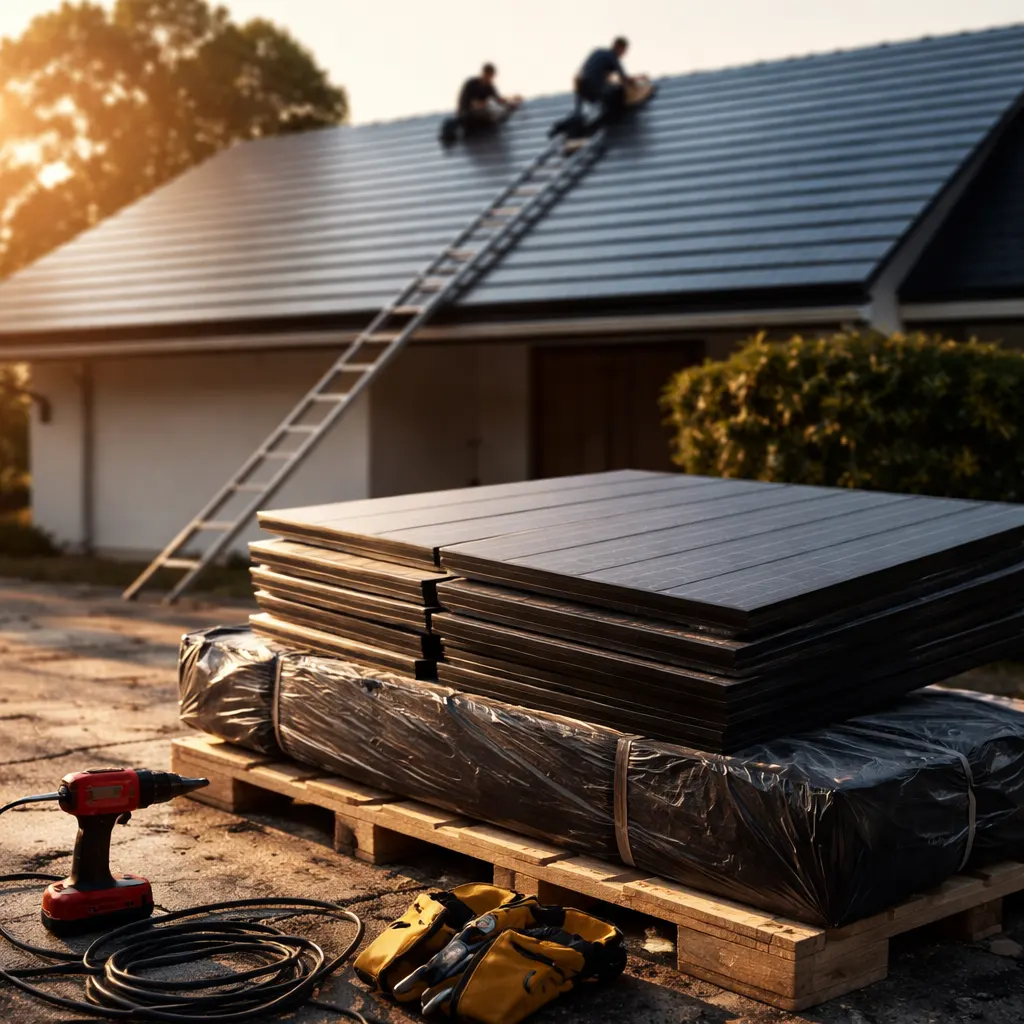
Tesla has discontinued its solar roof product after nearly a decade of struggling with manufacturing costs and performance issues, according to a report published Thursday by TechCrunch. The company has removed all public references to the solar roof from its website, with product pages now redirecting to a generic solar landing page. The solar roof, which was designed to resemble premium roofing materials like slate or terra-cotta tiles while generating electricity, never achieved the commercial success Tesla had anticipated despite years of refinement.
Tesla had set ambitious targets of 1,000 solar roof installations weekly, but the company reached only 20 to 40 installations per week as of 2022, according to the report. Customers reported receiving installation quotes as high as $200,000, making the product prohibitively expensive even when accounting for simultaneous roof replacement. While traditional solar panels decreased in cost over time as global manufacturing scaled to produce billions of standardized cells annually, the solar roof bucked this trend and grew more expensive. Two solar installers told TechCrunch they're still offering the product, though availability depends on project timelines, suggesting Tesla is working through remaining inventory.
The report identifies multiple technical and economic factors behind the product's failure. Unlike conventional solar panels that benefit from standardized global manufacturing, Tesla's solar roof tiles were unique to the system, requiring the company to design and purchase specialized manufacturing equipment. When sales fell short of projections, the per-unit cost of that equipment increased. The report also notes that customers complained the system generated less electricity than Tesla promised, likely due to heat-related efficiency losses, and that non-solar components warped while roof underlayment melted under intense sun exposure.
The physics of solar roof design created inherent performance limitations that traditional panels avoid, according to the report. Solar cells lose approximately half a percent of voltage for every degree Celsius of temperature increase, similar to many electronic devices. Standard solar panels mitigate this by maintaining a gap between the panel and roof surface, allowing air circulation for cooling. Tesla's solar roof incorporated a similar gap, but it was significantly smaller, potentially causing elevated temperatures that reduced cell efficiency. The report explains that this design constraint, combined with full sun exposure heating both the solar tiles and non-solar roofing components, contributed to both the underproduction complaints and physical warping issues that plagued installations.
Tesla's exit may not eliminate integrated solar roofs entirely, as competitors like GAF and Merlin Solar continue pursuing the market, the report notes. Buyers with specific aesthetic preferences will likely sustain some level of demand for products that avoid the appearance of traditional panels. However, the report suggests Tesla's failure could discourage investment in the solar roof concept broadly, raising questions about whether any company can overcome the fundamental manufacturing and thermal challenges that defeated one of the world's most valuable firms. The decision to shut down the product line positions Tesla's traditional solar panels as the company's sole residential solar offering going forward. For a market segment already skeptical of premium-priced solar solutions, the collapse of Tesla's most visible alternative reinforces that standardization and cost efficiency remain the dominant forces shaping renewable energy adoption.