Austin-based Tiny Health has secured $33 million in Series B funding led by B Capital, the company announced. The financing brings the startup's total capital raised to $46 million, following a $4.5 million seed round in 2021 and an $8.5 million Series A in late 2023. The company develops at-home microbiome tests that analyze gut bacteria through stool samples, selling both directly to consumers and through healthcare providers.
Demand for Tiny Health's testing kits is accelerating. The startup's overall revenue has more than doubled annually, according to co-founder and CEO Cheryl Sew Hoy. Its business-to-business division, called Powered by Tiny, which distributes tests through healthcare providers and other companies, expanded fourfold last year. The company has collected nearly 200,000 microbiome samples over time and now serves more than 6,000 practitioners. While Tiny Health initially focused on infant testing after launching its baby gut test in 2022, adults have since become its larger testing segment. The company did not disclose specific revenue figures or its valuation, though Sew Hoy said the valuation was "much higher" than in the Series A.
According to Sew Hoy, one of Tiny Health's biggest differentiators is that its tests use shotgun metagenomic sequencing to analyze microbial DNA. The method provides a broader view of the organisms in a sample than tests that look for a limited set of microbes, she explained. "We are a wellness test," Sew Hoy said. "We're not a diagnostic … It's very actionable, very evidence-backed." Nick Whitehead, senior principal at B Capital, wrote that "the gut microbiome is one of the most important and least understood pieces" of preventive health. Insurance does not cover the tests, which can identify microbes in a sample but cannot establish what caused a person's symptoms.
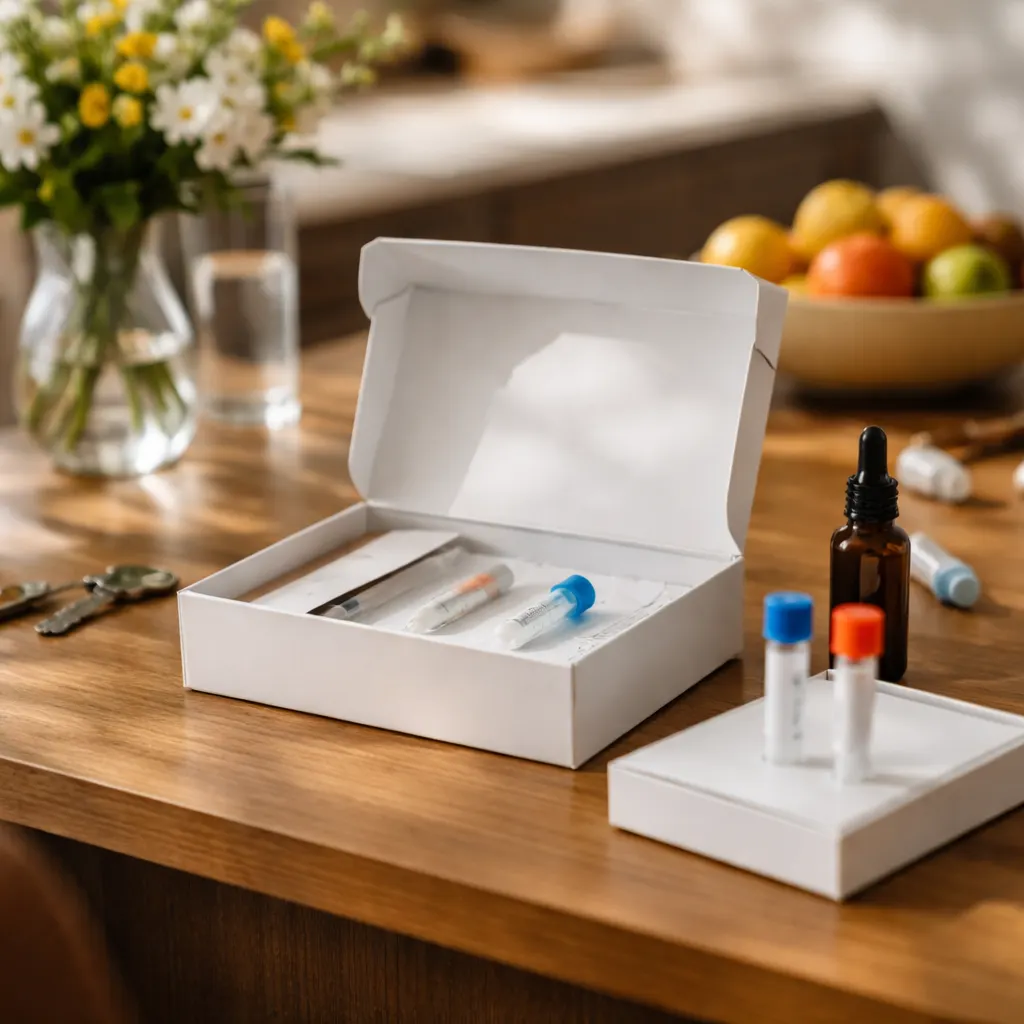
The company was born from Sew Hoy's personal experience when her daughter, born by C-section, developed eczema, allergies and food sensitivities, while her younger son, born vaginally, had no similar conditions. She incorporated Tiny Health in 2020, a week after her son's birth, after discovering research suggesting that missing certain beneficial bacteria can cause problems for infants. Before raising outside capital, she invested $50,000 of her own money into an initial study and spent about a year collecting stool samples and building the platform. Customers collect a small stool sample with a swab, send it in, and receive a report on the microbes detected, along with explanations and suggested next steps that examine what the detected microbes may be doing and suggest steps such as dietary changes, with links to supporting research.
Tiny Health plans to use the new capital to expand its work with healthcare providers and other companies, and to fund research into whether changes in the microbiome can improve health outcomes. The startup is developing a tool called TinyAI that will draw on its data and research reviewed by its scientific staff to help people understand their results. Long-term, Tiny Health aims to identify patterns that could help spot health risks before a condition develops, according to Sew Hoy, who noted that research has associated gut microbiome imbalances with more than 100 diseases. The company plans to devote $5 million to a program that will give researchers and clinical partners access to its testing and data. Presently, the company has about 40 employees and plans to hire 30 more. The fundraising builds on momentum in a category where consumer willingness to pay out-of-pocket is rising but clinical validation remains the gate to broader adoption. Whether pattern recognition at scale can turn correlations into prescriptions will determine if microbiome testing becomes routine or remains niche.