
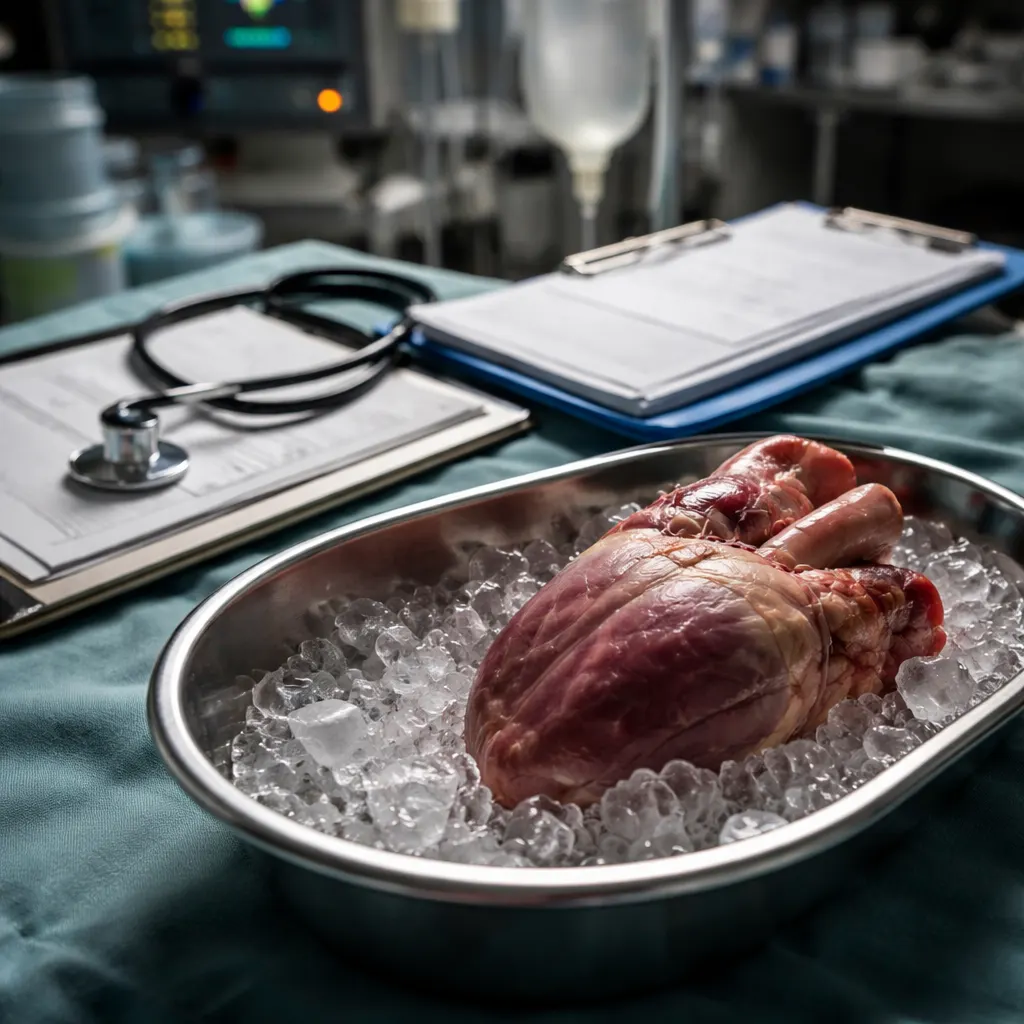
Transplanted hearts quickly take on the biological age of the person who receives them, regardless of how young the donor was, according to new research published last week on bioRxiv by scientists at Brigham and Women's Hospital in Boston. The finding throws cold water on the idea that young organs could serve as a fountain of youth for aging recipients—a notion that's gained attention after Russia's Vladimir Putin reportedly told China's Xi Jinping that organ transplantation could help people "live younger and younger, and even achieve immortality." The study examined both mouse and human heart transplants and concluded that the recipient's body environment, not the donor's age, determines how an organ ages biologically.
The research team, led by Jesse Poganik, conducted heart transplants in mice where young adult animals received hearts from middle-aged donors and middle-aged mice got young hearts. When the scientists analyzed the transplanted organs four to six months after surgery using three different "aging clocks"—molecular tools that estimate biological age—they found the hearts had adopted the biological age of their recipients. Young hearts grew older in older mice, while old hearts became younger in younger animals. Surprisingly, the team found no effect on the mice's blood or other organs, including their original hearts, despite the presence of the transplanted organ. Analysis of stored human heart biopsy samples from Brigham and Women's patients revealed the same pattern: donor hearts rapidly assumed the biological age of recipients, regardless of the donor's original age. Hospital records showed that most human transplant recipients were about 20 years older than their donors.
"The environment of the transplanted organ really dictates how it seems to behave biologically," Poganik says in the report. The researcher notes he was expecting to see a reciprocal effect where young hearts might benefit older animals, but that's not what emerged from the data. João Pedro de Magalhães at the University of Birmingham, who wasn't involved in the work, suggests the recipient's immune system might play a role, with immune cells circulating in the blood potentially affecting aging markers in the new organ.
Poganik proposes that any rejuvenating effects from a young heart might get diluted by all the other aged components of an older body, or perhaps a single organ simply isn't enough to produce a measurable effect. The complexity revealed by the study—where organs appear to age by one measure but not another—raises fundamental questions about how scientists can accurately assess biological age. The report suggests this means researchers are unlikely to discover a way to completely reverse aging, since "that would mean that every aspect of aging has to go back in time," including reversing DNA damage, structural damage, and all the other degradations across various cells and tissues. Poganik hopes the findings will encourage surgeons to consider using hearts from older donors, many of which are currently discarded on the assumption they won't function as well. "There are aspects of biological age that are probably reversible, and there are aspects that are probably not," the researcher concludes. The practical implication is that donor organ selection criteria may need rethinking, while the theoretical takeaway punctures hopeful speculation about organ replacement as a path to extreme longevity. For transplant programs weighing scarce donor pools against patient outcomes, the research suggests age matching may matter less than previously assumed, though the broader dream of biological rejuvenation through young tissue remains elusive.