
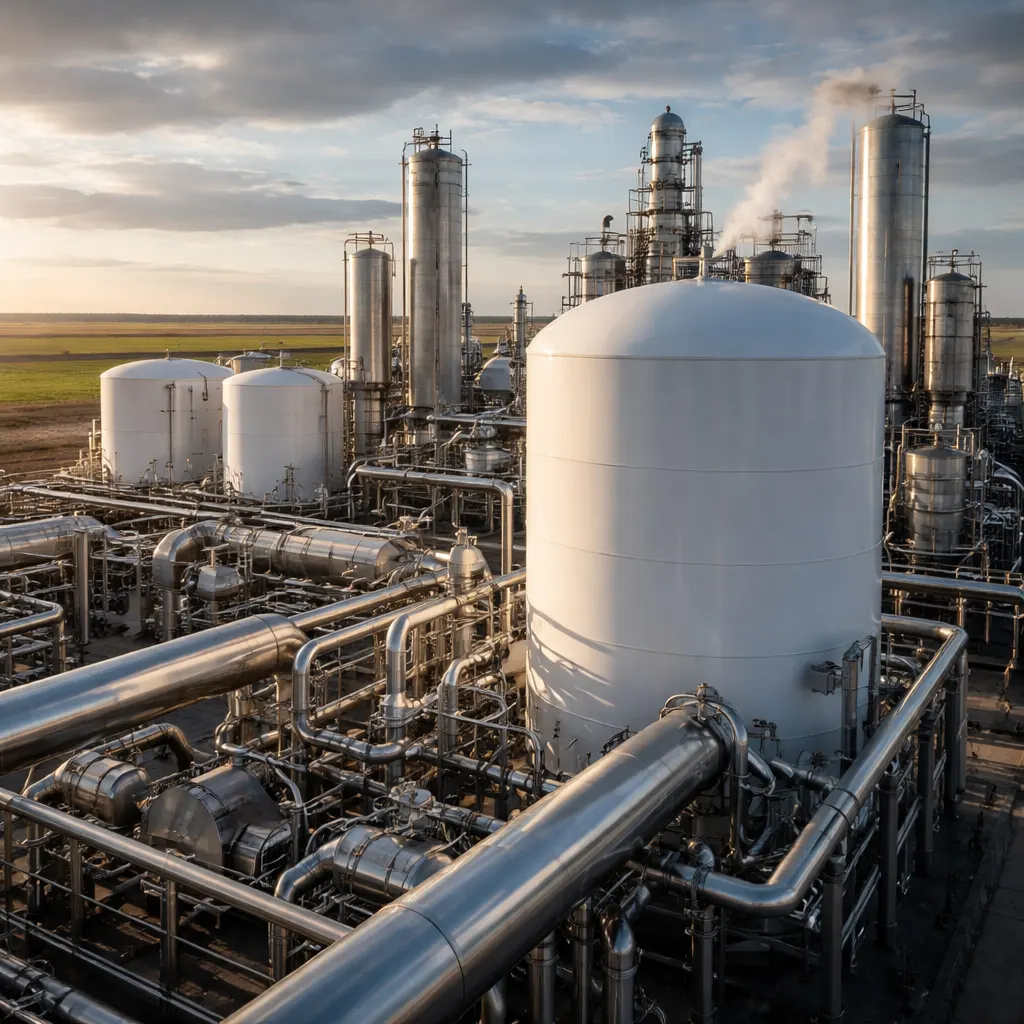
Companies exploring naturally occurring hydrogen deposits have discovered gas samples with concentrations reaching 96% purity in Nebraska and Kansas, according to a new story published by MIT Technology Review on August 20, 2026. The report, written by freelance journalist James Dineen, examines what the publication calls a "21st-century gold rush" for geologic hydrogen—a resource that could transform clean energy production if engineering and logistics challenges can be overcome. Traditional hydrogen production relies overwhelmingly on fossil fuels, but naturally occurring deposits have now been identified across Africa, Asia, Europe, Australia, and North America.
The US Geological Survey has published a map showing where hydrogen is most likely to occur naturally across the country, with one hot spot centered on the Midwest—specifically the Midcontinent Rift, which winds from Kansas to Michigan. That geological feature formed roughly a billion years ago when the planet's crust stretched and split, pushing molten rock upward through the crack and leaving behind iron-rich rock that reacts with water to readily produce hydrogen. HyTerra, an Australian firm, is searching for hydrogen across Nebraska and Kansas and has already found the 96% purity samples. Koloma, one of the most heavily funded companies in the sector with more than $400 million in total backing, is prospecting in the same region. At a mine in northern Ontario, researchers examined several dozen boreholes and found that each one released eight kilograms of hydrogen per year—and with more than 14,000 boreholes at that single site alone, the potential volume for capture is substantial.
The report notes that one of the major questions facing these companies is exactly how much hydrogen natural processes produce, and whether it can be effectively captured. Hydrogen is described as an incredibly light gas with a small molecular weight, allowing it to slip through even tiny cracks in rock. Some companies aren't waiting to find natural sources and are instead pursuing what's called stimulated geologic hydrogen—identifying spots with favorable conditions for hydrogen production but no accumulated resource, then adding water, a catalyst, or another factor needed to kick-start the reaction. Vema Hydrogen, a Texas-based company, is looking to produce hydrogen from subsurface rocks by drilling wells and injecting water and catalysts to stimulate reactions, with testing underway in Quebec and hopes to start full-scale production in 2028. Eden GeoPower is using electricity to form fracture networks in rocks, creating more routes for water to penetrate—a technology that could also prove useful in enhanced geothermal projects.
The report explains that both of the previously leading methods for clean hydrogen—electrolyzers powered by renewable electricity and fossil-fuel-based approaches cleaned up with carbon capture—have struggled to gain ground, largely because of their high cost. That economic challenge has created momentum for geologic hydrogen, which could offer a lower-cost alternative if the substantial engineering hurdles can be cleared. The report identifies hydrogen as notoriously difficult to move around and store, requiring either a lot of space or super-low temperatures to force the gas into liquid form. But if the engineering and logistics work out, this could represent a new beginning for hydrogen, particularly since most hydrogen today is used in petroleum refining or goes on to make fertilizer and other chemicals. The successful capture of naturally occurring hydrogen at scale would bypass the cost barriers that have stalled cleaner production methods and potentially accelerate the transition away from fossil-fuel-based manufacturing. For now, the race is on to prove that what's underground can be brought to the surface economically—and that the 96% purity found in the Midwest wasn't just a lucky strike. The commercial viability of geologic hydrogen will ultimately hinge not on discovery alone but on whether extraction infrastructure can be deployed profitably at industrial scale. If early movers can demonstrate consistent output and manageable transport costs, the sector may attract the kind of capital that turns prospecting into production.