
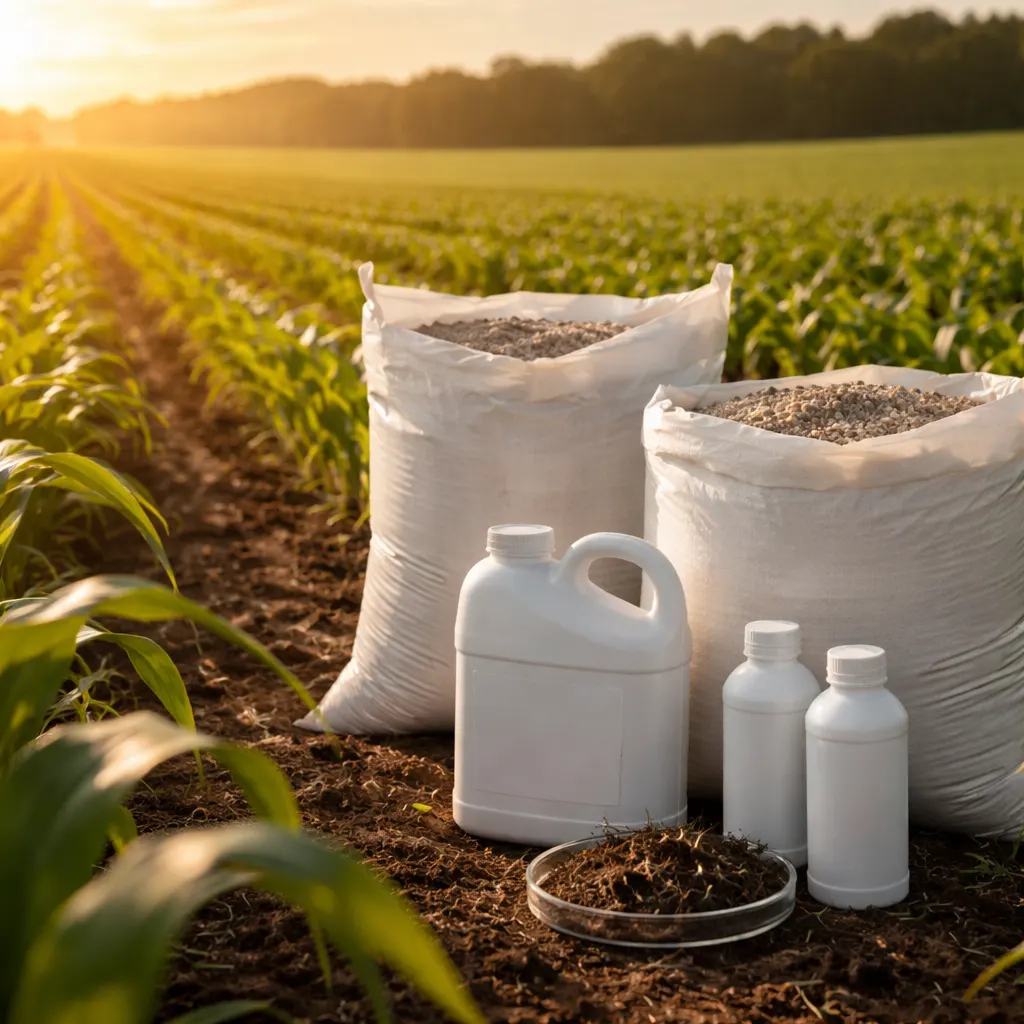
A startup called Switch Bioworks is developing microbial fertilizers that could eventually replace around 50% of the synthetic fertilizer used on farms, according to a report published by MIT Technology Review on September 1, 2026. The company uses a genetic switch that lets microbes establish healthy colonies before they start producing nitrogen for crops. Switch is currently testing its product across six U.S. states and expects to bring a commercial version to market in two to three years, initially targeting corn, the most-planted crop in the U.S. with over 90 million acres in 2026.
Synthetic fertilizer production accounts for roughly 2% of global greenhouse-gas emissions, and the recent Iran war has driven energy and fertilizer prices sharply higher in recent months. Switch's initial product is expected to replace about 25% of a farm's synthetic fertilizer, while competitor Pivot Bio—which has been used on millions of acres since its 2011 founding—says its products can substitute about one-quarter of current fertilizer use. By late August, some corn plants treated with Switch microbes already appeared visibly healthier than untreated ones, though the company won't harvest until late October or early November. Pivot Bio has expanded beyond corn to produce microbial fertilizers for cotton, wheat, and small grains including sorghum and barley.
"We have to reinvent fertilizer," says Tim Schnabel, Switch Bioworks' founder and CEO. The company's approach addresses a core challenge: it's energetically expensive for microbes to make and release ammonia, which can hamper their growth if they put all their energy into nitrogen fixation. According to the report, Switch's genetic switch responds to nitrogen levels in the soil—once it drops to a certain threshold, the microbes begin producing ammonia. Dan Blaustein-Rejto, director of food and agriculture at the Breakthrough Institute, notes that adding genetic switches could help microbes grow and thrive before they help fertilize crops.
The technology could deliver major benefits for a sector that's difficult to decarbonize, the report finds. Plants can't use the "free" nitrogen that makes up nearly 80% of air because it doesn't react readily with other elements, so they rely on fixed nitrogen converted into more reactive compounds like ammonia. Synthetic fertilizer essentially performs industrial nitrogen fixation through the Haber-Bosch process, which uses natural gas to make ammonia that's applied to fields. Biological fertilizers aim to replace some synthetic fertilizer with microbes that fix nitrogen for plants, but one challenge has been that microbes want to use any nitrogen they fix for themselves—to build proteins and survive—rather than release it. Travis Frey, Pivot Bio's chief technology officer, says growers are experiencing a double whammy: fertilizer costs are rising while commodity crop prices like corn have dropped, creating a big opportunity for the industry.
Field trials are a crucial step in proving these products work, and independent trials are especially important since there can be a large gap between a company's reported data and what independent researchers find, Blaustein-Rejto notes. "It's too early to tell exactly how well this works in the field," Schnabel says. John Havlin, a professor in the department of crop and soil sciences at North Carolina State University, says he's very excited about the future of these products and that they'll eventually play a role in reducing the load of nitrogen being applied. However, there's a ceiling to how much fertilizer microbes can replace—synthetic fertilizer will remain necessary for a long time, and other ways to reduce emissions and nitrogen pollution from farms remain critical, according to Blaustein-Rejto. The question isn't whether biological products will transform agriculture, but how quickly farmers will adopt them as fertilizer and seed costs—two of the biggest expenses for many growers—continue to squeeze margins. That economic pressure may prove more decisive than environmental benefits in determining whether this next decade truly becomes the era when biologicals go mainstream on farms.