
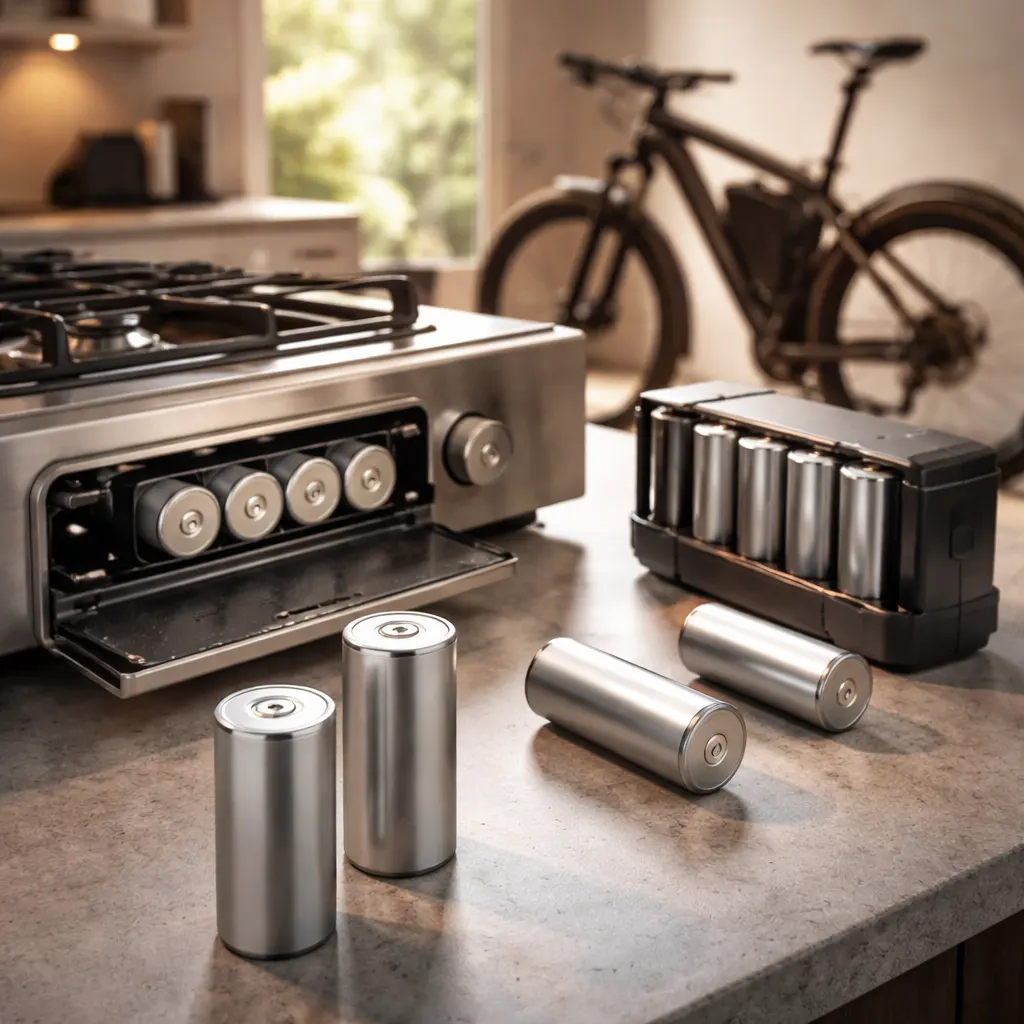
Startups are installing thousands of small batteries in everything from induction stovetops to food carts across New York City, sidestepping the regulatory hurdles that have blocked large-scale energy storage projects, according to a report published October 1 by MIT Technology Review. The companies are deploying consumer-focused batteries that directly cut pollution and power bills while avoiding the permitting tangles that plague utility-scale installations. If aggregated, these distributed batteries could add up to tens of gigawatts of capacity—potentially rivaling traditional grid-scale storage.
PopWheels operates roughly 50 battery-swapping cabinets across New York City, with about 2,500 batteries in circulation for delivery drivers on e-bikes. The company recently began supplying its batteries to food cart operators, where approximately four batteries deliver five kilowatt-hours of electricity—enough to cover a typical day's operation for many carts, replacing gas generators. Copper is manufacturing induction stoves with built-in batteries that let residents cook during power outages and help homeowners skip costly electrical upgrades, since the battery supplies part of the power during use. Meanwhile, companies like Every Electric and David Energy are selling plug-in batteries for homes and businesses, including air-conditioning units, laundromats, parking garages, and gyms.
David Hammer, cofounder of PopWheels, stated that "the number-one challenge that large-scale centralized energy storage providers have is the fact that their benefits are abstract and their costs are concrete." According to the report, these smaller batteries generally don't require grid upgrades or extensive permitting processes—users simply plug them in, similar to the growing balcony solar model with small modules that offset energy demand. Sam Calisch, cofounder and CEO of Copper, noted the company isn't "just selling a battery for resilience—we're selling it for cost savings."
The shift toward distributed batteries could transform the power grid, the report explains, because these small units bypass the community pushback that utility-scale projects face, especially in population-dense areas concerned about relatively rare but high-profile battery fires. Large, centralized battery installations have struggled in cities like New York due to notoriously complex regulations, making it difficult to get major energy storage projects connected to the grid. As batteries continue to drop in price, they'll likely appear in more everyday devices, bringing cleaner air and cheaper power bills. If every stove in America shipped with a battery, it would total tens of gigawatts of power—capacity that can be pooled and tapped when the grid is under stress.
The report concludes that large-scale energy storage won't disappear, since bigger installations will remain crucial for supporting intermittent renewables like wind and solar to meet rapidly growing electricity demand. But an aggregated collection of stoves, e-bikes, and window AC units could help ease grid congestion, especially in dense cities like New York, where anything that prevents summer blackouts is welcome. James McGinniss, cofounder and CEO of David Energy, called this trend "the biggest thing to happen in the power grid sector in the last 20 years." The companies involved—PopWheels, Copper, Every Electric, and David Energy—are demonstrating that distributed storage can deliver immediate, tangible benefits while quietly building grid-scale capacity one appliance at a time. For utilities and regulators accustomed to centralized planning, this consumer-driven model may force a rethink of how resilience and flexibility get priced and valued. The question isn't whether small batteries belong in the grid conversation anymore—it's whether legacy players can adapt fast enough to integrate them.